Introduction
How signs, sigils, and sacred imagery shape intention and channel power.
Before words, there were symbols and before spells were spoken, they were drawn. Symbols are one of the oldest and most powerful tools in witchcraft. They act as a bridge between the conscious and subconscious, the physical and spiritual. A single mark can hold layers of meaning, intention, and energy, making symbols an essential part of magical practice across cultures and traditions. This article explores the role of symbols in witchcraft — their history, meanings, modern uses, and how you can work with them to enhance your own practice. Whether carved into candles, drawn on paper, or visualized in the mind, symbols are a universal language of magic.

The History of Symbols in Witchcraft
Symbols have existed as magical tools for as long as humans have sought to understand and influence the unseen. Long before written language, humans marked stone, bone, and earth with shapes that carried meaning beyond survival, they carried belief.
The Earliest Marks – Before Language, There Was Meaning
The earliest known symbols predate formal writing systems by thousands of years. In caves across the world, ancient peoples painted spirals, animals, handprints, and geometric patterns. These were not random decorations — they were intentional acts of communication.
To these early humans:
- A spiral may have represented life cycles or journeys
- Animal figures may have invoked spirit allies or hunting success
- Handprints may have marked presence, identity, or protection
These symbols functioned as bridges between the physical and spiritual world, allowing early practitioners to influence forces they could not directly control — weather, animals, fertility, and survival itself.
In this sense, the first witches were not speaking spells — they were drawing them.
Symbols as Sacred Language in Ancient Civilizations
As societies developed, so too did their symbolic systems. These became more structured, but their magical roots remained deeply embedded.
- In Ancient Egypt, hieroglyphs were not just a written language — they were believed to carry heka, or magical force. Writing a symbol was an act of power, capable of shaping reality.
- In Mesopotamia, seals and sigils were pressed into clay to mark ownership, invoke protection, or bind agreements spiritually as well as physically.
- In Greece and Rome, symbols of gods, planets, and elements were used in ritual, medicine, and astrology, blending science and spirituality seamlessly.
Symbols during this time became both functional and sacred, used in governance, religion, and daily life. They were not separate from magic — they were magic.
Runes, Ogham, and the Power of Written Magic
In Northern and Celtic traditions, symbolic systems like runes and ogham developed — alphabets that were inherently magical.
- Runes were carved into wood, stone, or bone, each symbol representing not just a sound, but a concept, force, or aspect of reality.
- Ogham, often associated with trees, linked each symbol to natural energies and spiritual correspondences.
These were not passive writing systems. To carve a rune was to:
- Invoke its meaning
- Call its energy into being
- Bind that energy to an object or space
This practice blurred the line between language and spellwork. Writing itself became ritual.
Folk Magic and Everyday Protection
As witchcraft moved through the medieval and early modern periods, symbols became deeply woven into everyday life — especially through folk magic.
These symbols were often:
- Carved into doorways and beams
- Sewn into clothing
- Marked onto tools or kitchen items
- Hidden in homes as protective wards
Examples include:
- Hex signs to protect homes and crops
- Witch marks (apotropaic symbols) carved to ward off spirits
- Crossroads symbols marking sacred or dangerous spaces
Unlike ceremonial magic, these symbols were often created by ordinary people, healers, farmers, midwives, making them some of the most practical and enduring forms of magical symbolism.
They were quiet, subtle, and constant — magic embedded into daily life.
Sigils and Grimoires – Formalizing Symbolic Magic
During the Renaissance and into the early modern period, symbols became more codified in grimoires — magical texts that outlined rituals, spirits, and correspondences.
Here we see the rise of:
- Sigils of spirits and entities
- Planetary symbols tied to astrology
- Seals used in ritual invocation and protection
These symbols were often complex and highly specific, designed to:
- Represent a particular force or being
- Act as a key or gateway in ritual work
- Focus and direct magical intent with precision
While these systems could be intricate, they reinforced an important idea:
a symbol could act as a direct interface between the practitioner and the unseen.
Symbols in Modern Witchcraft
Today, symbols continue to evolve. Modern witches draw from ancient traditions while also creating their own.
You’ll see symbols:
- Blended across cultures and practices
- Simplified for accessibility
- Personalized through sigil work
- Integrated into daily tools like journals, candles, and kitchens
What remains unchanged is their purpose:
- To focus intention
- To hold energy
- To communicate beyond words
Modern practitioners understand something ancient witches always knew:
a symbol gains power through use, belief, and repetition.
The Living Nature of Symbols
One of the most important truths about symbols is that they are not static. They are living systems of meaning.
A spiral drawn 10,000 years ago and a spiral drawn today may look the same — but their meaning is shaped by:
- The culture using them
- The intention behind them
- The person creating them
This makes symbols both universal and deeply personal.
The history of symbols in witchcraft is not just a timeline — it is a lineage. Every mark drawn today echoes those made by countless practitioners before.
When you draw a symbol in your practice, you are participating in something ancient:
- A language older than speech
- A method of magic that transcends tradition
- A quiet but powerful act of creation
Symbols are not just tools of witchcraft.
They are its foundation.
Why Symbols Are So Powerful
A symbol is more than a picture — it is a container of intention, a key that unlocks meaning beyond words, and a bridge between thought and manifestation.
The Mind Responds to Symbols Before Words
Human beings are wired to understand symbols instinctively. Long before we learn language, we recognize shapes, patterns, and visual cues. A circle feels complete. A jagged line feels dangerous. A spiral suggests motion.
This is because symbols communicate directly with the subconscious mind — the part of us responsible for instinct, memory, emotion, and belief.
In witchcraft, this is crucial.
When you use words alone, the conscious mind analyzes them.
When you use symbols, the subconscious accepts and responds.
This allows symbols to:
- Bypass doubt and overthinking
- Imprint intention more deeply
- Create faster and more intuitive energetic shifts
In simple terms:
A symbol doesn’t ask permission — it simply acts.
Condensed Intention – Complexity Made Simple
One of the greatest strengths of a symbol is its ability to hold complex meaning in a single form.
Instead of focusing on multiple thoughts like:
- “I want protection, stability, clarity, and strength…”
A single symbol can represent all of that at once.
This creates:
- Clarity of focus
- Stronger intention
- Less mental fragmentation
In magical practice, scattered intention leads to scattered results. Symbols act as a focal point, aligning your energy into a singular direction.
Think of a symbol as a lens:
- Without it → light is scattered
- With it → light becomes focused and powerful
Symbols as Energetic Anchors
When you create or use a symbol with intention, it becomes an anchor for energy.
This means:
- The energy you put into it doesn’t dissipate immediately
- It remains attached to the symbol
- It continues to influence its surroundings over time
This is why symbols are often:
- Carved into candles
- Worn as jewelry
- Placed in homes or sacred spaces
- Drawn on objects or tools
They act as ongoing spells, holding and radiating the intention long after the initial act.
The more you interact with a symbol — seeing it, touching it, working with it — the more it reinforces its energetic charge.
Repetition Builds Power
Symbols gain strength through repetition.
Every time you:
- Draw a symbol
- Visualize it
- Work with it in ritual
You are reinforcing its meaning and deepening its connection to your intention.
Over time, this creates:
- Faster energetic activation
- Stronger emotional association
- A more immediate magical response
Eventually, simply seeing or thinking of the symbol can trigger its effect.
This is why many traditions use the same symbols repeatedly — not out of habit, but because familiarity builds potency.
Universal vs. Personal Symbols
Symbols operate on two levels:
Universal Symbols
These carry shared meaning across cultures or traditions:
- Circle → wholeness, protection
- Spiral → growth, cycles
- Moon → intuition, cycles
Because many people recognize these meanings, they carry collective energy, making them immediately powerful.
Personal Symbols
These are created or adopted by the individual:
- A unique sigil
- A shape tied to a personal experience
- A symbol that “feels right” intuitively
Personal symbols are powerful because they are:
- Deeply tied to your subconscious
- Free from external interpretation
- Pure expressions of your intention
In many cases, personal symbols can become even more potent than traditional ones — because they are entirely yours.
Symbols as a Bridge Between Worlds
At their core, symbols act as a bridge:
- Between thought and action
- Between the conscious and subconscious
- Between the physical and spiritual
They allow something intangible — an idea, a desire, an intention — to take form.
Once something has form, it can be:
- Focused on
- Charged
- Directed
This is the essence of magic:
giving shape to the unseen so it can influence the seen.
The Emotional Component of Symbols
Symbols are not just intellectual — they are emotional.
A symbol that resonates with you will:
- Feel powerful
- Create a sense of recognition
- Evoke a physical or emotional response
This emotional connection is what fuels the symbol’s effectiveness.
Without emotion, a symbol is just a shape.
With emotion, it becomes alive with meaning.
Symbols are powerful because they combine:
- Focused intention
- Subconscious influence
- Repetition and reinforcement
- Emotional resonance
They are simple, but not simplistic. Subtle, but not weak.
In witchcraft, a symbol is not just something you use — it is something you build a relationship with.
And over time, that relationship becomes a source of consistent, reliable magic.
Common Symbols in Witchcraft and Their Meanings
Certain symbols appear again and again across magical traditions — not because they are trendy, but because they endure. These forms carry layered meaning, shaped by centuries of use, belief, and practice. When you work with them, you are tapping into both personal intention and collective power.
It’s important to remember: no symbol is completely fixed. Its meaning can shift depending on context, culture, and the practitioner. What follows is not a rigid definition, but a foundation to build from.
The Pentacle – Balance and Protection
Core Meaning: Protection, balance, harmony of the elements
The pentacle — a five-pointed star often enclosed in a circle — is one of the most widely recognized symbols in witchcraft. Each point represents an element:
- Earth
- Air
- Fire
- Water
- Spirit
The circle surrounding the star symbolizes unity and containment, binding these forces into balance.
Magical Use:
- Protection wards on doors, tools, or altars
- Grounding and centering rituals
- Elemental magic and balance work
Deeper Insight:
The pentacle is not just protective — it is stabilizing. It reminds the practitioner that true power comes from equilibrium, not dominance.
The Triple Moon – Cycles and Intuition
Core Meaning: Cycles, intuition, feminine energy
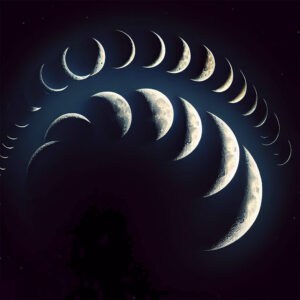
The Triple Moon depicts three lunar phases:
- Waxing crescent (Maiden)
- Full moon (Mother)
- Waning crescent (Crone)
It represents the cyclical nature of life, growth, and transformation.
Magical Use:
- Lunar rituals and moon magic
- Divination and intuition work
- Honoring life phases and transitions
Deeper Insight:
This symbol teaches that all phases — growth, fullness, and decline — are necessary. Nothing is wasted; everything transforms.
The Spiral – Growth and Transformation
Core Meaning: Evolution, cycles, inward and outward journeys
The spiral is one of the oldest symbols known to humanity. It represents movement — either inward (introspection) or outward (expansion).
Magical Use:
- Personal growth and transformation work
- Meditation and visualization
- Journeying or pathworking
Deeper Insight:
The spiral reminds us that growth is not linear. We revisit the same lessons, but each time from a new level of understanding.
The Circle – Unity and Sacred Space
Core Meaning: Wholeness, protection, infinity
The circle has no beginning and no end. It represents unity, completion, and containment.
Magical Use:
- Casting ritual circles
- Creating protected space
- Sealing spells or intentions
Deeper Insight:
The act of drawing a circle is itself magical — it defines space, focuses energy, and separates the sacred from the mundane.
The Eye – Awareness and Protection
Core Meaning: Protection, awareness, perception
Often called the “evil eye” or protective eye, this symbol guards against negative energy and unwanted attention.
Magical Use:
- Protective jewelry or charms
- Home wards
- Energy shielding and awareness work
Deeper Insight:
The eye is both outward and inward — it protects by seeing, and empowers by increasing awareness.
Runes – Symbols of Force and Fate
Core Meaning: Power, fate, knowledge, transformation
Runes are more than letters — each rune represents a concept, force, or archetype.
Examples:
- Fehu: Wealth, movement, abundance
- Algiz: Protection, defense
- Raidho: Journey, movement, alignment
Magical Use:
- Divination and guidance
- Carving into objects for specific outcomes
- Spell reinforcement
Deeper Insight:
Runes are not passive symbols — they are active forces. Working with them is a dialogue, not a command.
Sigils – Personal Symbols of Intention
Core Meaning: Personalized intention, focused will
Sigils are unique symbols created by the practitioner to represent a specific desire or outcome.
Magical Use:
- Manifestation work
- Charging objects or spaces
- Hidden or embedded spellwork
Deeper Insight:
Sigils are powerful because they bypass external meaning. They are pure intention made visible, shaped entirely by the creator.
Closing Insight
These symbols are not just references — they are tools. Each one offers a different pathway into magical work:
- The pentacle stabilizes
- The moon guides
- The spiral transforms
- The circle protects
- The eye watches
- The runes speak
- The sigil becomes
The more you work with them, the more they shift from images into living parts of your practice.
Modern Uses of Symbols in Witchcraft
Symbols are ancient, but their power is far from outdated. Modern witchcraft has not abandoned symbolic magic — it has woven it into everyday life. Today, symbols remain one of the most accessible, adaptable, and effective tools for magical practice because they require very little beyond intention and awareness.
You do not need an elaborate altar or rare ritual tools to work with symbols. A mark on paper, a carved candle, a traced shape in flour, or even a symbol visualized in your mind can become powerful spellwork. Symbols thrive because they move easily between the sacred and the ordinary.
In many ways, modern witchcraft returns symbols to their oldest purpose: practical, lived magic.
Sigils – Personal Magic Made Visible
One of the most common modern uses of symbols is sigil work. A sigil is a symbol created for a specific purpose — protection, prosperity, confidence, healing, love, clarity, or any focused intention.
Unlike traditional symbols with inherited meanings, sigils are personal and purpose-built. They allow the practitioner to create a direct visual representation of desire.
Modern witches use sigils by:
- Drawing them in journals or grimoires
- Placing them beneath candles during spellwork
- Carrying them in wallets or pockets
- Writing them on mirrors, phones, or notebooks
- Burning them to release intention into the universe
Sigils are especially powerful because they can be hidden in plain sight. A small mark on a shopping list or the underside of a mug can hold just as much magic as a formal ritual.
Candle Magic – Carving Intention into Flame
Candles are one of the most popular tools in modern witchcraft, and symbols are often part of that practice. Carving symbols into wax transforms a simple candle into a focused magical working.
Examples include:
- A pentacle for protection
- A heart sigil for love
- Runes for prosperity or courage
- The moon symbol for intuition and dreamwork
As the candle burns, the symbol is activated and released, sending the intention outward through flame and smoke.
This method is simple, effective, and deeply symbolic: the intention is not only held — it is transformed.
Kitchen Witchcraft – Symbols in Food and Hearth
Symbols are especially powerful in kitchen witchcraft because the act of preparing food is already an act of transformation.
Modern kitchen witches may:
- Stir clockwise to draw in abundance
- Stir counterclockwise to banish negativity
- Draw symbols in flour, sugar, cinnamon, or sauces
- Score sigils into bread dough before baking
- Arrange ingredients in symbolic patterns
Even something as simple as cutting an apple horizontally to reveal the hidden five-pointed star becomes a symbolic ritual.
The kitchen is often where symbolic magic feels most natural — quiet, practical, and woven into daily life.
Home Protection – Warding the Threshold
Throughout history, symbols have been used to protect homes, and this remains one of their strongest modern uses.
Symbols for protection may be:
- Drawn above doors and windows
- Hidden beneath welcome mats
- Carved into candles burned near entryways
- Placed on mirrors or household objects
- Incorporated into seasonal decorations
Some witches use traditional symbols like pentacles or protective eyes, while others create personal house sigils unique to their home.
The purpose remains the same: to define the home as sacred, protected space.
In this way, symbols become guardians — quiet sentinels holding the energy of safety and intention.
Jewelry and Wearable Magic
Wearing symbols turns the body itself into sacred space.
Necklaces, rings, bracelets, and even embroidered clothing can carry symbolic meaning and magical purpose. A moon pendant may strengthen intuition, a pentacle ring may serve as protection, and a rune charm may call in specific energy.
This form of symbolic magic is especially effective because it stays close to the body, continuously reinforcing intention throughout the day.
It is subtle magic — private, personal, and constant.
Journaling, Spellbooks, and Grimoire Work
Writing symbols into magical records strengthens both memory and intention.
Modern practitioners often use symbols in:
- Spell journals
- Dream logs
- Tarot reflections
- Moon phase tracking
- Ritual planning pages
Symbols help create visual anchors in magical writing. Instead of simply recording information, the page itself becomes enchanted.
A grimoire filled with symbols is not just a notebook — it becomes a living magical object.
Digital Witchcraft and Modern Adaptation
Even in the digital age, symbols remain powerful.
Many witches now use symbolic magic through:
- Phone wallpapers with sigils
- Digital altar spaces
- Symbols in passwords or reminders
- Protective screensavers
- Digital journaling and moon tracking apps
Magic adapts to the practitioner’s life. A sigil saved on your phone can be just as meaningful as one carved into wood.
The tool changes — the intention does not.
Visualization and Invisible Symbols
Not all symbols need to be drawn physically. Some of the strongest magical work happens entirely in the mind.
Practitioners may:
- Visualize a protective circle around themselves
- Imagine runes glowing over a doorway
- Picture a sigil surrounding a goal or desire
- Use symbolic meditation for healing or grounding
This invisible magic is powerful because it trains focus and strengthens energetic awareness.
The symbol exists because you hold it with intention.
Closing Insight
Modern uses of symbols remind us that witchcraft does not need to be dramatic to be effective. Magic often works best when it becomes part of ordinary life, which is woven into routines, spaces, meals, and habits.
A symbol on a candle.
A rune on a keychain.
A spiral traced absentmindedly during reflection.
These small acts matter.
Because symbols are not powerful because they are old — they are powerful because they continue to be used.
And every time you use one with intention, you add your own energy to a language that has never stopped speaking.
Creating Your Own Symbols (Sigil Work)
One of the most powerful forms of symbolic magic is the creation of personal symbols. While traditional symbols carry the weight of collective history and shared meaning, sigils are different — they are born directly from your own intention, shaped by your will, and charged with your personal energy.
A sigil is not inherited. It is created.
This makes sigil work one of the most intimate and adaptable forms of witchcraft. It requires no expensive tools, no strict tradition, and no complicated ritual structure — only clarity, focus, and the willingness to give form to desire.
At its core, sigil magic is the act of turning intention into symbol so that the subconscious mind — and the magical self — can work with it more directly.
What Is a Sigil?
A sigil is a symbolic design created to represent a specific goal, desire, or magical intention. Unlike universal symbols like the pentacle or the moon, a sigil is personal and purpose-built.
It may be created for:
- Protection
- Prosperity
- Confidence
- Love
- Healing
- Success
- Motivation
- Peace
- Boundaries
- Creativity
- Safe travel
- Better sleep
- Spiritual clarity
The possibilities are endless because the symbol is created specifically for your need.
Rather than saying the intention aloud over and over, the sigil condenses that desire into a single visual form. It becomes a shortcut between thought and manifestation.
Why Sigil Work Is So Effective
Sigils work because they allow the practitioner to bypass the conscious mind’s habit of doubt and over-analysis.
When you focus on a sentence like:
“I want to be protected.”
…the conscious mind may immediately respond with questions:
- Protected from what?
- Is that realistic?
- What if it doesn’t work?
But when that same intention becomes a symbol, the mind interacts with it differently. The subconscious accepts it more readily because it is no longer engaging with the statement logically — it is responding to it symbolically.
This makes sigils:
- Quietly powerful
- Highly focused
- Easy to repeat and reinforce
- Deeply personal and emotionally resonant
A sigil becomes a magical shorthand for your will.
How to Create a Simple Sigil
There are many ways to create sigils, but one of the most common and beginner-friendly methods is the letter method.
Step 1: Write a Clear Intention
Start with a direct, positive statement of what you want.
Examples:
- I am protected
- I move through life with confidence
- My home is peaceful and safe
- Opportunities flow to me
- I trust my intuition
Try to phrase your intention:
- In the present tense
- Positively (what you want, not what you fear)
- Clearly and simply
Avoid vague or contradictory wording. Precision strengthens magic.
Good:
✔ “I welcome healthy love”
Less effective:
✘ “I don’t want bad relationships”
The goal is clarity.
Step 2: Remove Repeating Letters
Take your phrase and remove duplicate letters.
Example:
I AM PROTECTED
Becomes:
I A M P R O T E C D
(Removing repeated letters like extra T’s or repeated O’s depending on your method)
This distills the statement down to its essential energetic structure.
Step 3: Combine the Remaining Letters
Now begin layering, rotating, and merging those letters into a single design.
This is where the art begins.
You might:
- Overlap lines
- Flip letters upside down
- Mirror shapes
- Simplify curves
- Turn letter forms into abstract marks
The goal is not readability — it is symbolism.
You should no longer be able to easily “read” the sentence. The words are becoming magic.
Step 4: Simplify Until It Becomes a Symbol
Refine the design until it feels balanced and intentional.
Ask yourself:
- Does this feel complete?
- Does it feel powerful?
- Does it evoke the right emotional response?
The final sigil should feel like a symbol, not handwriting.
Some become:
- Sharp and angular
- Circular and flowing
- Minimal and elegant
- Dense and protective
There is no wrong aesthetic. Your intuition matters.
Step 5: Charge the Sigil
Creating the sigil is only the first half. Charging it is what gives it life.
Charging means filling the symbol with energy and intention so it becomes active.
This can be done through:
Focus
Stare at the sigil while holding the intention strongly in your mind.
Visualization
Imagine the sigil glowing, burning, or radiating energy.
Breathwork
Breathe onto the sigil intentionally, transferring energy through breath.
Candle Ritual
Place the sigil beneath a candle and let the flame charge it.
Moonlight
Leave it beneath the Full Moon for lunar charging.
Movement
Dance, drum, sing, or move energy physically into the symbol.
Meditation
Enter a focused, altered state and imprint the sigil there.
The charging method matters less than the sincerity of intention.
Why It Works
A sigil is uniquely yours. It carries your intention without external associations, making it a pure expression of your will.
Because it is personal:
- It bypasses inherited meanings
- It avoids outside interpretation
- It speaks directly to your subconscious
- It becomes stronger through your repeated interaction with it
Unlike borrowed symbols, a sigil grows with you.
It is not just a tool — it becomes part of your magical language.
What to Do with a Sigil After It’s Created
Once charged, a sigil can be used in many different ways depending on your goal.
Drawn on Objects
Write it on:
- Candles
- Mirrors
- Doors
- Wallets
- Spell jars
- Phone cases
- Jewelry
- Notebooks
- Shoes for travel magic
- Kitchen tools for hearth magic
This creates ongoing influence.
Burned to Release Intention
Some sigils are meant to be destroyed so the intention is released into the universe.
Burning is common for:
- Manifestation
- Releasing blockages
- Sending energy outward
- Spell completion
This is especially powerful during Full Moon rituals.
Hidden for Long-Term Influence
Some sigils work best when quietly embedded.
Examples:
- Under a mattress for restful sleep
- Beneath a doormat for home protection
- Inside a wallet for prosperity
- Tucked into a planner for success
- Sewn into clothing for confidence
This creates subtle, continuous magic.
Consumed Symbolically
Some kitchen witches draw sigils in:
- Bread dough
- Pie crusts
- Tea steam
- Coffee foam
- Sauces
- Spice blends
In this way, the spell becomes nourishment.
It is one of the most beautiful forms of everyday magic.
Closing Insight
Sigil work teaches one of witchcraft’s most important lessons:
Magic does not always need ceremony to be powerful.
Sometimes it is a quiet mark in a notebook.
A symbol hidden beneath a candle.
A line drawn in flour before baking bread.
A sigil is proof that intention can take shape.
And once it does, it begins to move.
That is the heart of symbolic magic —
the moment thought becomes form,
and form becomes spell.
Conclusion
Symbols are the language of magic — a silent vocabulary through which intention takes form, energy finds direction, and the unseen becomes something we can touch, draw, and understand. They are among the oldest tools in witchcraft, woven through every tradition, every culture, and every era where humans have sought connection with forces greater than themselves.
From ancient cave markings and sacred spirals carved into stone, to protective symbols hidden above doorways, to modern sigils drawn in journals and candle wax, symbols remain a foundational part of magical practice because they speak where words often fail. They bypass logic, reach into the subconscious, and allow us to work with energy in a direct and deeply personal way.
A symbol can be ancient and universal, like the circle or the moon, carrying the weight of collective meaning and ancestral memory. Or it can be entirely your own — a sigil created from your desire, your need, your intention, and your will. Both are powerful. Both are sacred. What matters most is not how complex the symbol is, but how intentionally it is used.
Symbols remind us that witchcraft is not always loud or dramatic. Sometimes it is quiet. Sometimes it is a pentacle traced on a fogged window. A protective rune carved into the bottom of a candle. A spiral drawn absentmindedly during reflection. A sigil hidden inside a loaf of bread before it bakes. These small acts are not lesser magic — they are often the most enduring.
If you are beginning to work with symbols, start small. Choose one that resonates with you and spend time with it. Draw it repeatedly. Meditate on it. Place it on your altar. Carry it in your pocket. Notice how it feels, what it stirs, and how your relationship with it changes over time. Magic grows through repetition, attention, and trust.
In witchcraft, a single line can carry power. A simple shape can hold a lifetime of meaning. A symbol, once awakened, is no longer just an image — it becomes a living part of your practice, a companion in your spellwork, and a reflection of the magic you carry within yourself.
To draw a symbol is to make intention visible.
To charge it is to give it life.
To trust it is to speak the oldest language of magic.