Introduction
Roman Goddess of Agriculture
Ceres is the Roman counterpart to Demeter, holding significant influence over agriculture, fertility, and the life cycles of plants and crops. As one of the Dii Consentes, the chief deities of the Roman pantheon, Ceres was highly revered in Roman society, which placed immense importance on agriculture. Her presence in Roman religion underscores the civilization’s dependence on farming and the nurturing of crops for survival and prosperity.

Iconography and Symbols
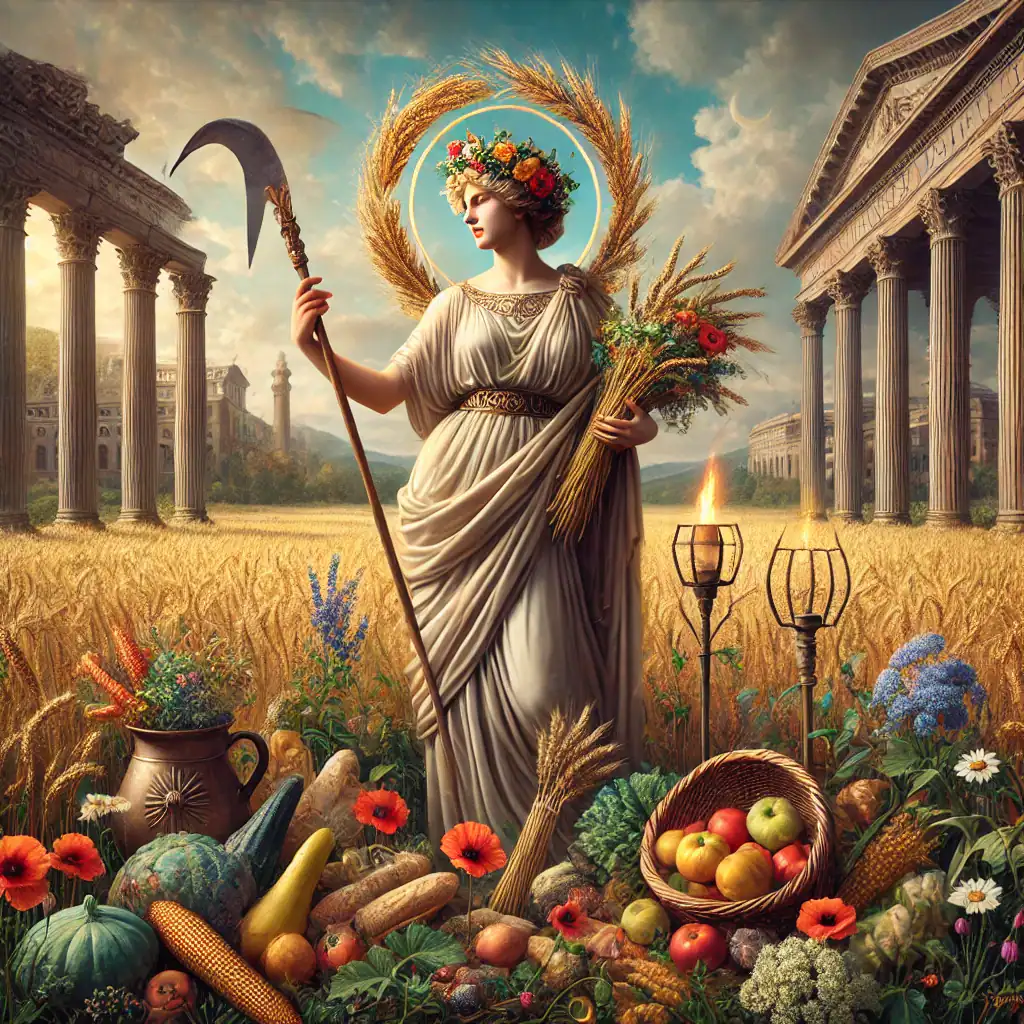
Ceres, the Roman goddess of agriculture, is often depicted holding a sickle or a bundle of wheat, which are potent symbols of her dominion over the harvest. These images serve as direct representations of her role in the growth and reaping of crops, essential activities for sustaining life and community in ancient Roman society.
The Sickle: The sickle, a curved blade used for cutting grain, signifies the harvest and the culmination of the growing season. This tool is emblematic of the labor and effort involved in bringing the crops to maturity and reaping the rewards of that hard work. The sickle not only represents the act of harvesting but also the broader themes of cutting away the old to make way for the new, mirroring the cycles of death and rebirth in nature. It underscores Ceres’ role in the transformative processes of growth and renewal.
The Wheat Bundle: The wheat bundle, or sheaf, symbolizes the bounty of the fields and the sustenance it provides. Wheat was a staple crop in ancient Rome, integral to the diet and economy. A bundle of wheat represents the fruits of the earth, harvested through the diligence and care of the farmers under Ceres’ patronage. This symbol emphasizes abundance, nourishment, and the goddess’s gift of fertility to the land. It also reflects the idea of community and shared resources, as wheat and other grains were central to communal feasts and religious offerings.
Additional Symbols: In some depictions, Ceres is shown with cornucopias (horns of plenty), filled with an overflow of fruits, vegetables, and grains, further emphasizing abundance and prosperity. The cornucopia is a universal symbol of nourishment and the generosity of the earth.
Symbolic Representation in Rituals: These symbols not only highlight Ceres’ connection to agriculture but also emphasize the cyclical nature of planting, growing, and harvesting that was central to Roman life. During rituals and festivals, such as those during Lughnasadh, participants might carry or display these symbols to invoke Ceres’ blessings on their fields and to express gratitude for her gifts. Wheat bundles might be used to decorate altars or woven into corn dollies, while sickles could be carried in processions or used in ceremonial harvests.
By incorporating these symbols into their religious and agricultural practices, the Romans maintained a tangible connection to Ceres, recognizing her vital role in ensuring the fertility of the land and the sustenance of their communities. These symbols served as daily reminders of the goddess’s presence and influence, fostering a sense of reverence and continuity with the natural world.
Influence of the Eleusinian Mysteries
The Eleusinian Mysteries, a set of secret religious rites held annually in ancient Greece, were conducted in honor of Demeter and Persephone. These mysteries celebrated the myth of Demeter and Persephone and their influence on the seasons and agricultural cycles. The Eleusinian Mysteries were profoundly influential and eventually impacted Roman religious practices in honor of Ceres. The Romans adopted and adapted these rites, integrating them into their own agricultural festivals and rituals dedicated to Ceres.
Origins and Significance: The Eleusinian Mysteries originated in the city of Eleusis, near Athens, and were among the most important religious events in ancient Greece. They were celebrated in honor of Demeter, the goddess of the harvest, and her daughter Persephone. Central to these mysteries was the myth of Persephone’s abduction by Hades and Demeter’s subsequent grief, which caused the earth to become barren. The eventual return of Persephone to the earth symbolized the return of fertility and the renewal of life.
Ceremonies and Initiations: The Eleusinian Mysteries were characterized by elaborate ceremonies and initiation processes. These rites were divided into the Lesser Mysteries, held in the spring, and the Greater Mysteries, held in the fall. Participants underwent a series of purification rituals, fasting, and secretive ceremonies that culminated in the revelation of sacred objects and the performance of dramatic reenactments of the Demeter-Persephone myth. The initiates believed that through these rites, they would gain a deeper understanding of life, death, and the promise of rebirth.
Adoption by the Romans: The influence of the Eleusinian Mysteries extended beyond Greece, profoundly impacting Roman religious practices. The Romans, who held Ceres in high regard as their goddess of agriculture, were captivated by the rich symbolism and profound spiritual insights offered by the Eleusinian Mysteries. They adopted and adapted these rites, integrating them into their own agricultural festivals and rituals dedicated to Ceres.
Roman Adaptations: In Rome, similar rites were performed to honor Ceres, reflecting the shared agricultural heritage and the vital role of these deities in ensuring the fertility of the land and the prosperity of the people. These adapted ceremonies included processions, sacrifices, and the offering of first fruits to Ceres. The Romans also incorporated aspects of the Eleusinian initiatory practices, creating their own version of the mysteries that promised spiritual renewal and a closer connection to the divine.
Cultural and Spiritual Impact: The adoption of the Eleusinian Mysteries by the Romans underscores the interconnectedness of ancient Mediterranean religious practices. These mysteries offered not only agricultural blessings but also profound spiritual insights, promising initiates a deeper understanding of the cycles of life and death and the hope of rebirth. By integrating these rites, the Romans enriched their own religious traditions, creating a cultural and spiritual tapestry that honored both their indigenous deities and the powerful influences from neighboring civilizations.
Legacy: The legacy of the Eleusinian Mysteries and their influence on Roman practices in honor of Ceres highlights the enduring human quest for meaning and connection through ritual and myth. These ancient rites remind us of the deep spiritual and agricultural roots that underpin many of our modern traditions. By understanding and honoring these connections, we can foster a greater appreciation for the cycles of nature and the timeless quest for renewal and rebirth that continues to shape our lives.
Honoring Ceres During Lughnasadh
During Lughnasadh, a festival that marks the beginning of the harvest season, rituals involving Ceres often include the creation of corn dollies. These figures are made from the last sheaf of harvested grain and hold deep symbolic significance. The corn dollies represent the spirit of the harvest and are believed to embody the life force of the grain. By crafting these figures, celebrants honor Ceres and the bounty of the harvest, ensuring that the spirit of the grain is preserved until the next planting season.
Corn Dollies: Crafting corn dollies from the last sheaf of harvested grain is a traditional way to honor Ceres. These dolls are kept until the next planting season as good luck charms, symbolizing the continuation of life and the hope for future abundance. The practice of making corn dollies connects participants with ancient agricultural traditions and the cyclical nature of the seasons.
Harvest Festivals: Roman harvest festivals dedicated to Ceres often included processions, offerings of grain and fruits, and communal feasting. These celebrations were times of gratitude and joy, marking the successful completion of the growing season and the gathering of crops. During Lughnasadh, similar practices can be incorporated, such as holding feasts that feature seasonal produce and offering thanks for the earth’s bounty.
Offerings and Altars: Creating altars adorned with symbols of Ceres, such as wheat sheaves, corn dollies, and representations of sickles, can be a meaningful way to honor her during Lughnasadh. Offerings of grains, bread, and other harvested items can be placed on these altars as tokens of gratitude. These rituals reinforce the connection between humanity and the natural world, acknowledging the essential role of agriculture in sustaining life.
Storytelling and Rituals: Sharing stories and myths about Ceres and her influence on agriculture can deepen the understanding and appreciation of her role. Rituals that involve planting seeds, blessing fields, or engaging in communal harvest activities can also be incorporated into Lughnasadh celebrations. These practices honor the goddess and celebrate the vital cycles of growth and renewal that she oversees.
By incorporating these traditions and rituals into Lughnasadh celebrations, participants can honor Ceres’ profound impact on agriculture and express their gratitude for the earth’s fertility. This acknowledgment helps to strengthen the connection between humans and the natural world, fostering a sense of reverence and respect for the cycles that sustain life.
Symbols of Ceres and Their Meanings
Wheat Sheaves Wheat sheaves are perhaps the most iconic symbol associated with Ceres, reflecting her dominion over agriculture and the harvest. As the goddess of grain, wheat represents the culmination of the growing season and the prosperity that comes from a successful harvest. During Lughnasadh, which marks the beginning of the harvest season, wheat sheaves symbolize abundance, nourishment, and the hard work that goes into cultivating the land. Incorporating wheat sheaves into Lughnasadh rituals and decorations serves as a tribute to Ceres’ role in ensuring the fertility of the earth and the bounty it provides.
Poppies Poppies are another significant symbol linked to Ceres, often depicted in her iconography. These flowers not only add a vibrant splash of color to celebrations but also carry deeper meanings. In the context of Ceres, poppies represent the cycles of growth, decay, and rebirth that are integral to agricultural life. Their connection to sleep and dreams also ties into the mythological aspects of Ceres and her daughter Persephone, hinting at the seasonal cycles of dormancy and renewal. Using poppies in Lughnasadh rituals can help invoke these themes and honor the continuous cycle of life.
Cornucopias The cornucopia, or horn of plenty, is a symbol of abundance and nourishment often associated with Ceres. This emblem signifies the overflowing bounty of the harvest and the prosperity that comes with it. During Lughnasadh, cornucopias can be filled with fruits, vegetables, grains, and other produce to create a visual representation of the earth’s generosity. This symbol serves as a powerful reminder of Ceres’ gift of fertility and the sustenance that supports life.
Sickle The sickle, a tool used for harvesting grain, is another symbol intimately connected with Ceres. It represents the act of reaping the rewards of the growing season and the labor involved in bringing in the harvest. During Lughnasadh, the sickle symbolizes the hard work and dedication required to cultivate the land and gather its fruits. Incorporating a sickle into rituals and decorations can honor the physical and spiritual labor that sustains communities and acknowledges Ceres’ guidance in these efforts.
Torch In some depictions, Ceres is shown holding a torch, symbolizing the light that guides and the hope that sustains. The torch represents enlightenment, warmth, and the guiding force that leads through the darkness. During Lughnasadh, lighting torches or candles can symbolize the illumination of Ceres’ wisdom and the light of the harvest that dispels the shadows of scarcity. It serves as a beacon of hope and prosperity, guiding celebrants as they honor the goddess and the fruitful season.
Bread and Grains Bread and grains are central to Ceres’ symbolism, representing the nourishment and sustenance provided by the earth. These items are often used in rituals to honor her, as they embody the transformation of raw materials into life-sustaining food. During Lughnasadh, baking bread from freshly harvested grain or offering grains at an altar can symbolize gratitude for Ceres’ blessings and the continuous cycle of growth and sustenance. These offerings serve as tangible expressions of appreciation for the goddess’ role in the harvest and the fertility of the land.
Incorporating Symbols into Lughnasadh Rituals and Decorations
Creating Altars Setting up an altar adorned with symbols of Ceres can be a central part of Lughnasadh celebrations. Decorate your altar with wheat sheaves, poppies, cornucopias, and bread to honor the goddess and the season’s bounty. Including a sickle or torch can further enhance the symbolism and pay tribute to the harvest’s hard work and guiding light.
Offering Rituals Incorporate offerings of grains, bread, and seasonal produce into your Lughnasadh rituals. These offerings can be placed on the altar or shared among participants to symbolize the abundance of the earth and the gratitude owed to Ceres for her blessings. Such rituals can deepen the connection to the agricultural cycle and the divine forces that nurture it.
Symbolic Decorations Use symbols of Ceres to decorate your home or gathering space during Lughnasadh. Wheat sheaves, poppies, and cornucopias can create a festive and meaningful atmosphere, reminding all present of the goddess’ gifts and the season’s significance. These decorations not only beautify the space but also serve as constant reminders of the interconnectedness of life, labor, and the land.
Crafting Activities Engage in crafting activities that incorporate Ceres’ symbols, such as making corn dollies or weaving wheat sheaves. These hands-on activities can be a fun and educational way to involve family and friends in the celebration, fostering a deeper appreciation for the goddess and the harvest traditions.
By thoughtfully incorporating these symbols into your Lughnasadh celebrations, you not only honor Ceres but also deepen your connection to the cycles of nature and the harvest. Each symbol serves as a tangible reminder of the goddess’s influence and the abundant blessings of the season, fostering a sense of reverence and gratitude for the earth’s generosity.
Conclusion
Ceres, the Roman goddess of agriculture and the harvest, holds a significant place in the celebration of Lughnasadh. Her symbols—wheat sheaves, poppies, cornucopias, sickles, torches, and bread—carry profound meanings that connect us to the cycles of nature, the hard work of cultivation, and the abundant blessings of the earth. By incorporating these symbols into our Lughnasadh rituals and decorations, we honor Ceres’ vital role in ensuring the fertility of the land and express our gratitude for the bounty it provides.
From setting up altars adorned with her symbols to offering grains and bread, from decorating our spaces with reminders of her gifts to engaging in crafting activities, each act of reverence strengthens our connection to the goddess and the natural world. As we celebrate Lughnasadh, we are reminded of the importance of living in harmony with nature, recognizing the sacrifices and hard work that sustain our communities, and fostering a deep sense of gratitude and reverence for the cycles of life.
By honoring Ceres during Lughnasadh, we not only pay tribute to the goddess of agriculture but also embrace the spirit of the harvest festival. It is a time to celebrate the abundance, fertility, and prosperity that come from the earth, and to acknowledge the interconnectedness of all life. May the symbols and rituals of Lughnasadh inspire us to live with gratitude, to care for the land, and to honor the divine forces that nurture and sustain us.