Introduction
Nature’s Sticky Secret: Uncovering Cleavers’ Healing Magic
A versatile, scrambling plant with medicinal, culinary, and even coffee-making potential, Cleavers is an easy-to-forage herb that offers an abundance of benefits. Learn how to identify, harvest, and use this remarkable wild edible.

What Are Cleavers?
Cleavers (Galium aparine), also known as Goosegrass, Stickyweed, or Bedstraw, is a straggly, climbing plant known for its distinctive clinging nature. The plant gets its name from the tiny, hooked hairs covering its stems and leaves, which allow it to attach to clothing, fur, and surrounding vegetation as it grows.
This member of the coffee family (Rubiaceae) has been used for centuries as a cleansing herb, prized for its ability to support kidney function, detoxify the body, and soothe irritated skin. Beyond its medicinal applications, Cleavers is also a nutritious wild green that can be enjoyed in soups, stews, and teas. The plant’s seeds, when dried and roasted, can even be used as a coffee substitute.
Cleavers is widely distributed across North America, Europe, and Asia, thriving in a variety of environments. It is an excellent wild plant for foragers due to its abundance, ease of identification, and range of uses.
Variants of Cleavers
While Galium aparine is the most commonly foraged species, other members of the Galium genus share similar characteristics and properties. Some notable variants include:
- Northern Bedstraw (Galium boreale): Found in North America, this species has non-clinging leaves and produces small white flowers in clusters. It has similar medicinal uses but lacks the sticky quality of Cleavers.
- Sweet Woodruff (Galium odoratum): A fragrant, low-growing relative that is used to flavor drinks, especially in European May wine traditions. Unlike Cleavers, Sweet Woodruff has a pleasant vanilla-like aroma.
- Field Madder (Sherardia arvensis): A close relative that is often confused with Cleavers but has tiny pink flowers instead of white. It is not as commonly used medicinally.
While some variants have their own unique properties, Galium aparine remains the most widely used for both foraging and herbal applications.
How to Identify Cleavers
Cleavers is an easily recognizable plant due to its characteristic clinging growth habit. Key identification features include:
- Stems: Thin, weak, and square-shaped with tiny backward-facing bristles. The stems are often hollow and tend to sprawl or climb over other vegetation.
- Leaves: Arranged in whorls of 4-8 around the stem, Cleavers leaves are narrow, lance-shaped, and covered in tiny hooked hairs that make them feel rough to the touch.
- Flowers: Small, white, and star-like, appearing in clusters along the stems in late spring and early summer.
- Seeds: Tiny, round, and covered in hooked bristles, which help them cling to animals and spread.
- Scent: Fresh Cleavers has a mild grassy scent when crushed, with a slightly bitter, earthy aroma.
- Growth Habit: This plant scrambles across the ground or climbs using its tiny hooks to latch onto nearby plants, fences, or other structures.
Cleavers grows prolifically in hedgerows, meadows, forest edges, and disturbed ground, making it a common and easy-to-find wild edible.
Habits of Cleavers
Cleavers is a resilient and opportunistic plant that thrives in temperate climates. It prefers moist, nutrient-rich soils and is commonly found in:
- Woodland edges
- Hedgerows and fence lines
- Stream banks and moist meadows
- Disturbed soils and roadsides
- Shaded garden beds and backyards
Cleavers is an annual plant, meaning it completes its life cycle in one growing season. It emerges in early spring, producing sprawling stems and lush green foliage. The plant flowers from late spring to early summer, with small white blooms giving way to seed pods that cling to passing animals and clothing. By midsummer, Cleavers begins to die back, leaving behind seeds that ensure its return the following year.
How to Properly Forage Cleavers
Foraging Cleavers is simple due to its widespread distribution and ease of identification. Follow these steps for a successful and sustainable harvest:
- Identify Safely: Ensure the plant has its signature clinging stems, whorled leaves, and small white flowers. If in doubt, check for the sticky texture by gently brushing your hand along the plant.
- Harvest Young Shoots: The best time to harvest Cleavers is in early spring when the shoots are tender and vibrant green. Older plants can become tough and fibrous.
- Use Scissors or Hands: Cleavers can be easily pulled up by hand, but using scissors to snip the upper portions of the plant allows for regrowth.
- Avoid Contaminated Areas: Do not harvest Cleavers near roadsides, industrial sites, or places treated with pesticides or herbicides.
- Storage: Store fresh Cleavers in a sealed bag in the refrigerator for up to a week. They can also be dried and stored in an airtight container for later use in teas and tinctures.
Magical Uses of Cleavers
Cleavers has long been associated with purification, binding, and renewal in magical practices:
- Purification and Cleansing: Often used in purification spells, Cleavers is believed to remove negativity and clear spiritual blockages.
- Binding and Connection: Because of its clinging nature, Cleavers symbolizes binding energy and can be used in spells related to love, friendship, and loyalty.
- Healing and Renewal: Its historical use as a cleansing herb translates into magical applications for personal growth and healing rituals.
- Dream Work: Some traditions believe that placing Cleavers under a pillow can promote insightful dreams and deeper spiritual connections.
Medicinal Uses of Cleavers
Cleavers has been used in traditional medicine for centuries, particularly as a cleansing and detoxifying herb. Some key medicinal benefits include:
- Kidney and Urinary Health: Cleavers is a natural diuretic, helping to flush toxins from the body and support kidney function. It has been used to alleviate urinary tract infections and kidney stones.
- Lymphatic Support: Herbalists use Cleavers to stimulate the lymphatic system, promoting detoxification and reducing swollen glands.
- Skin Health: Cleavers is excellent for treating skin conditions such as eczema, psoriasis, and rashes. A wash or poultice made from the leaves can soothe irritation.
- Anti-Inflammatory Properties: Traditionally used to reduce inflammation and support the immune system.
- Digestive Aid: Cleavers has mild laxative properties and can help with sluggish digestion.
It is often consumed as an infusion, tincture, or fresh juice to harness its medicinal effects.
Culinary Uses of Cleavers
Although not as widely used as other wild greens, Cleavers can be incorporated into various dishes:
- Soups and Stews: The young leaves and stems can be finely chopped and added to broths and vegetable soups.
- Cooked Greens: Tender shoots can be steamed, boiled, or sautéed and served like spinach.
- Cleavers Coffee: The seeds can be dried, roasted, and ground as a caffeine-free coffee alternative.
- Herbal Teas and Infusions: Fresh or dried Cleavers can be steeped in hot water to make a refreshing, detoxifying tea.
- Smoothies: Blend fresh Cleavers into green smoothies for an added nutritional boost.
Due to their sticky texture, raw Cleavers are not commonly eaten in salads, but they can be blended into a pesto or pureed soups.
Northern Bedstraw (Galium boreale)
A Fragrant and Gentle Cousin to Cleavers
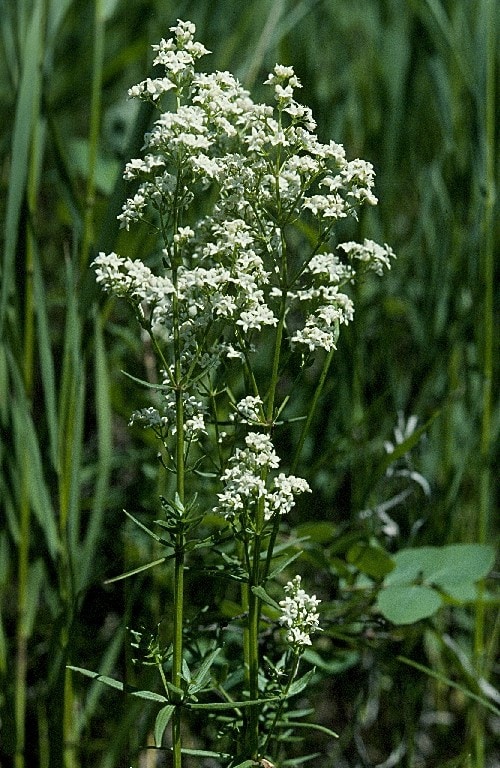
Northern Bedstraw (Galium boreale) is a graceful perennial herb native to North America, often found in cool temperate regions stretching from Canada into the northern United States. As a member of the Galium genus—like Cleavers (Galium aparine)—Northern Bedstraw shares many botanical and medicinal traits with its stickier relative but is distinguished by a more refined structure, a lack of clinging hairs, and a soft, pleasant scent that has earned it a place in both traditional medicine and folklore.
Identification and Physical Characteristics
Unlike Cleavers, Northern Bedstraw does not cling to clothing or fur, making it easier to handle and more appealing in certain uses, especially those involving dried plant material. Key features of Galium boreale include:
- Leaves: The leaves are slender, smooth, and arranged in symmetrical whorls of four along the square stem. They are dark green, glossy, and lack the tiny hook-like hairs that make Cleavers sticky. This smoothness is one of the easiest ways to distinguish Northern Bedstraw in the field.
- Stems: Square in cross-section and generally upright, the stems of Northern Bedstraw are more rigid than Cleavers and do not sprawl or climb. They tend to grow in tidy clumps, forming loose colonies in open meadows and lightly shaded woods.
- Flowers: In midsummer, Northern Bedstraw blooms with tight clusters of tiny, star-shaped white flowers at the tops of the stems. These flowers are highly fragrant, giving the plant a sweet, honeyed aroma that is especially noticeable in the warmth of the sun.
- Height and Habit: The plant typically reaches 12 to 24 inches in height and grows upright, unlike the more vine-like Cleavers. It spreads via rhizomes, forming dense but non-invasive colonies in appropriate habitats.
Where It Grows
Northern Bedstraw thrives in a wide range of temperate ecosystems, preferring:
- Open woodlands and forest edges
- Prairies and tallgrass meadows
- Moist, well-drained soils
- Hillsides, riverbanks, and transitional zones between wet and dry habitats
It is particularly common in the northern United States, the Great Lakes region, and across much of Canada. Due to its adaptability and low maintenance, it is sometimes cultivated in native plant gardens for its ecological value and gentle charm.
Medicinal Uses
Although not as well-known as Cleavers in modern herbal medicine, Northern Bedstraw carries a long history of traditional use among Indigenous peoples and early settlers, especially in the realm of cleansing and detoxification:
- Lymphatic Support: Like Cleavers, Northern Bedstraw has mild diuretic and lymphatic-cleansing properties. It was traditionally used to support the urinary system and help reduce swelling of the lymph nodes.
- Skin Conditions: Infusions made from the aerial parts were applied topically or consumed to help clear minor skin ailments such as eczema, acne, and rashes.
- Mild Sedative Effects: The pleasant aroma and calming energy of the plant have given it a reputation for helping with restlessness and tension. Herbalists sometimes use it in tea blends intended for emotional balance and gentle relaxation.
- Kidney and Bladder Health: Northern Bedstraw has been used to soothe irritation in the urinary tract and support healthy kidney function, although it is considered milder in effect compared to Galium aparine.
Culinary and Practical Uses
While not commonly used in modern cuisine, Northern Bedstraw does have a few interesting applications:
- Tea Infusions: The flowering tops can be dried and steeped to create a subtly sweet herbal tea with gentle tonic effects. The tea is often used for general wellness and to support detox during seasonal transitions.
- Bed Stuffing and Herbal Pillows: True to its name, Bedstraw was once used to stuff mattresses and pillows. The dried plant maintains its fragrance for some time and was believed to ward off pests while providing a soothing aroma conducive to sleep.
- Craft and Potpourri: Due to its fragrant flowers and tidy growth habit, Northern Bedstraw is sometimes used in natural wreaths, herbal bundles, or potpourri for its aromatic qualities and attractive form.
Magical and Folkloric Associations
Northern Bedstraw holds a quiet but meaningful place in folklore:
- Love and Protection: Its association with rest, sweetness, and gentle energy lends it well to charm bags or spells for love, home protection, or peaceful sleep.
- Dream Magic: The fragrant blossoms are sometimes used in herbal dream pillows to encourage restful sleep and pleasant dreams.
- Fairy Plant Lore: In some traditions, bedstraw plants—particularly those that bloom in midsummer—are said to attract the attention of forest spirits and fairies, making them a charming addition to ritual or celebration during the summer solstice.
Northern Bedstraw (Galium boreale) may not have the sticky notoriety of Cleavers, but its grace, gentle fragrance, and subtle medicinal powers make it a wonderful plant to know and appreciate. Its upright habit, smooth leaves, and starry white blooms set it apart as both a visual delight and a gentle ally in herbal wellness. Whether dried for tea, tucked into a dream pillow, or admired in a summer meadow, Northern Bedstraw invites us to explore the quieter side of the Galium family with reverence and curiosity.
Sweet Woodruff (Galium odoratum)
A Fragrant Herb of Folklore, Flavor, and Forest Floors
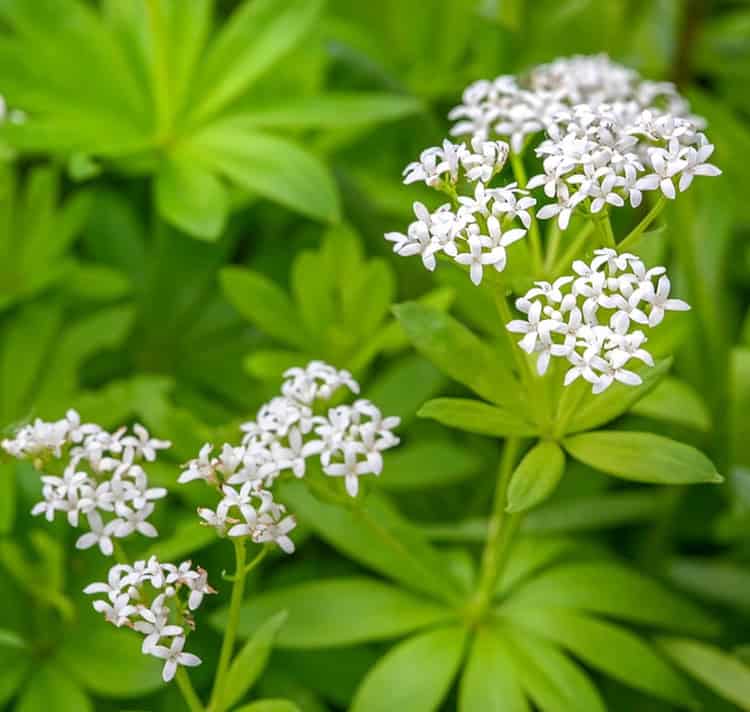
Sweet Woodruff (Galium odoratum), also known as Wild Baby’s Breath, is a charming, low-growing herb in the Galium genus that has long held a beloved place in European herbal traditions. Known for its delicate whorls of emerald-green leaves, dainty white blossoms, and sweet, hay-like fragrance, Sweet Woodruff is both a visual and olfactory delight. Unlike its cousin Galium aparine (Cleavers), which clings with sticky hooks, Galium odoratum is velvety smooth and soft to the touch—a true woodland gem that enchants the senses.
Identification and Characteristics
Sweet Woodruff is relatively easy to identify, especially when in bloom. It forms dense, carpet-like mats in shaded, moist woodland environments and is often grown as a ground cover in gardens due to its lovely scent and low maintenance needs. Key identifying features include:
- Leaves: Its narrow, lance-shaped leaves grow in symmetrical whorls of six to eight around the stem. The foliage is soft and smooth, lacking the clinging hairs found on Cleavers. When dried, the leaves develop an even more intense fragrance reminiscent of fresh-cut hay or vanilla.
- Flowers: In late spring to early summer, Sweet Woodruff produces clusters of tiny, star-shaped white flowers. These blooms are small but numerous, and they give the plant a frothy, ethereal appearance when in full bloom.
- Growth Habit: Sweet Woodruff is a low-growing, spreading perennial, typically reaching heights of 6–12 inches. It spreads by creeping rhizomes and can quickly form lush, green carpets under trees or in shaded garden beds.
- Scent: The plant’s signature scent comes from a compound called coumarin, which is released more strongly when the plant is dried. Coumarin gives Sweet Woodruff its unmistakable sweet, vanilla-like aroma—pleasant, soothing, and sometimes used in aromatherapy.
Habitat and Range
Sweet Woodruff is native to Europe, parts of Asia, and northern Africa, but has naturalized in some parts of North America. It thrives in:
- Deciduous woodlands and shaded forests
- Moist, rich, well-drained soil
- Shady garden environments where it spreads easily as ground cover
Because of its preference for shade and dampness, Sweet Woodruff often grows near moss, ferns, and other woodland flora. It’s a common sight beneath beech, oak, and maple trees in its native habitats.
Culinary Uses and May Wine Traditions
One of Sweet Woodruff’s most famous historical uses is as a flavoring in May wine, a traditional German beverage consumed during Walpurgis Night and May Day celebrations. The plant is steeped in white wine—traditionally a young Rhine wine—along with strawberries and citrus slices, to create a light, floral, celebratory drink meant to welcome spring.
Other Culinary Applications Include:
- Infused Syrups: Sweet Woodruff can be infused into simple syrup and added to lemonade, cocktails, or desserts for a subtle, floral sweetness.
- Flavored Jellies and Puddings: The plant has occasionally been used to flavor dairy-based desserts, jellies, and sweet creams, especially in historical European recipes.
- Herbal Teas (in moderation): When dried, the leaves may be steeped into teas that carry a mild, vanilla-mint flavor. However, because of its coumarin content, it should be used sparingly.
Note: While coumarin is natural and aromatic, high doses are considered toxic to the liver in concentrated or medicinal quantities. In culinary use, especially as an occasional flavoring in drinks or desserts, Sweet Woodruff is generally safe—but always consume in moderation and avoid medicinal use unless guided by an experienced herbalist.
Medicinal and Folk Uses
Traditionally, Sweet Woodruff has been used in folk medicine as a mild sedative and tonic. Though not as commonly used in modern herbal practices, its historic applications included:
- Nerve Tonic and Mild Sedative: Sweet Woodruff was often used to ease nervous tension, anxiety, and insomnia. A tea from dried leaves was said to promote calm and restful sleep.
- Liver and Gallbladder Support: Some herbalists used it in tonics for liver detoxification and gallbladder support, although this use is now discouraged due to the coumarin content.
- Wound Healing and Inflammation: The plant was once applied topically to wounds, bruises, and irritated skin to reduce inflammation and speed healing.
Aromatic and Household Uses
Because of its coumarin content, Sweet Woodruff retains its fragrance long after drying, making it perfect for household uses:
- Potpourri and Sachets: Dried Sweet Woodruff can be added to potpourri mixes or tucked into linen drawers to impart a pleasant, lingering scent.
- Natural Moth Repellent: Like lavender, the scent of Sweet Woodruff was historically believed to repel moths and insects, making it a popular addition to stored clothing and bedding.
- Herbal Pillows: Added to dream or healing pillows, Sweet Woodruff was thought to encourage sweet dreams and promote restful sleep.
Magical and Folkloric Significance
Sweet Woodruff has a strong place in European folklore, especially in connection with spring rites, love, and peace:
- Celebrations of Renewal: Associated with Beltane and May Day, Sweet Woodruff symbolizes joy, fertility, and the blossoming of new life.
- Love and Friendship Magic: Worn as a garland or added to charms, it was believed to foster harmony and deepen bonds of affection.
- Dream and Sleep Magic: Because of its calming energy and association with dreams, it is often used in spells or sachets for restful sleep and peaceful energies in the home.
- Protection and Blessing: In some traditions, Sweet Woodruff was placed in doorways or windows to protect the home and invite blessings.
Galium odoratum, or Sweet Woodruff, is a delicate woodland plant with a wide array of uses—from springtime libations and fragrant teas to gentle healing and magical charm. Though it must be used mindfully due to its coumarin content, this soft-leaved herb continues to enchant foragers, herbalists, and gardeners alike with its scent, symbolism, and beauty. Whether brewed into May wine, tucked into a sachet, or left to flower beneath the trees, Sweet Woodruff brings the gentle joy of spring wherever it grows.
Field Madder (Sherardia arvensis)
A Dainty Cousin Often Mistaken for Cleavers
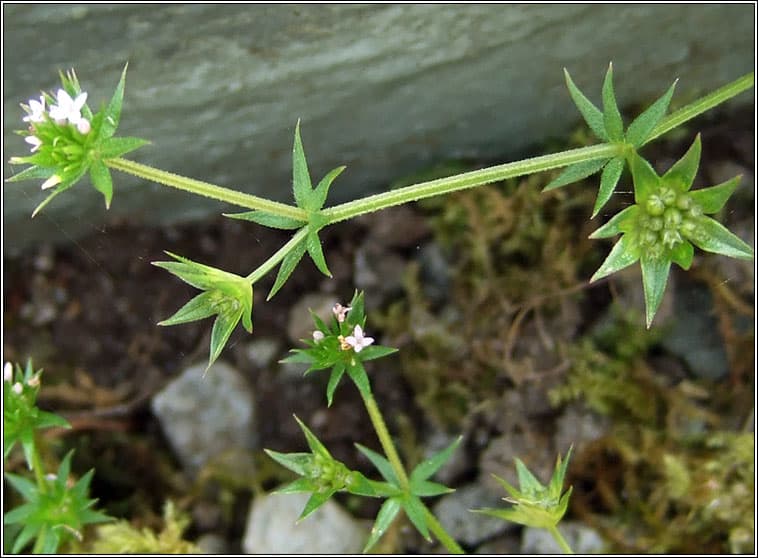
Field Madder (Sherardia arvensis) is a delicate annual herbaceous plant that belongs to the Rubiaceae family, the same family as Cleavers (Galium aparine), Sweet Woodruff (Galium odoratum), and Bedstraw species. Though not technically in the Galium genus, it is closely related and shares a number of visual similarities—enough that it is often mistaken for young Cleavers by novice foragers. However, this plant can be distinguished by its soft, sprawling nature and its charming pinkish-lavender flowers.
While Field Madder is not commonly used for food or medicine, it is worth knowing for identification purposes and for its subtle beauty. Its presence can serve as a reminder of the diversity within the bedstraw family and the importance of careful foraging.
Identification and Physical Characteristics
Field Madder is a low-growing, spreading plant that thrives in disturbed soils, making it a frequent sight in gardens, fields, roadsides, and fallow plots. It is considerably smaller and less robust than Cleavers, but its similar leaf arrangement and growth habit often lead to confusion.
Key features include:
- Leaves: Arranged in whorls of 4 to 6 around the square stems, Field Madder’s leaves are narrow and pointed, similar to Cleavers but much shorter and softer. The plant lacks the tiny hooked hairs found on Cleavers, so it does not cling to clothing or other plants. Its leaf margins are smooth, and the leaves have a somewhat glossier, neater appearance.
- Stems: Thin, weak, and square in cross-section, the stems of Field Madder are smooth and slightly ridged, growing along the ground or gently sprawling among other plants. They do not have the rough or bristly texture that Cleavers is known for.
- Flowers: One of the easiest ways to distinguish Field Madder is by its tiny, four-lobed flowers, which are pink to pale lavender in color. These blossoms are only a few millimeters across but often appear in clusters at the tips of the stems or nestled in leaf whorls. Cleavers, by contrast, bears small white flowers with a more star-like shape.
- Size: Field Madder is much more delicate than Cleavers, typically growing only 4–8 inches tall, forming a fine mat or ground-hugging tangle rather than a clinging or climbing structure.
- Scent: Unlike Cleavers and other Galium species, Field Madder has little to no scent when crushed.
Habitat and Distribution
Field Madder is native to Europe, western Asia, and parts of North Africa but has become widespread across North America and other temperate regions. It thrives in:
- Open, sunny spaces with well-drained soil
- Cultivated fields and gardens
- Road verges and compacted soils
- Waste grounds, parks, and urban greenspaces
Its tendency to appear in disturbed or cultivated ground means it often coexists with early spring greens and other wild edibles—another reason for the common mix-up with Cleavers.
Medicinal and Practical Uses
Unlike its more celebrated cousins in the Galium genus, Field Madder has very limited use in herbal medicine. Historical mentions are sparse, and it has not earned a prominent place in traditional healing practices. That said, some folk uses and minor applications have been recorded:
- Mild Astringent: Like many members of the Rubiaceae family, Field Madder may possess mild astringent properties, but it is far less potent than Cleavers or Sweet Woodruff.
- Dye Plant: The roots of Field Madder contain trace amounts of red pigment similar to the related Rubia tinctorum (true madder), which has historically been used as a source of red dye. However, Field Madder is too small and weak to be of significant use in this regard.
Given its limited potency and lack of modern scientific study, Field Madder is not generally harvested for food or medicine and is best appreciated for its ecological presence and role in biodiversity.
Foraging Considerations
Field Madder should not be foraged for consumption, but it is vital for foragers to learn how to distinguish it from similar species, particularly Cleavers:
- Look for the Flowers: The small pink or lavender flowers are the most reliable visual cue that you’re looking at Field Madder, not Cleavers.
- Check for Clinging Hairs: If the plant doesn’t stick to your fingers or clothes, it’s likely not Cleavers.
- Examine the Leaf Texture: Cleavers’ leaves are rough and bristly, while Field Madder’s are smooth and soft.
Because of its resemblance to Cleavers, Field Madder often serves as a natural “double-check” for foragers—helping sharpen identification skills and avoid misidentification of more potent herbs.
Sherardia arvensis, or Field Madder, may not offer the same range of uses as its cousins in the bedstraw family, but it’s still an important plant to recognize. Its dainty flowers and soft leaves distinguish it from Cleavers, and while it lacks strong medicinal or culinary value, it holds a quiet charm in meadows, gardens, and weedy corners of the world. For foragers, learning to identify Field Madder deepens plant knowledge, reinforces safe foraging practices, and highlights the subtle diversity that exists even within a single plant family.
Safety Concerns
Cleavers is generally safe for consumption but should be used with caution in certain situations:
- Pregnancy and Breastfeeding: Consult a healthcare provider before consuming Cleavers in medicinal amounts.
- Allergies: Those sensitive to plants in the coffee or bedstraw family should test for allergic reactions before consuming.
- Diuretic Effects: Because Cleavers supports kidney function, those with kidney disease or on diuretic medications should use it cautiously.
Wrapping Up
Cleavers (Galium aparine) is an underrated wild edible with a wide range of medicinal, culinary, and even magical applications. Its sticky nature makes it easy to recognize, and its cleansing properties make it a valuable plant for detoxification and healing. Whether steeped into a cleansing tea, used as a natural remedy, or transformed into a coffee substitute, Cleavers is a fantastic addition to any forager’s toolkit. Happy foraging!