Introduction
Honoring Kari and his Kin
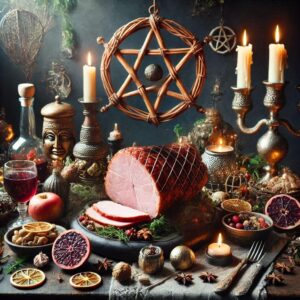
The 7th Night of Yule is a sacred turning point in the Wheel of the Year—a night of deep kinship, warmth, and elemental harmony. In Norse tradition, this night honors Kari, the divine force of wind and breath, whose presence reminds us of resilience and renewal in the heart of winter. As the cold deepens, the hearth becomes a sanctuary, and the feast a ritual of hospitality and gratitude.
This 12-course Winter Feast is more than a meal—it is a spell woven from the gifts of fire, sea, and wind. Each dish is an offering to the spirits of winter, a celebration of abundance, and a blessing for those who gather in circle. Tonight, we share stories, laughter, and flavors that honor the magic of Yule and the bonds that hold us togethe

The History and Cultural Significance of the 7th Night of Yule Winter Feast
The Yule season, rooted in ancient Norse and Germanic traditions, spans twelve nights of ritual and celebration, marking the rebirth of the sun and the turning of the year. Each night carries its own symbolism, honoring different forces and deities that guide the cycle of life and nature. The 7th Night of Yule is traditionally associated with Kari, the divine embodiment of wind and breath—a force of cleansing, renewal, and movement. In the heart of winter, Kari’s presence reminds us that even in stillness, life stirs and transformation begins.
Historically, Yule feasts were more than communal meals—they were sacred acts of hospitality and reciprocity. In pre-Christian Northern Europe, these gatherings honored the spirits of the land, the ancestors, and the gods, weaving blessings into every dish. Food was offered not only to nourish the living but also as a gift to unseen guests: the wights, the ancestors, and the divine powers who ensured survival through the harsh winter months. The hearth became the axis of the world—a place where fire met frost, and where kinship was strengthened against the cold.
The 12-course Winter Feast reflects this ancient rhythm of abundance and gratitude. Each dish symbolizes the harmony of the elements—fire in the warmth of the hearth, sea in the bounty of fish and salt, and wind in the cleansing brightness of herbs and citrus. Sharing such a feast on the 7th Night is a ritual of balance and renewal, a way to honor Kari’s breath as it sweeps through the dark season, carrying away stagnation and inviting clarity for the year ahead. Today, modern pagan circles revive these traditions not only to honor the old gods but to reclaim the sacred art of feasting as a spell of community, resilience, and joy.
The Winter Feast
Begin with the delicate whispers of the sea and herbs, then journey through the hearth’s warmth and winter’s brightness. Each course flows like a rune in a sacred script, guiding us deeper into the heart of Yule.
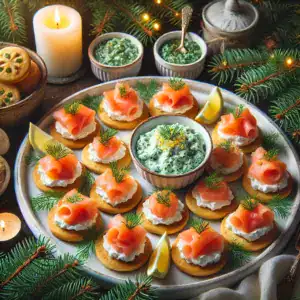
Amuse-Bouche: Smoked Salmon Blinis
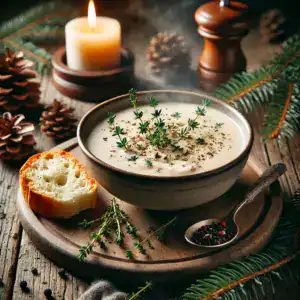
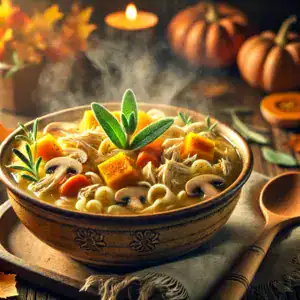
Soup: Winter Hearth Chowder
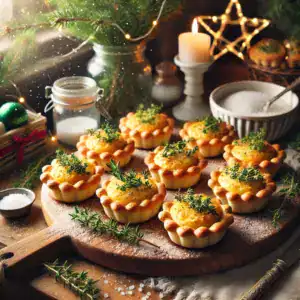
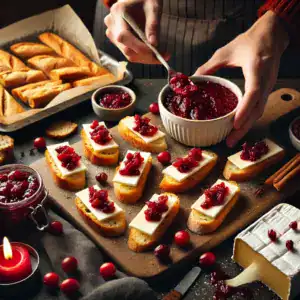
Appetizer: Winter Herb and Sea-Salt Tartlets
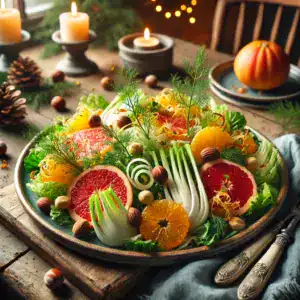
Salad: Winter Citrus and Fennel Salad
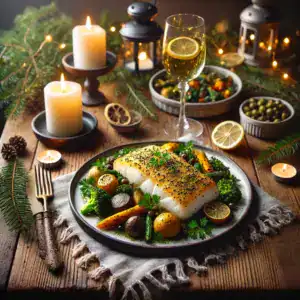
Seafood: Winter Herb-Crusted Cod
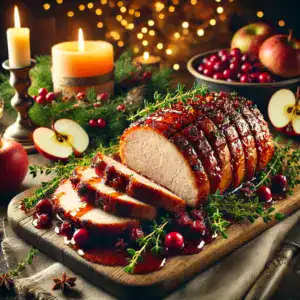
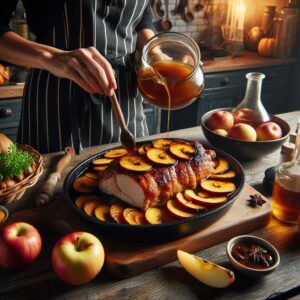
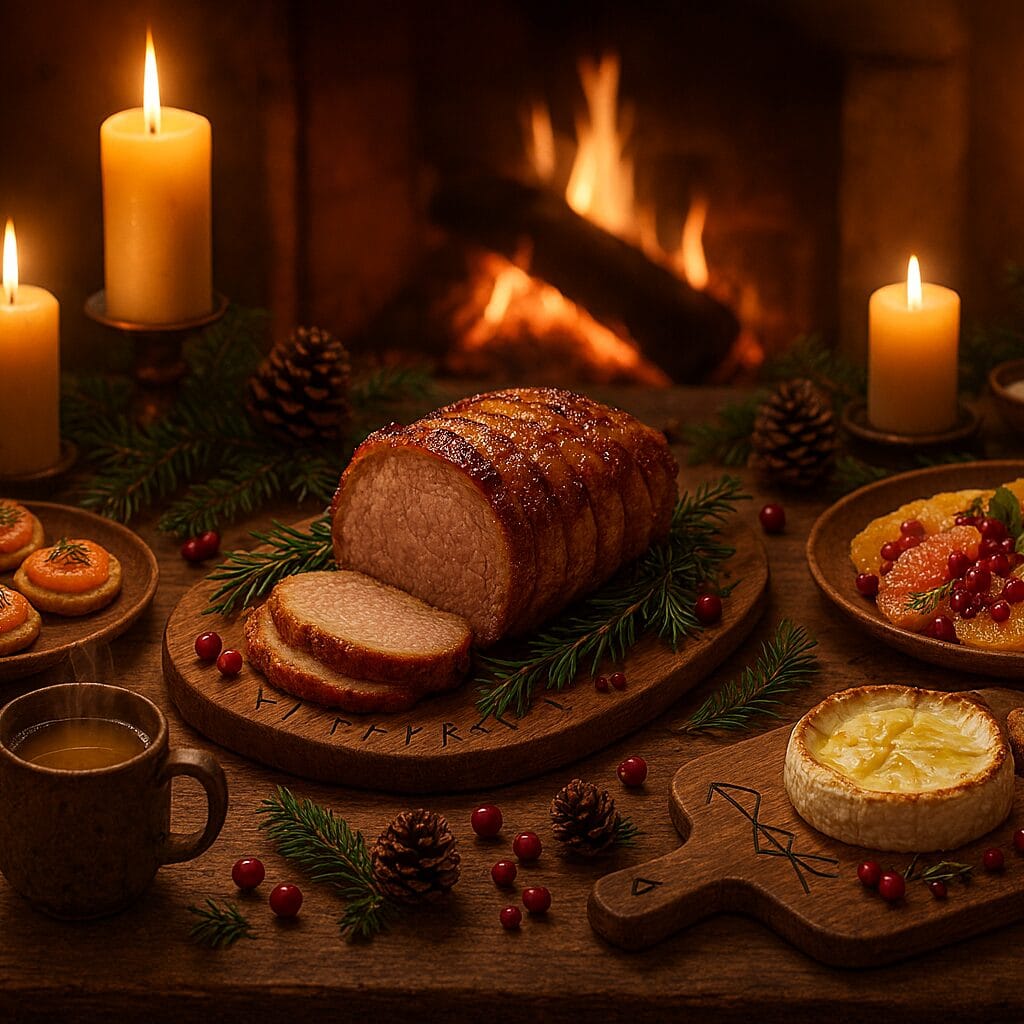
Main Dish: Hearth-Roasted Pork Loin
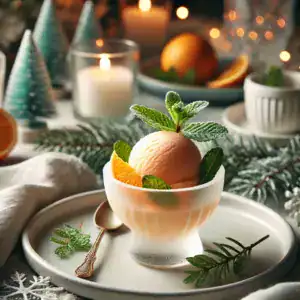
Palate Cleanser: Winter Mint and Citrus Sorbet
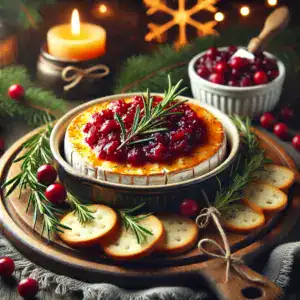
Cheese Course: Winter Baked Camembert
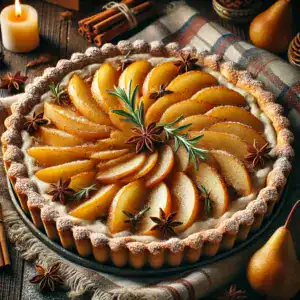
Dessert Course: Spiced Winter Pear and Almond Tart
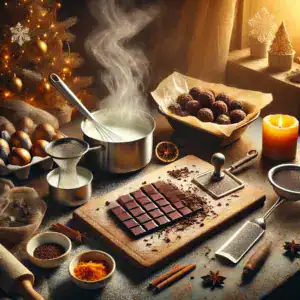
Mignardise: Spiced Winter Chocolate Truffles
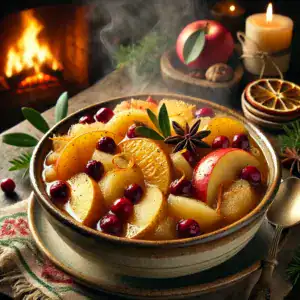
Fruit Course: Spiced Winter Fruit Compote

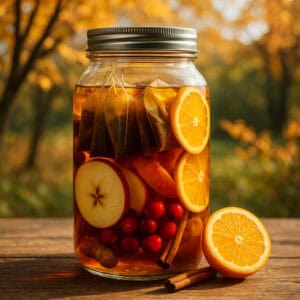
Digestif: Spiced Honey Winter Toddy
Concluding the Winter Feast
As the last sip of toddy warms your spirit, pause and breathe in the magic of this night. The 7th Night of Yule is a time of kinship, resilience, and renewal—a reminder that even in winter’s depths, the hearth burns bright and the circle endures. May Kari’s winds carry your blessings far, may the fire of hospitality glow in your heart, and may the sea’s abundance flow into the year ahead.
Hail the season, hail the kinship, hail the feast. Blessed Yule.