Introduction
Celebrating the Summer Solstice through Color, Crystal, Herb, and Symbol
As the Wheel of the Year turns, we find ourselves at Litha, also known as the Summer Solstice—the longest day and shortest night of the year. This is the sun at its zenith, when life bursts with heat, color, and vitality. Litha is a time of abundance, celebration, and power, when the earth is heavy with growth, and the energies of light, fire, and fertility reach their peak.
To fully align with this potent sabbat, many practitioners work with correspondences—the colors, crystals, herbs, and symbols that resonate with the season’s energy. These correspondences help attune our rituals, altars, and spells to the natural forces around us, allowing for deeper spiritual connection and more intentional magic.
Let’s explore the vibrant web of Litha correspondences and how to incorporate them into your celebration of the solstice sun.

Litha Colors: The Palette of the Sun’s Power
At Litha—the height of the sun’s strength and the apex of the year’s light—we are invited to bathe in a spectrum of vivid, warming, and fertile colors that mirror the natural world in its fullest bloom. Each hue carries a sacred resonance that harmonizes with the energy of the Summer Solstice, offering a way to connect more deeply with the season’s gifts.
These radiant colors don’t just please the eye—they carry symbolic and energetic significance that can amplify your magical workings, altar crafting, ritual attire, and personal intentions.
Gold
Gold is the quintessential color of the sun and divine light. It evokes solar deities, enlightenment, abundance, and clarity of purpose. Gold radiates regal energy and encourages personal empowerment, confidence, and sacred alignment. At Litha, gold is the color of spiritual illumination, bringing a sense of wholeness, achievement, and completion before the Wheel of the Year begins its slow turn toward harvest.
Use gold to:
• Dress a candle with golden glitter or wrap your altar tools in gold ribbon.
• Adorn yourself with gold jewelry to channel solar energy.
• Anoint your body with shimmer oils to embrace your own divine radiance.
Red
Red pulses with vitality and primal life force. It is the color of passion, love, courage, and the blazing hearth fire. In the context of Litha, red is associated with the wild exuberance of the season—its heat, its fertility, and its intensity. It reflects the dance of desire and the sacred union of earth and sky.
Use red to:
• Invite passionate energy into your life—romantic, creative, or spiritual.
• Add crimson fabrics to your altar to represent the fire of transformation.
• Burn red candles to energize rituals of love, lust, and bold intentions.
Yellow
Yellow is the hue of laughter, sunlight, joy, and clarity. It vibrates with the energy of mental stimulation, success, happiness, and optimism. Yellow’s frequency awakens the solar plexus, inspiring confidence, focus, and a sense of purpose.
Use yellow to:
• Decorate your altar with yellow sunflowers, daisies, or marigolds.
• Burn yellow candles to invoke wisdom, focus, or clear communication.
• Carry citrine or wear yellow clothing to uplift your spirit and mood.
Orange
Orange blends the strength of red and the lightness of yellow into a color that is dynamic, creative, and life-affirming. It stirs the sacral chakra, stimulating joy, sensual pleasure, ambition, and emotional vibrancy. Orange is the perfect color for taking bold steps and embracing the pleasures of the body.
Use orange to:
• Celebrate the sweetness of the season with orange-themed foods or drinks.
• Place tangerine-hued candles on your altar to inspire courage and pleasure.
• Add orange ribbons to your hair or garments to embody the playfulness of Litha.
Green
Green is the color of the earth at its most fertile—lush, rich, and teeming with life. At Litha, green represents nature’s peak: the forests are deep, the fields abundant, and life is thriving. It is also the color of healing, balance, renewal, and prosperity.
Use green to:
• Create floral crowns or herbal wreaths using ivy, ferns, and leafy vines.
• Burn green candles to bless gardens, attract abundance, or center your energy.
• Add green altar cloths or offerings to honor earth spirits and fertility deities.
Use in Practice
Let these colors inspire every aspect of your Litha celebration:
- Dress in fiery or floral hues to embody the sun and the earth.
- Adorn your altar with color-coded candles, seasonal flowers, dyed fabric, or colored stones.
- Make color magic intentional by assigning each hue a purpose—set an intention as you light a gold candle for clarity, a red one for passion, or a green one for growth.
- Craft decorations like garlands, paper suns, banners, or flower crowns using the full Litha palette.
- Paint or draw with these colors as a form of meditation or magic-making.
By embracing Litha’s vibrant color correspondences, you weave yourself into the living tapestry of the season—a living flame among the summer fields, shining with purpose, play, and power.
Litha Crystals: Harnessing Solar Energy
The stones associated with Litha shimmer with vibrant solar energy, echoing the radiant power of the sun at its zenith. As the Wheel of the Year turns to the Summer Solstice, these crystals act as mirrors of light—amplifying warmth, joy, courage, and spiritual clarity. They help attune the body and spirit to the peak of life force energy, empowering intention and transformation.
Citrine
Revered as the stone of abundance and happiness, citrine channels the golden vitality of sunlight. Its warm glow is believed to attract wealth, success, and joyful experiences. It resonates with the solar plexus chakra, boosting self-esteem, confidence, and personal power. During Litha, it’s ideal for intention-setting around prosperity, joy, and expansion.
Carnelian
Carnelian pulses with fiery energy, awakening passion and creativity. This bold orange-red crystal is a stone of courage, action, and motivation—aligned with Litha’s themes of vitality and fertility. It is especially useful for stirring the inner fire and strengthening the will to pursue goals. Use carnelian in Litha rituals where bold expression or sensuality is celebrated.
Sunstone
Sunstone is a direct reflection of solar brilliance. Shimmering with golden sparkles, this crystal encourages leadership, self-empowerment, and a joyful heart. It’s a stone of celebration and sovereignty, guiding the wearer toward embracing their inner radiance. During Litha, it can be used to align with solar deities, uplift the spirit, and enhance magical charisma.
Clear Quartz
Often called the “Master Healer,” clear quartz carries the full spectrum of light and amplifies the energy of any other crystal or intention. During Litha, when solar energy is most potent, quartz acts as a prism—focusing and enhancing magical workings. It’s especially powerful when charged in the solstice sun, turning it into a vessel of radiant energy for healing, clarity, and transformation.
Use in Practice:
Crystals can be integrated into Litha rituals in a variety of sacred and practical ways. Place them on your altar to soak in the midsummer energy and serve as focal points during spellwork. Create a crystal grid around a bonfire or sun-drenched space to amplify solar magic. Carry them in a charm pouch or wear them as jewelry to embody the energy of the season throughout the day. For a ritual bath, safely place crystals nearby to invoke light and warmth as you cleanse and recharge.
These stones act not just as tools—but as companions—reminding you of your own luminous nature and the endless vitality available in the season of the sun.
Litha Herbs: Healing and Magical Allies
The herbs of Litha are bursting with aromatic vitality, many of them aligned with the sun’s medicinal and spiritual qualities.
St. John’s Wort
Traditionally harvested at midsummer, this herb is used for protection, warding off negativity, and invoking solar energy.
Lavender
Calming yet potent, lavender aids in relaxation, purification, and spiritual insight during this high-energy time.
Rosemary
A classic sun herb associated with memory, protection, and cleansing—perfect for smoke cleansing or infusing summer oils.
Chamomile
Gentle and sunny, chamomile brings peace, prosperity, and healing, making it ideal for teas or dreamwork at Litha.
Use in Practice
Create herbal bundles to burn as incense, sprinkle them in ritual baths, or steep them in teas to align with Litha’s themes. You can also hang bundles of St. John’s Wort or rosemary over doorways to protect your space.
Litha Symbols: Sacred Imagery of the Solstice
Symbols speak directly to the soul, carrying the energy of myth, memory, and magic. During Litha, the Summer Solstice, the earth is brimming with visual cues that express the fullness of life, the triumph of light, and the sacred rhythms of the natural world. These symbols are not merely decorative—they are living emblems of the season’s power and can become portals for intention, ritual, and reflection.
Sun Wheels
Sun wheels are ancient solar emblems—circular designs that reflect the sun’s eternal path across the sky and the turning Wheel of the Year. Their origins stretch back to Neolithic Europe, often etched into stones or worn as protective charms.
Symbolism: The endless circle represents unity, eternity, and the cyclical nature of time and seasons. At Litha, when the sun reaches its peak, the sun wheel becomes a symbol of divine order, illumination, and spiritual enlightenment.
Use in Practice: Create sun wheels from herbs, vines, or woven straw. Hang them over altars, doors, or in trees during your celebrations. Decorate them with solar colors like gold, red, and orange, and bless them as talismans of protection and vitality.
Bonfires
Fire is the heart of most Litha rites—a blazing expression of the sun’s peak power. Bonfires were lit on hilltops in ancient European traditions to honor the sun and to provide protection, purification, and fertility to the land and people.
Symbolism: Bonfires at Litha are not just celebratory; they are magical tools of transformation. Fire burns away stagnation and fear, and in return offers warmth, light, and the courage to walk into one’s purpose.
Use in Practice: Dance around a fire, leap over it (safely) for luck, or offer herbs and intentions to the flames. Even a small fire bowl or candle can serve as a sacred flame in your solstice work, representing the inner fire you tend all year long.
Honeybees
Honeybees, the golden workers of nature, are deeply sacred at Litha. Revered by ancient cultures for their role in pollination and their golden nectar, bees symbolize harmony, diligence, and the interconnectedness of all life.
Symbolism: Bees remind us of the power of collaboration, sacred service, and creating sweetness in life. Their hives represent community, fertility, and the rewards of sustained effort.
Use in Practice: Offer honey at your altar as a libation to solar deities or the spirit of summer. Meditate on the hive as a symbol of your own sacred work. Use beeswax candles to align with their energy in ritual or spellwork.
Oak Leaves
The mighty oak tree has long been associated with strength, endurance, and wisdom. At Litha, the Oak King—one of the two seasonal rulers in Wiccan mythology—is at the height of his power before he is symbolically defeated by the Holly King as the days begin to wane.
Symbolism: Oak leaves represent triumph, protection, and the spiritual strength gained through experience. They are a reminder that even at the peak of life and power, the cycle continues, and humility must walk with strength.
Use in Practice: Collect fallen oak leaves or acorns and place them on your altar. Create wreaths or crowns from oak branches and wear them during ritual to invoke the Oak King’s energy. Speak prayers for resilience, leadership, and growth under the oak’s gaze.
Sunflowers
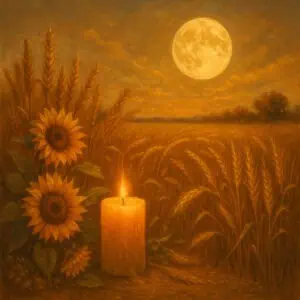
Sunflowers are natural solar emblems, turning their faces toward the sun and following its path across the sky. They bloom at midsummer, offering a striking visual affirmation of Litha’s themes.
Symbolism: Sunflowers symbolize adoration, joy, loyalty, and divine light. They are living mirrors of the sun, embodying solar energy in both appearance and function. Their seeds represent potential and the abundance still to come in the harvest seasons.
Use in Practice: Plant sunflowers as a ritual act of devotion and hope. Place them on your altar or give them as offerings. Scatter their seeds in sacred places, or share them with friends and family as blessings for growth and joy.
Use in Practice
Litha’s symbols invite you to co-create with nature and spirit. You can:
- Dance around a bonfire to honor transformation and vitality.
- Craft sun wheels with friends or children to decorate your home or altar.
- Offer honey and sunflowers in gratitude to the spirits of summer.
- Wear oak leaf crowns to connect with wisdom and strength.
- Use beeswax candles in meditation, focusing on what you wish to manifest.
Let these symbols guide you through your solstice celebrations, reminding you that you are a living part of the Wheel of the Year. At Litha, the world is radiant with life—step boldly into that light, and let it awaken the sacred within.
Bringing It All Together: A Ritual of Light and Gratitude
To fully immerse yourself in the correspondences of Litha:
- Dress in vibrant solar colors.
- Adorn your altar with crystals, herbs, and flowers.
- Light candles or a fire to honor the sun.
- Offer gratitude for the abundance you’ve received.
- Dance, feast, and bask in the warmth of community or solitude.
Litha invites us to pause at the peak of the sun’s journey, to honor the light we’ve cultivated, and to prepare for the gentle descent into the second half of the year. By working with the correspondences of this sabbat, we align ourselves with the heart of the earth and the eternal rhythm of the sun.
Conclusion
As the sun stands at its zenith and the earth reaches the peak of her power, Litha offers us a moment to pause, to bask in light, and to honor the forces that sustain and inspire life. Through the vivid colors, radiant crystals, aromatic herbs, and sacred symbols of this sabbat, we are reminded of our deep-rooted connection to the natural world and the cyclical rhythms that guide us. Each correspondence—whether a sunflower on your altar or a sunstone in your palm—becomes a thread in the tapestry of midsummer magic. Let these vibrant elements infuse your celebrations with meaning, presence, and joy, and may they empower you to carry the warmth of the solstice sun into every corner of your life.