Introduction
The Eternal Dance of Death and Rebirth
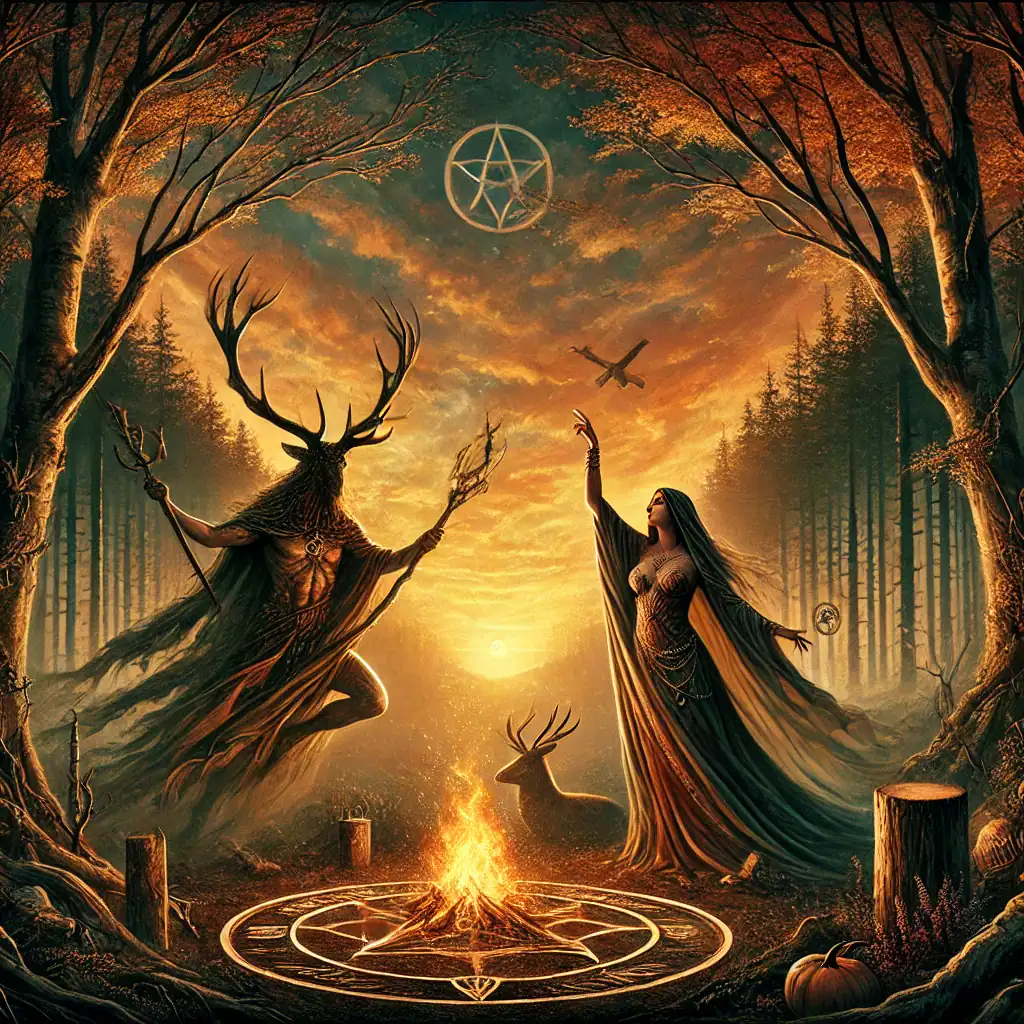
In Wiccan and neo-Pagan traditions, the festival of Samhain holds profound significance, marking the end of the harvest season and the beginning of winter’s dark descent. It is a time when the veil between the worlds of the living and the dead is at its thinnest, making it an ideal occasion to honor the cycles of life, death, and rebirth. Central to these traditions is the myth of the Goddess and the Horned God—a sacred story that reflects the natural rhythms of the earth and the eternal dance between death and renewal. During Samhain, this myth serves as a powerful reminder that death is not the end but a necessary part of existence, making way for rebirth and new beginnings.

The Death of the Horned God
As the festival of Samhain approaches, the cycle of the year draws to a close, and the Horned God—the embodiment of nature’s life force and wild vitality—prepares for his sacred sacrifice. The Horned God holds a central role in Wiccan and neo-Pagan traditions, where he represents the ever-changing seasons, the wildness of nature, and the energy that drives growth and fertility in the natural world. Throughout the year, in his role as the Green Man and the God of the Harvest, the Horned God has presided over the abundance of the earth, nurturing the fields, forests, and all living beings with his strength and energy. Under his care, the land has flourished, yielding crops, supporting the creatures of the wild, and sustaining the rhythm of life through the spring and summer.
Yet, as the wheel of the year turns toward Samhain, a shift begins. The vibrancy of the natural world fades as the season of harvest draws to a close. The leaves fall from the trees, the crops are gathered, and the animals retreat, storing food and conserving energy to survive the barren winter ahead. The warmth of summer gives way to the cold, and the Horned God, having fulfilled his role as the life-giver, prepares to die. His time as the provider has come to an end, and now he must relinquish his life, allowing the earth to enter its resting phase.
In Wiccan tradition, the death of the Horned God is not a tragedy or a loss to be mourned; rather, it is an act of profound purpose and sacrifice. The Horned God’s death is a necessary part of the cycle of life, death, and rebirth. Just as the crops must be harvested and the fields cleared to prepare for the next growing season, so too must the Horned God offer himself, giving his life force back to the earth so that life can flourish once again in the future. His death is not a final end, but part of the eternal cycle that sustains the natural world. As the God of the Wild and the Harvest, he understands that sacrifice is required to maintain balance, and he willingly offers himself, knowing that from his death will come the promise of renewal.
The Horned God’s death occurs at Samhain, the most liminal time of the year, when the veil between the worlds of the living and the dead is at its thinnest. His descent into the underworld marks the transition into the dark half of the year, when the earth lies dormant, and life slows to a near standstill. Yet, his death also holds the seed of his rebirth. Much like the sun, which sets each night only to rise again in the morning, the Horned God will not remain in the underworld forever. His spirit will rest, gathering strength, and at Yule—the Winter Solstice—he will rise once more. The Winter Solstice marks the rebirth of the sun, when the longest night gives way to the return of light. On this sacred night, the Horned God will be reborn, and his energy will return to the earth, preparing it for the eventual renewal of spring.
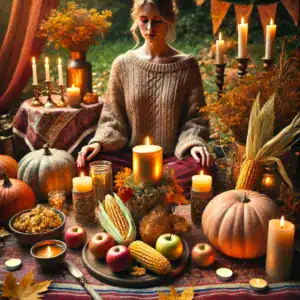
The symbolism of the Horned God’s death is central to Samhain rituals, where his sacrifice is honored and celebrated. Often, this is represented through the lighting of fires or candles—flames that symbolize both the extinguishing of life and the spark of new beginnings. As the fires burn, they remind practitioners that death is not an end but a necessary part of the cycle of existence. Through the act of lighting a fire, participants reflect on the transformative power of endings and the importance of sacrifice in making way for the new. The Horned God’s death becomes a metaphor for the changes we all face in our lives—the letting go of what is no longer needed, the acceptance of transition, and the trust that from these endings, something new and vital will emerge.
Samhain is a time to confront the personal sacrifices we have made throughout the year. Practitioners may use this time to reflect on the challenges, losses, or transitions they have experienced, acknowledging the necessity of releasing what no longer serves them. This might include letting go of old habits, emotional burdens, or aspects of their lives that have run their course. The Horned God’s death becomes a powerful symbol of this process, reminding us that while endings can be difficult, they are also the gateway to renewal and transformation.
In many Samhain rituals, practitioners will symbolically honor the Horned God’s sacrifice by offering personal items or written reflections into the fire. These offerings represent what they are willing to release, allowing the flames to carry away the old and make space for the new. Just as the Horned God gives his life to ensure the continued vitality of the earth, participants offer up their own sacrifices, trusting that the cycle of life will bring them new growth and opportunities in time.
This deep connection between the Horned God’s death and the turning of the seasons reflects a profound spiritual truth that resonates throughout Wiccan and Pagan traditions: life, death, and rebirth are not separate events but interwoven stages of an eternal cycle. The Horned God’s journey through death and rebirth serves as a reminder that nothing is ever truly lost. As the earth enters its period of dormancy, we are called to honor the rhythms of nature, trusting that even in the darkest moments, the light of renewal is always on the horizon.
The Goddess as the Crone
As the Horned God descends into the underworld at Samhain, the Goddess shifts into her most ancient and powerful aspect—that of the Crone. In Wiccan tradition, the Goddess is the eternal force that embodies all stages of life: she is the Maiden, symbolizing youth and new beginnings; the Mother, representing fertility, growth, and nurturing; and the Crone, the wise and knowing figure who presides over death, endings, and transformation. At Samhain, the Goddess fully embraces her Crone aspect, embodying the deep wisdom that comes with age and the acceptance of life’s natural cycles.
In her role as the Crone, the Goddess is not diminished or weakened by the passage of time; rather, she is at the height of her spiritual and mystical power. She carries within her the accumulated knowledge of all her past experiences as Maiden and Mother, and she understands the sacred dance of life, death, and rebirth. Samhain is the time when her wisdom is most needed, as it marks the turning point between the seasons of growth and the long, dark descent into winter. As the Crone, the Goddess offers her profound understanding of the cycles of nature, and she helps to guide her followers through the inevitable transitions they must face in their own lives.
At Samhain, the Crone mourns the passing of the Horned God, recognizing the depth of his sacrifice as he relinquishes his life force to the earth. Yet her mourning is not one of grief or despair; rather, it is a quiet, reverent acknowledgment of the necessary role that death plays in the continuation of life. She mourns with wisdom, knowing that the Horned God’s death is part of the sacred cycle that ensures the earth will be reborn in time. Through her connection to the natural world, the Crone sees the broader picture—she knows that death is not the end, but a transition, an essential part of the eternal dance of life. This acceptance of death as part of life is a central theme of Samhain, and the Crone’s wisdom helps practitioners navigate their own understanding of loss, change, and renewal.
As the goddess of both life and death, the Crone oversees this sacred transition, guiding souls through the underworld and preparing the earth for the eventual rebirth that will occur at Yule, when the sun returns and the Horned God is reborn. She is the guardian of those who pass into the next life, holding the mysteries of the afterlife within her, and she helps facilitate the transformation that follows death. This dual role—overseeing both death and rebirth—gives the Crone her power and makes her an essential figure during Samhain. She is the keeper of ancient wisdom, the one who understands that without death, there can be no new life, and that endings always carry the seed of a new beginning.
The Crone’s wisdom is not just theoretical; it is deeply practical and applicable to the lives of those who honor her. She teaches that life is a series of cycles, each with its own rhythm, and that resisting change is to resist the very flow of existence. The Crone’s lessons are about embracing transformation, even when it is difficult or painful. She reminds us that death—whether it be the literal death of a loved one, the end of a relationship, or the closure of a chapter in our lives—is not something to be feared, but something to be faced with courage and acceptance. Her guidance is invaluable as we confront our own personal transformations, helping us to release what no longer serves us and prepare for the rebirth that will inevitably come.
In Samhain rituals, the Goddess as the Crone is honored for her role as the bringer of wisdom and the guardian of the dead. Practitioners may invoke her presence to help them navigate their own personal transitions, asking for her strength as they confront the challenges of letting go. These rituals often involve offerings made to the Crone—small gifts such as food, herbs, or written reflections—placed on altars or left in nature to honor her wisdom and her connection to the cycles of life. Some may also offer prayers or meditations, seeking her guidance in embracing the changes they are facing and finding the wisdom to move forward with grace.
The Crone’s energy during Samhain is particularly powerful for those who are undergoing periods of transformation or who are mourning a loss. She offers the strength to face the darkness, knowing that within that darkness lies the potential for new growth. Her presence reassures practitioners that while endings are inevitable, they are not to be feared, for they are always followed by renewal. She encourages us to trust in the cycle of life and to embrace the changes we must undergo in order to grow.
In Wiccan tradition, the Crone is not merely a symbol of old age or death; she is the embodiment of the deeper wisdom that can only come through experience. She teaches that all things must come to an end, but that each ending is part of a larger, continuous cycle. Her power lies in her ability to hold space for both life and death, for both joy and sorrow, and to help us navigate the spaces in between. As the keeper of secrets and the guide through the mysteries of life and death, the Crone reminds us that nothing in this world is permanent, but that through embracing change, we can find strength, wisdom, and peace.
Through her role at Samhain, the Crone teaches us the most fundamental lessons of life: that death is not to be feared, that endings are natural, and that from the darkness of winter, the light of renewal will always emerge. The Goddess, in her Crone aspect, stands as a reminder that we too are part of this eternal cycle, and that by accepting our place within it, we can find the wisdom to navigate the challenges of life with grace and understanding. Her presence during Samhain encourages us to honor the past, release what no longer serves us, and trust in the promise of rebirth, just as she oversees the passage of the Horned God and the turning of the wheel of the year.
The Eternal Dance of Death and Rebirth
In Wiccan and neo-Pagan traditions, the relationship between the Goddess and the Horned God encapsulates the cyclical nature of existence—the eternal dance of life, death, and rebirth. They are not separate forces but complementary aspects of the same universal process, bound together in an unbreakable unity. Together, they embody the rhythms that govern not only the natural world but also the spiritual journey of every individual. This dance is at the heart of Samhain, when the Horned God dies, only to be reborn at Yule, and the Goddess, in her aspect as the Crone, ensures that this cycle is upheld, guiding the transition with wisdom and reverence.
The Horned God’s death at Samhain is not a final goodbye but rather a passage into the underworld, where his spirit rests and regenerates, gathering strength for his inevitable rebirth at Yule, the Winter Solstice. His journey mirrors the seasonal changes that we witness each year—the earth’s retreat into stillness during winter, only to emerge full of life with the arrival of spring. The Goddess, embodying both life and death, watches over this process, ensuring that the balance between these forces is maintained. As the crone, she knows that death is an essential part of the cycle, a phase that nourishes the ground for new life to take root and flourish.
This eternal dance between the Goddess and the Horned God is reflected everywhere in nature. The seasons follow a predictable yet awe-inspiring cycle of growth, decay, and renewal. The vibrant bloom of summer gives way to autumn’s quiet surrender, as trees shed their leaves and the landscape retreats into itself. The earth, once bursting with life, now rests beneath the cold of winter, seemingly barren. Yet, within this stillness, life is simply waiting, gathering strength in the same way that the Horned God’s spirit regenerates in the underworld. Just as the Horned God will rise again at Yule, so too will the sun return after the longest night of the year, slowly warming the land and awakening new growth. This rhythm reminds us that death is not the end, but a transition—a necessary passage that gives way to new beginnings.
In Wiccan belief, this truth is reflected in every corner of the natural world. The decaying leaves of autumn, which return to the soil, nourish the earth, creating fertile ground for the rebirth of life in the spring. The hibernating animals, who retreat into sleep during the harsh winter months, emerge renewed and energized when the warmer days return. Even the ebb and flow of the tides, the phases of the moon, and the growth cycles of plants follow this same pattern of death and renewal. Nature’s inherent cycles are constant reminders that death is not to be feared but embraced as a part of life’s larger journey.
Samhain, as the festival marking the end of the harvest and the beginning of winter, is the sacred time when this eternal dance is most apparent. It is a moment to honor the death of the Horned God and reflect on the cycles of nature and our own lives. In Samhain rituals, this dance between death and rebirth is often enacted through symbolic acts of release and renewal. Practitioners may write down old habits, relationships, or patterns that no longer serve them and symbolically release them through fire, water, or other ritual acts. This mirrors the Horned God’s sacrifice, allowing the practitioner to let go of what is no longer needed, clearing the way for personal transformation and new growth. These rituals are not merely acts of mourning or loss but are filled with the promise of renewal, just as the Horned God’s death nourishes the earth for the next cycle of life.
In these rituals, the energy of the Horned God’s death is not mournful; it is celebratory, filled with understanding that his passing is necessary for life to continue. The fire that symbolizes his death is also the spark of his eventual return. Practitioners embrace this cycle, recognizing that their own lives reflect the same rhythm. Just as nature must shed what is no longer useful—be it leaves, old growth, or dying energy—so too must we release the things that weigh us down. Whether it is a limiting belief, an outdated way of living, or even a relationship that has run its course, these personal sacrifices are made in the understanding that they pave the way for renewal, growth, and greater clarity in the future.
The Goddess, in her Crone aspect, is an integral part of these rituals. She oversees this period of transformation, guiding the Horned God’s passage into the underworld and tending to the cycles of life and death. Her wisdom reminds us that even in the darkest times, when all seems lost, the potential for new life is always present. She holds the knowledge that from every ending comes a new beginning, and she offers her guidance to those who seek to embrace the changes in their own lives. Practitioners often call upon her to provide the strength and wisdom needed to let go of the past and prepare for the rebirth that is to come.
In this way, the rituals of Samhain are both deeply personal and cosmic. They reflect the individual’s journey through transformation—the release of old patterns, the mourning of losses, and the acceptance of change—but they also mirror the larger, universal cycles of existence. The Horned God and the Goddess show us that life, death, and rebirth are not isolated events but part of a continuous process that sustains the natural world. Through their sacred dance, we are reminded that change is inevitable, that death is not the end, and that every moment of darkness carries within it the seed of new beginnings.
Ultimately, the eternal dance of the Goddess and the Horned God offers a powerful spiritual lesson: that the cycles of life and death are not something to be feared, but to be embraced with reverence and understanding. Their story teaches us that, just as the seasons turn, so too must we let go of the old in order to make room for the new. The Horned God’s death and eventual rebirth at Yule are reflections of the constant renewal that takes place within and around us, and the Goddess, in her infinite wisdom, ensures that this cycle continues unbroken. Through their eternal dance, we learn to trust in the rhythms of life, death, and rebirth, knowing that each ending is simply the beginning of something new.
Embracing the Cycle
The myth of the Goddess and the Horned God offers a profound spiritual lesson that challenges modern society’s often fearful view of death. In many contemporary cultures, death is perceived as the ultimate end—something to be delayed, feared, or avoided. It is shrouded in mystery and grief, with little recognition of the larger cycle it belongs to. However, in Wiccan and neo-Pagan traditions, death is not an ending but a necessary part of life’s continual flow. The death of the Horned God at Samhain serves as a reminder that endings, while inevitable, are not final. They are merely transitions, essential steps within the greater process of rebirth and renewal.
The Horned God’s sacrifice, in which he willingly gives his life for the good of the earth and the continued vitality of the natural world, embodies this spiritual truth. His death is not an act of despair, but of deep purpose and understanding. He knows that by giving himself to the earth, he is nourishing the land, ensuring the return of life in the future. The Goddess, in her Crone aspect, mourns him with reverence, but she does so with the wisdom that this is how the cycle must unfold. The Horned God’s death is not the end of his story—he will rise again at Yule, reborn with the returning light of the sun, just as spring will eventually come to the cold, dark earth. His journey reflects the eternal truth that life and death are intimately connected, two parts of the same natural cycle.
This understanding of death as a gateway to rebirth is central to Wiccan belief and practice. Samhain, as the festival that marks the end of the harvest season and the beginning of winter, provides a time to confront this truth directly. It is a time for honoring those who have passed and reflecting on the sacrifices that have been made—both in the natural world and in our own lives. Just as the Horned God gives his life for the earth, we too experience cycles of letting go, of death in its many forms. Whether it’s the loss of loved ones, the end of relationships, or the closing of personal chapters, Samhain invites us to embrace these endings, knowing that they are part of the process that leads to new beginnings.
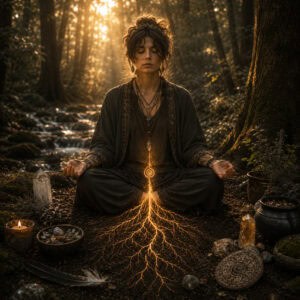
In Wiccan rituals, death is honored not as something to be feared, but as something to be understood and accepted. The act of releasing what no longer serves—be it emotional baggage, unhealthy habits, or outdated ways of thinking—mirrors the Horned God’s sacrifice. These acts of release prepare the way for personal transformation, just as his death prepares the earth for its eventual rebirth. Practitioners often use divination, meditation, and ritual to gain insight into the transitions they are facing, seeking guidance from the Goddess and the spirits of the dead. They align themselves with the natural cycles of life, death, and rebirth, trusting in the wisdom of the universe to carry them through periods of darkness and uncertainty.
Divination practices during Samhain, such as scrying, tarot readings, or rune casting, are often used to gain clarity about the path ahead. Just as the veil between the worlds is thin, making it easier to connect with ancestors and spirit guides, this time also allows for deep introspection. Practitioners look to the symbols and messages they receive during Samhain for guidance on how to navigate their own transformations. What do they need to release? What lessons have they learned from the past year, and how can they use that wisdom to move forward? By confronting the truths that arise during Samhain, they prepare for the rebirth that awaits them as the Wheel of the Year turns toward Yule and beyond.
In this way, the Goddess and the Horned God serve as guides through the cycles of life. The Goddess, ever eternal, oversees the transitions between birth, death, and rebirth. She is there in her aspect as the Maiden when new life begins, in her aspect as the Mother when life is nurtured and grown, and in her aspect as the Crone when it is time to let go. At Samhain, the Crone offers her wisdom and protection, helping those who celebrate to navigate their own transformations with grace and understanding. She reminds us that while death is a necessary part of life, it is not the end of the story. The Horned God, even in death, is a symbol of hope, for his rebirth at Yule promises that new life is always on the horizon.
As the Wheel of the Year turns once more, Samhain invites us to reflect on these cycles and what they mean for our own lives. The myth of the Goddess and the Horned God reminds us that life and death are not opposites—they are two sides of the same coin, inseparable from one another. The same energy that drives the vitality of life also governs the process of death and renewal. Every ending carries within it the seed of a new beginning, and every death is part of the cycle that brings about rebirth.
This eternal dance between life, death, and rebirth is not limited to the natural world; it is a metaphor for our own experiences as well. We too go through periods of growth, decay, and renewal, shedding old identities and ways of being so that new ones can take their place. Samhain is the perfect time to honor these personal transitions, to reflect on the cycles we have moved through and prepare for the ones that lie ahead. It is a time to release what no longer serves, to mourn what has passed, and to trust that, like the Horned God, we will rise again with renewed strength and clarity.
Ultimately, the myth of the Goddess and the Horned God offers a timeless message: that death is not an ending, but a transition. It is part of the greater cycle of life, a necessary step in the process of rebirth. By embracing this cycle, we free ourselves from the fear of loss and change. Instead, we learn to see death as a gateway, a passage through which new life emerges. As we honor the Goddess and the Horned God at Samhain, we align ourselves with the natural rhythms of the earth, trusting in the eternal cycle of life, death, and rebirth that governs all existence.
Conclusion: The Eternal Wisdom of the Goddess and the Horned God
The myth of the Goddess and the Horned God offers a powerful reflection on the cycles of life, death, and rebirth that govern not only the natural world but our personal journeys as well. In Wiccan and neo-Pagan traditions, Samhain stands as a sacred moment to confront these cycles, honoring the Horned God’s willing sacrifice and the Goddess’s eternal wisdom. Their story reminds us that death is not to be feared—it is a passage, a necessary end that gives rise to new beginnings. As the Horned God dies at Samhain and the Goddess takes on her Crone aspect, we are invited to release what no longer serves us, to let go of the old, and to trust in the rebirth that awaits at Yule.
In this eternal dance, the Goddess and the Horned God reveal that life’s transitions are not solitary events but part of a greater cosmic rhythm. The darkness of winter is not an end but a time of rest and regeneration, preparing the way for spring’s renewal. As the Wheel of the Year turns, we are reminded that endings are never truly final, for within every death lies the seed of rebirth. This profound truth offers not only comfort but empowerment, helping us embrace change with grace, knowing that the Goddess will always guide us through, and the Horned God will rise again.
Through their sacred myth, we are reminded that life and death, creation and destruction, are not opposing forces but are interwoven aspects of the same divine cycle. By honoring their story at Samhain, we align ourselves with the ancient rhythms of the universe, trusting in the balance of life and the promise of renewal that follows every dark night. In the end, the Goddess and the Horned God teach us that the cycle of existence is eternal, and within that cycle, we can always find hope, transformation, and rebirth.