Introduction
A bright, bold mushroom that mimics the taste and texture of chicken, offering culinary and magical delights in late summer and fall.
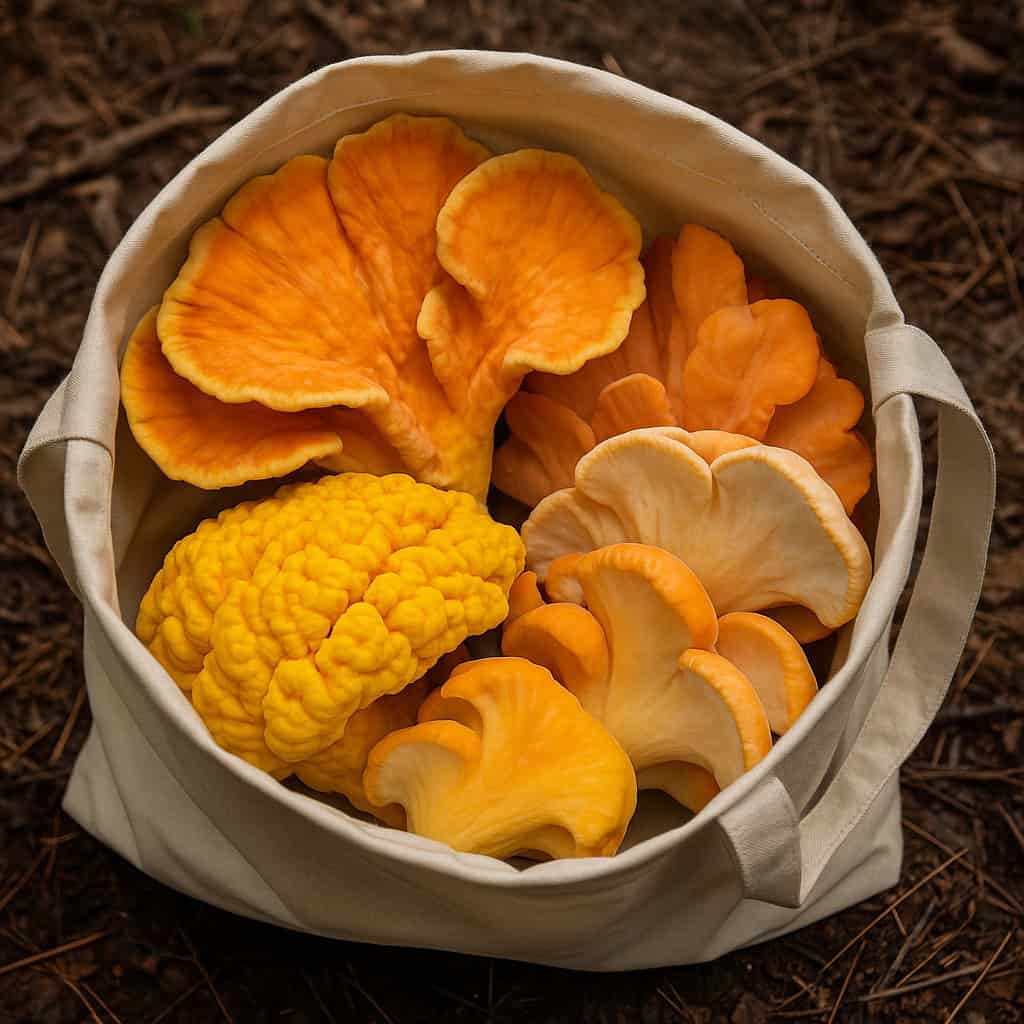
Chicken of the Woods is a showstopper in the wild mushroom world, boasting bright orange to yellow shelves that seem to glow against the forest backdrop. Revered by foragers for its remarkable flavor and meaty texture, this fungus earns its name by convincingly standing in for chicken in a wide variety of dishes. In this guide, we’ll explore everything you need to know about identifying, foraging, and safely enjoying this wild mushroom, as well as its place in traditional medicine and magical practice.

What Is It?
Chicken of the Woods is a polypore mushroom belonging to the Laetiporus genus. Most commonly, foragers encounter Laetiporus sulphureus, though several closely related species share similar traits and edibility. These mushrooms are known for their shelf-like formations, which grow on trees—sometimes singly, often in large, overlapping clusters.
What makes Chicken of the Woods so special is its remarkable texture. When cooked, it has a firm, fibrous consistency remarkably similar to poultry. It absorbs flavors well, making it an exceptional meat substitute for vegetarians and vegans, or anyone seeking a sustainable foraged protein.
Variants
Several species within the Laetiporus genus are referred to as Chicken of the Woods. Here are the most common ones:
- Laetiporus sulphureus: The classic species with bright orange caps and vivid sulfur-yellow pores underneath. Found growing on hardwoods, particularly oak.
- Laetiporus cincinnatus: Paler, often growing in rosettes at the base of trees rather than shelves on trunks. Its white pores and more delicate flavor make it a favorite for culinary use.
- Laetiporus conifericola: Found on conifers in the western United States. While edible for many, some people report digestive upset with this species, so test in small amounts.
- Laetiporus gilbertsonii: A West Coast variety growing on eucalyptus, oak, or other trees. Similar in appearance and edibility to L. sulphureus.
How to Identify Chicken of the Woods and Its Variants
Key traits for identification include:
- Color: Vivid orange to golden-yellow caps. Underside is pore-bearing, not gilled, with colors ranging from sulfur-yellow to white depending on species.
- Shape: Grows in fan- or shelf-like clusters. The edges are usually wavy, soft, and slightly fuzzy when young.
- Texture: When fresh, it feels moist and supple. Older specimens dry out, become tough, or even crumbly.
- Growth Habitat: Found on living or dead trees—often oak, chestnut, and beech in the east; eucalyptus or conifers in the west.
Never eat a mushroom unless you are 100% confident in your identification. Look-alikes are rare for Chicken of the Woods, but always double-check your find with multiple sources or an experienced forager.
Habits
Chicken of the Woods typically fruits from late summer into fall, though in mild climates it can appear as early as mid-summer. It tends to favor:
- Dead or dying trees: Especially hardwoods like oak or beech.
- Warm, humid conditions: Rain followed by heat often triggers a fruiting.
- Recurring spots: Chicken of the Woods may return to the same tree for several years, making it worth noting past finds.
How to Properly Forage Chicken of the Woods
- Timing Is Key: Look for young, tender shelves with vivid coloration. Older specimens become woody and less palatable.
- Cut, Don’t Rip: Use a sharp knife to cut the mushroom close to the tree, leaving some behind to allow regrowth.
- Inspect Your Harvest: Avoid mushrooms that are overly dry, bug-eaten, or rubbery. Young specimens are soft, moist, and bright.
- Clean Carefully: Use a damp cloth or soft brush to remove dirt and debris. Avoid soaking, as they can absorb water quickly.
- Store Properly: Keep fresh in the fridge for up to a week. For long-term storage, slice and freeze or sauté and freeze.
Magical Uses
Chicken of the Woods may not be common in historical witchcraft, but modern practitioners have found symbolic and energetic uses:
- Elemental Correspondence: Aligned with Earth and Fire for its grounded, hearty energy and vibrant coloring.
- Prosperity and Protection: Gathered respectfully, it can be used in spells or charms for abundance, nourishment, and shelter.
- Kitchen Magic: Its role as a meat substitute connects it to transformation, adaptability, and balance in magical meals.
Medicinal Uses
Though less studied than other medicinal fungi, Chicken of the Woods has a few noteworthy qualities:
- Antimicrobial Compounds: Some preliminary research suggests that Laetiporus species contain antifungal and antibacterial properties.
- Rich in Antioxidants: These help reduce oxidative stress and support general health.
- Digestive Support: As a fibrous food, it can support gut health, though only when harvested young and cooked thoroughly.
Culinary Uses
- “Chicken” Substitute: Excellent sautéed, grilled, or fried. Try it in tacos, curries, sandwiches, or stir-fries.
- Pairings: Pairs well with garlic, thyme, lemon, and cream sauces. Avoid overpowering spices that can mask its flavor.
- Preserving: It can be frozen (raw or sautéed), dried, or pickled. Sauté before freezing for best results.
Always cook Chicken of the Woods thoroughly, as it can cause digestive upset if undercooked or too old.
Laetiporus sulphureus (Eastern or “True” Chicken of the Woods)
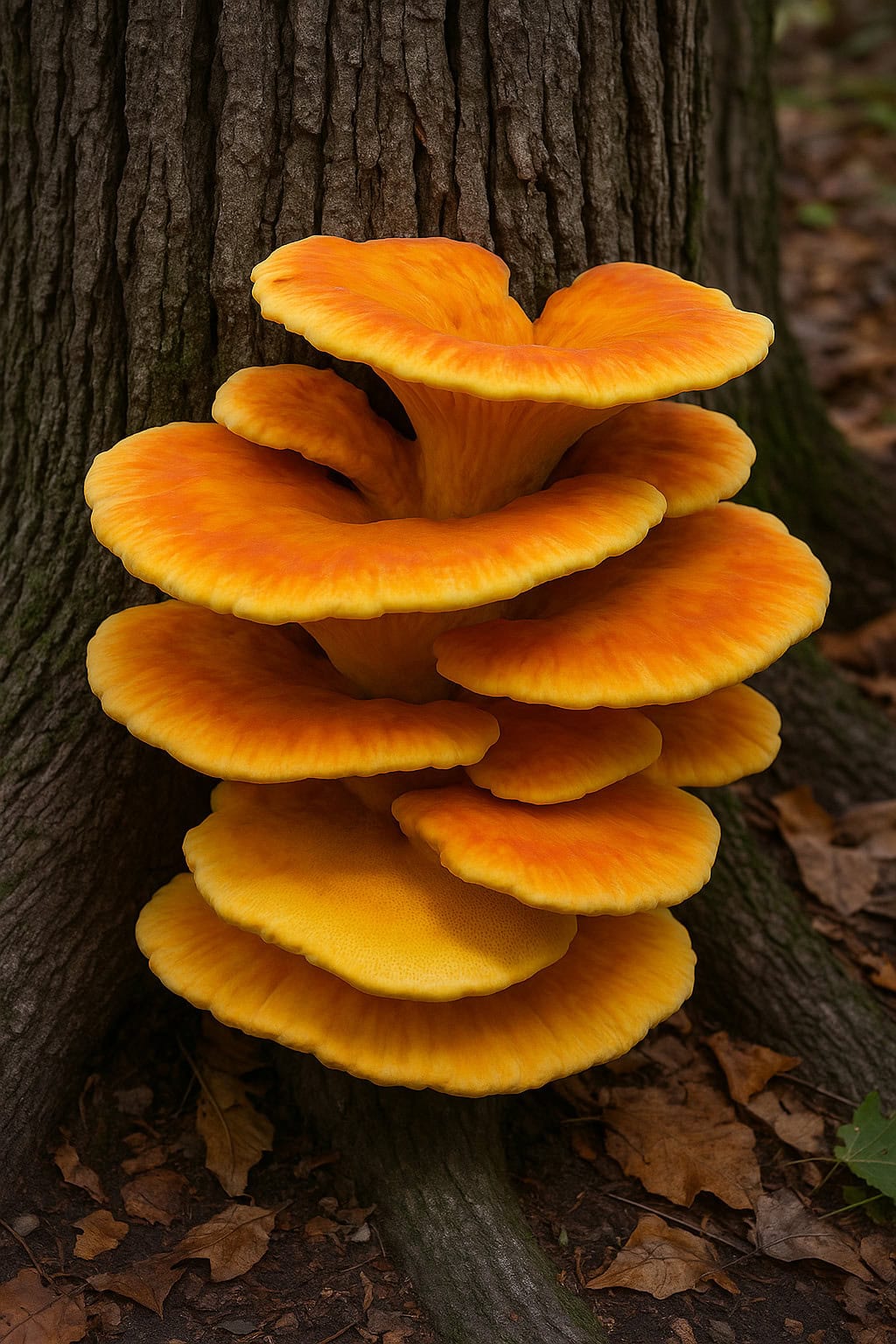
Laetiporus sulphureus is the quintessential Chicken of the Woods species—the one most foragers are referring to when they mention this bright, bold fungus. It is widely distributed across eastern North America and parts of Europe, and is renowned for both its visual vibrancy and culinary appeal. This species is often considered the safest and tastiest of the Laetiporus genus.
Color and Form
The upper surface of L. sulphureus ranges in color from deep orange to a bright golden-yellow, often with a paler, sun-bleached edge as it matures. The underside, rather than having gills, is densely packed with sulfur-yellow pores—a key identifier that gives the species its name. These shelf-like brackets often grow in overlapping clusters on the trunks and large limbs of hardwood trees, forming large, tiered rosettes that can span over a foot wide.
Growth Habitat
Laetiporus sulphureus is strongly associated with hardwood trees, particularly oak, but it can also be found on cherry, chestnut, beech, and other deciduous species. It typically appears from late summer through fall, though in warmer climates or after summer rains, fruitings can occur earlier. It tends to fruit on dead or dying trees, stumps, and sometimes living hardwoods, which it can slowly decay over time.
Texture and Culinary Profile
When harvested young, the texture of L. sulphureus is dense and tender, with a juicy, almost meat-like chew that’s strikingly similar to chicken breast—hence its name. The flavor is mild but rich, with hints of lemon, earth, and umami. As it ages, the flesh becomes woody and brittle, losing its culinary desirability. Young specimens are ideal for sautéing, frying, or simmering in soups and stews.
Foraging Tips
- Seek out fresh, pliable clusters with vibrant colors.
- Avoid chalky or overly firm specimens, as these are likely past their prime.
- Always double-check that the host tree is a hardwood and not a conifer—this helps ensure you’re harvesting L. sulphureus and not a related species that may cause digestive upset.
Medicinal and Nutritional Notes
L. sulphureus contains antioxidants and antimicrobial compounds, and it is a good source of dietary fiber and trace minerals. While it hasn’t been studied as extensively as reishi or turkey tail, it holds potential in natural medicine for supporting immune health and providing general nourishment.
This species is often considered the “gold standard” of wild edible mushrooms—not only due to its distinctive appearance and hearty texture, but also for the confidence it inspires in beginner foragers. If you’re lucky enough to find a fresh flush of Laetiporus sulphureus, you’re in for a culinary and wildcrafting delight.
Laetiporus cincinnatus (White-Pored Chicken of the Woods)
Often referred to as the “white-pored” or “rosette-forming” Chicken of the Woods, Laetiporus cincinnatus is a prized and slightly lesser-known member of the Laetiporus genus, particularly favored by chefs and experienced foragers for its delicate flavor and tender texture. This species is native to eastern North America and is especially common in regions with abundant oak and other hardwoods.
Color and Morphology
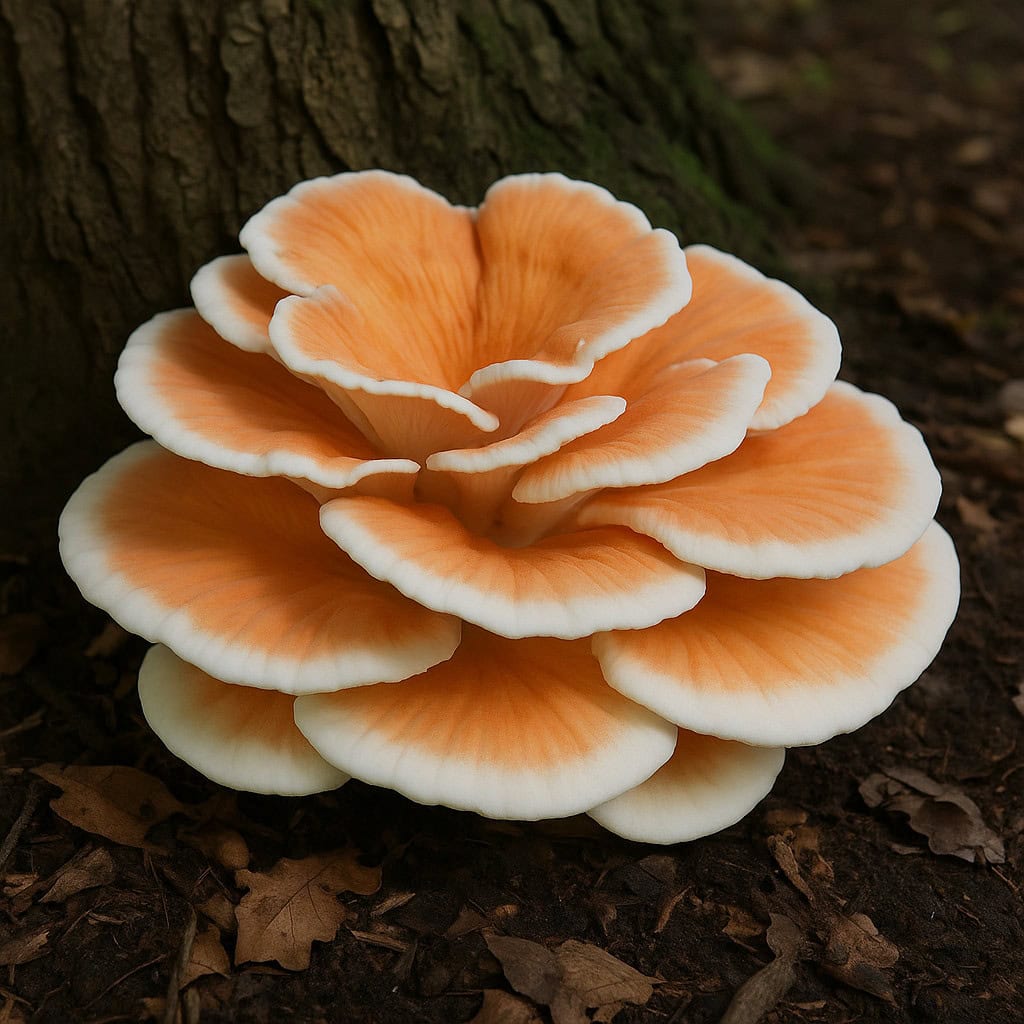
L. cincinnatus is easily distinguished from its more flamboyant cousin, L. sulphureus, by its paler coloration and growth pattern. The caps are typically a light salmon-orange or soft peach hue, often with faint white or pale yellow margins. Instead of growing in overlapping shelves along tree trunks, L. cincinnatus usually forms rosette-like clusters at the base of trees or emerging directly from the ground, connected to buried roots. This growth habit often gives the appearance of a “flowering” mushroom at the forest floor.
Pore Surface and Texture
One of the defining features of L. cincinnatus is its white to creamy-white pore surface underneath—a key identifying trait that separates it from L. sulphureus, which has bright yellow pores. The flesh is tender, moist, and less fibrous than other Chicken of the Woods species, even as it ages. It slices easily and retains a pleasing texture when cooked, making it one of the most culinarily versatile mushrooms in the wild.
Habitat and Seasonality
This species tends to appear from mid-summer through fall, especially after warm rains. It favors hardwood trees, especially oak and beech, and is typically found at the base of living or recently dead trees, as well as near stumps and buried roots. Because of its below-ground growth, it’s often overlooked—so experienced foragers know to scan the forest floor carefully, especially where root systems protrude.
Flavor Profile and Culinary Use
L. cincinnatus has a milder, more refined flavor compared to other Laetiporus species. The taste is subtly sweet, with light citrusy notes and far less of the strong “mushroomy” or resinous undertone found in L. sulphureus. It excels in soups, stir-fries, risottos, and grilled preparations, and is a popular meat substitute in vegetarian and vegan cuisine. Many foragers consider it the best-tasting Chicken of the Woods, particularly when young and tender.
Harvesting Tips
- Look for fresh, soft specimens with no discoloration or dry edges.
- Since it often fruits underground or near roots, gently dig around the base to gather the entire cluster.
- Clean well, as dirt can cling to the base and between the lobes.
Digestibility
Many people find L. cincinnatus to be more digestible than other species in the genus, with fewer reports of gastrointestinal sensitivity. That said, as with any wild mushroom, it’s best to cook thoroughly and sample a small amount the first time you try it.
Fun Forager’s Note
Because it grows from buried roots, you may not always see a tree nearby when you stumble upon it—some foragers have humorously dubbed it the “ghost mushroom” for appearing in seemingly random forest clearings.
Laetiporus conifericola (Chicken of the Woods on Conifers)
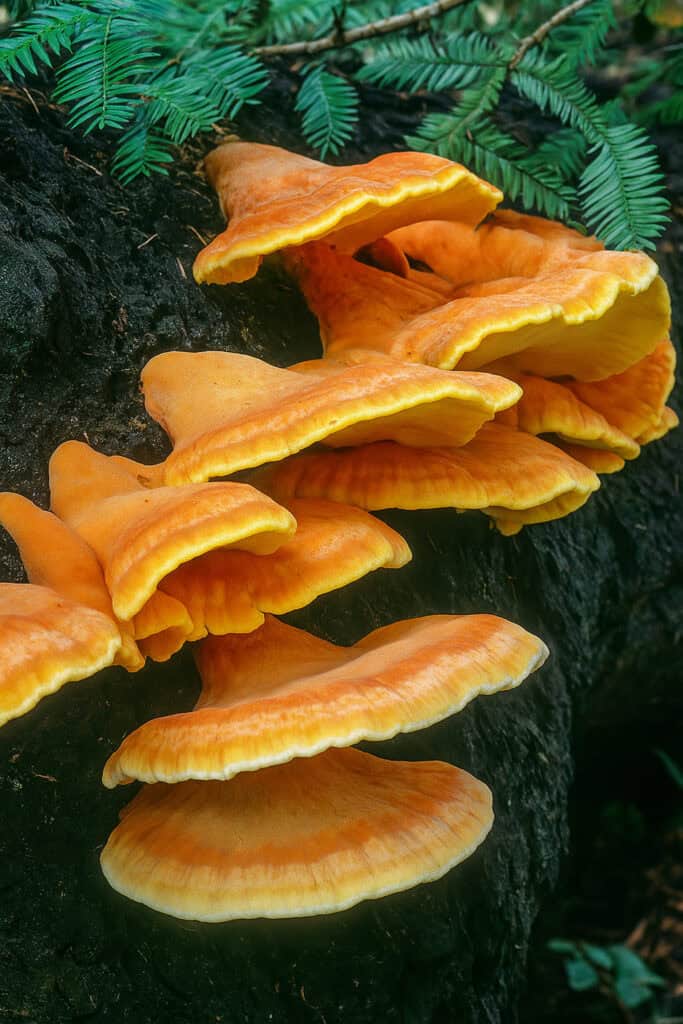
Laetiporus conifericola is a striking and somewhat enigmatic member of the Chicken of the Woods group, known for its vivid coloration and tendency to grow exclusively on coniferous trees. As its name implies, this species thrives in forests dominated by pines, firs, hemlocks, spruces, and other needle-bearing trees, making it a familiar sight in the western United States, especially in coastal and mountainous regions.
Appearance and Identification
L. conifericola is visually similar to the more widely known L. sulphureus, displaying large, shelf-like brackets in radiant shades of orange and yellow. These fan-shaped fruiting bodies often appear in layered clusters on the trunks or stumps of living or dead conifers, particularly Douglas fir and other native evergreens.
The upper surface ranges from a brilliant sunset orange to golden yellow, while the underside typically features sulfur-yellow pores that are smooth and release white spores when mature. The edges tend to be wavy or lobed, and the texture is soft and tender when young, becoming tougher with age.
Habitat and Seasonality
L. conifericola fruits primarily from late summer through fall, though in some mild, moist climates, it may appear as early as late spring. It favors the temperate rainforests of the Pacific Northwest, including Washington, Oregon, and Northern California, but has also been reported in parts of the Rockies and Sierra Nevada.
Look for it on conifer logs, dead stumps, or living trees showing signs of decay. It often grows high on the trunk, so visual identification may require binoculars or a careful approach to fallen wood.
Culinary Notes and Flavor Profile
This species has the characteristic “chicken-like” texture that makes the genus popular among foragers. The flavor is robust, with notes of lemon, mushroom, and pine resin, giving it a more woodsy and intense taste than its hardwood-loving cousins.
However, caution is essential
Some individuals experience digestive upset after consuming L. conifericola, even when fully cooked. This is believed to be due to chemical compounds present in conifer wood, which the mushroom may absorb or metabolize. The flavor may also be a bit stronger and more resinous, depending on the tree species it grew on.
Best Practices for Eating Safely
- Always cook thoroughly before consuming. This species should never be eaten raw.
- Sample a small portion first, even if you’ve eaten other Laetiporus species without issue.
- Discard any tough, rubbery, or waterlogged sections, especially if the mushroom is older.
- Young, freshly harvested specimens are more tender and less likely to cause irritation.
Pro Tip for Harvesters
Unlike L. sulphureus or L. cincinnatus, which tend to grow lower on tree trunks or from the ground, L. conifericola often appears higher up, and may require a pole, careful climbing, or waiting for a fallen tree to harvest easily and safely.
Laetiporus gilbertsonii (West Coast Chicken of the Woods)
Laetiporus gilbertsonii is a vibrant and sought-after edible mushroom species found along the West Coast of North America, particularly in California and parts of Oregon. It was once grouped with Laetiporus sulphureus but is now recognized as a distinct species, largely due to differences in its preferred habitat, spore genetics, and subtle variations in flavor and texture.
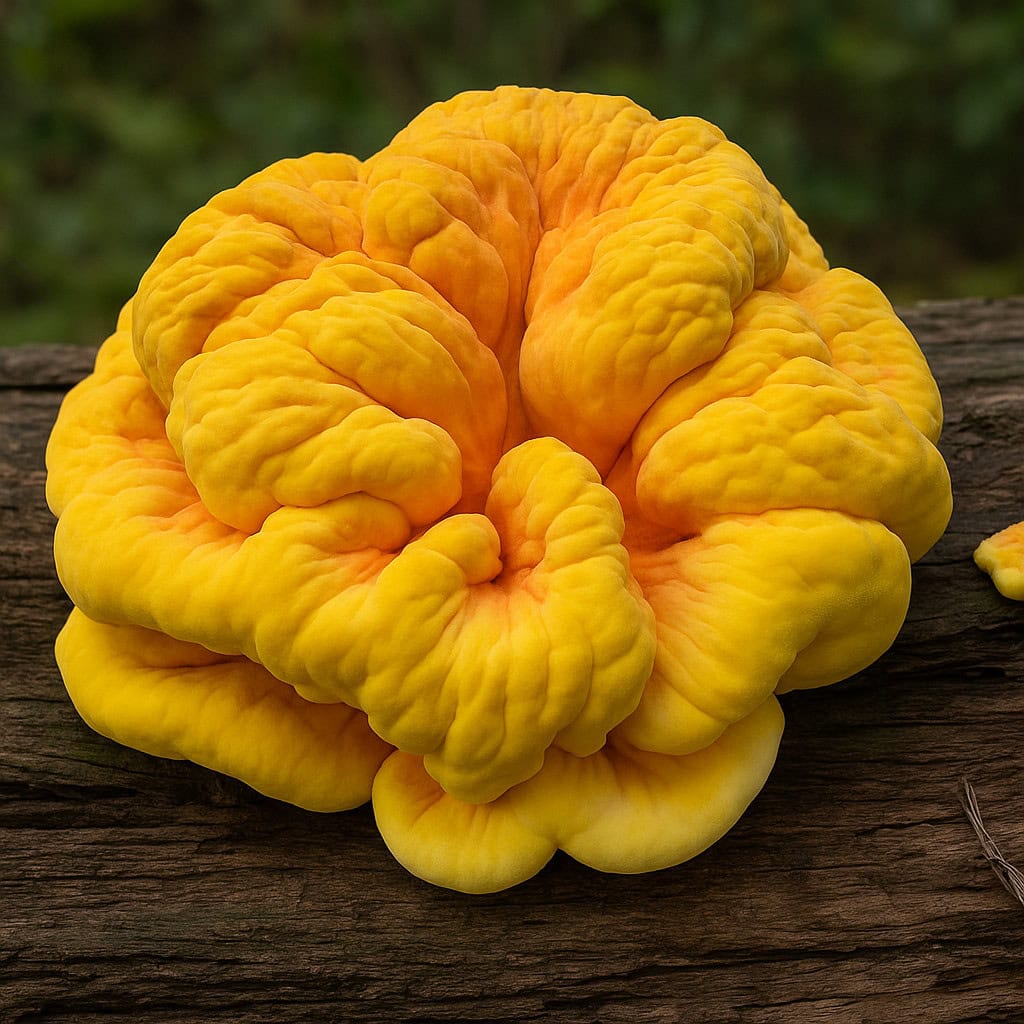
Appearance and Identification
Much like its relatives, L. gilbertsonii produces large, overlapping shelves or “brackets” that are bright orange to golden yellow on top, with pale yellow to sulfur-yellow pores underneath. These fan-shaped caps are often smooth, with a slightly velvety texture and wavy margins, and can grow quite large—clusters sometimes weighing several pounds.
The underside is non-gilled, featuring a spongy, pore-like surface that releases white spores. The mushroom’s flesh is thick, juicy, and tender when young but becomes firmer and chalkier as it ages. When cut or broken, the interior is typically creamy white or slightly yellow.
Habitat and Preferred Trees
Unlike L. sulphureus, which grows predominantly on hardwoods in the eastern U.S., L. gilbertsonii favors hardwood hosts native to the West Coast, especially oak (Quercus spp.), eucalyptus, and occasionally tanoak or other broadleaf species. It does not grow on conifers, which helps differentiate it from similar species like L. conifericola.
It typically fruits from late spring through fall, particularly after warm, moist weather or following foggy coastal periods.
Flavor Profile and Culinary Notes
L. gilbertsonii shares the characteristic “chicken-like” texture that makes the Laetiporus genus a favorite among foragers. The flavor is rich, savory, and mildly citrusy, with less of the resinous or pungent overtones sometimes found in conifer-growing species like L. conifericola.
Its tender texture and balanced flavor make it a superb choice for:
- Sautéing with garlic and herbs
- Using as a meat substitute in stir-fries or tacos
- Breaded and fried as vegetarian “chicken” cutlets
- Pickling, drying, or freezing for off-season use
This species is widely regarded as one of the most palatable and culinarily versatile members of the Laetiporus group.
Digestibility and Safety
L. gilbertsonii is generally well tolerated when harvested young and properly cooked. However, as with all Laetiporus species:
- It must be cooked thoroughly, never eaten raw.
- Older specimens can be tough, bitter, or cause mild gastrointestinal discomfort.
- If you’re new to this mushroom, sample a small amount first to test your individual sensitivity.
Caution with Host Trees
Some foragers note that L. gilbertsonii found on eucalyptus trees may have a more astringent or medicinal flavor, possibly due to the aromatic compounds absorbed from the host. If possible, opt for specimens growing on oak, which are often milder and more pleasant in taste.
Ecological Role and Conservation Note
Like its cousins, L. gilbertsonii is a saprobic and weakly parasitic fungus, meaning it helps decompose dead wood while occasionally infecting living trees. When harvesting, take care not to overharvest from a single tree, especially in fragile oak ecosystems, to allow the fungus to continue its role in the forest’s nutrient cycle.
Safety Concerns
- Proper Identification: Always double-check species. Though Chicken of the Woods has few lookalikes, misidentification can be dangerous.
- Digestive Sensitivity: Some individuals report mild stomach upset, particularly with specimens from conifers. Try a small amount first.
- Allergies: As with any wild food, allergic reactions are possible. If trying it for the first time, start with a small bite.
Avoid any mushroom that appears overly dry, cracked, or infested with insects.
Wrapping Up
Chicken of the Woods is one of the most rewarding wild mushrooms to forage—easy to identify, bountiful, and packed with culinary potential. Whether you’re sautéing it as a savory main course or incorporating it into your magical work, this vibrant fungus connects you directly to the life cycles of the forest. Forage with respect, cook with care, and enjoy one of nature’s finest edible treasures.