Introduction
Goddess of Healing, Poetry, and the Forge
Brigid, also known as Brighid or Brigit, is a goddess of profound significance in Irish mythology, revered as a deity of healing, poetry, smithing, fertility, and the hearth. Her name, meaning “exalted one,” reflects her elevated status among the gods of pre-Christian Ireland. Brigid embodies a triple goddess, representing the interconnected realms of creativity, protection, and transformation.
Brigid’s influence transcends the boundaries of time and religion. With the spread of Christianity in Ireland, she was syncretized into Saint Brigid, a revered figure in Christian tradition. Her dual legacy as a goddess and saint speaks to her enduring relevance and the adaptability of her worship.
This article delves into the mythology, symbols, and modern practices associated with Brigid, highlighting her role as a guardian of light, transformation, and new beginnings.

Who is Brigid?
Brigid is one of the most revered deities in Irish mythology, celebrated as a triple goddess who embodies healing, poetry, and smithing. Her multifaceted nature makes her a powerful symbol of creativity, transformation, and nurturing energy. As a goddess of fire and inspiration, Brigid governs the creative spark, the warmth of the hearth, and the transformative power of the forge, connecting her to both the domestic and mystical realms.
Brigid’s influence extends to fertility, agriculture, and the cycles of life, reflecting her essential role in Imbolc, the ancient festival marking the arrival of spring. As a bringer of light and renewal, she inspires the growth and transformation that follow winter’s stillness. Her energy embodies the balance between creation and sustenance, making her a guardian of life’s perpetual cycles.
Her deep connection to the hearth and home underscores her protective and nurturing qualities, while her link to fire and the sun symbolizes illumination, purification, and renewal. Through these associations, Brigid serves as a guiding force in both personal and communal transformation.
Epithets and Titles
Brigid’s epithets and titles reflect her divine authority and her varied domains of influence. Each highlights a different facet of her power and significance:
- The Exalted One:
This title speaks to her elevated status among the Irish gods, emphasizing her role as a deity of immense power and reverence. - Goddess of the Hearth:
Honoring her role as a protector of homes and families, this title reflects her importance in domestic life, where the hearth serves as a sacred space of warmth, nourishment, and connection. - Lady of the Forge:
Celebrating her dominion over smithing and transformation, this title underscores her role in creation and resilience, where the forge symbolizes both physical and spiritual renewal. - Muse of Poets:
Highlighting her role as an inspiration in creativity and the arts, this title connects her to the power of words, expression, and the divine spark that fuels artistic endeavors.
Iconography
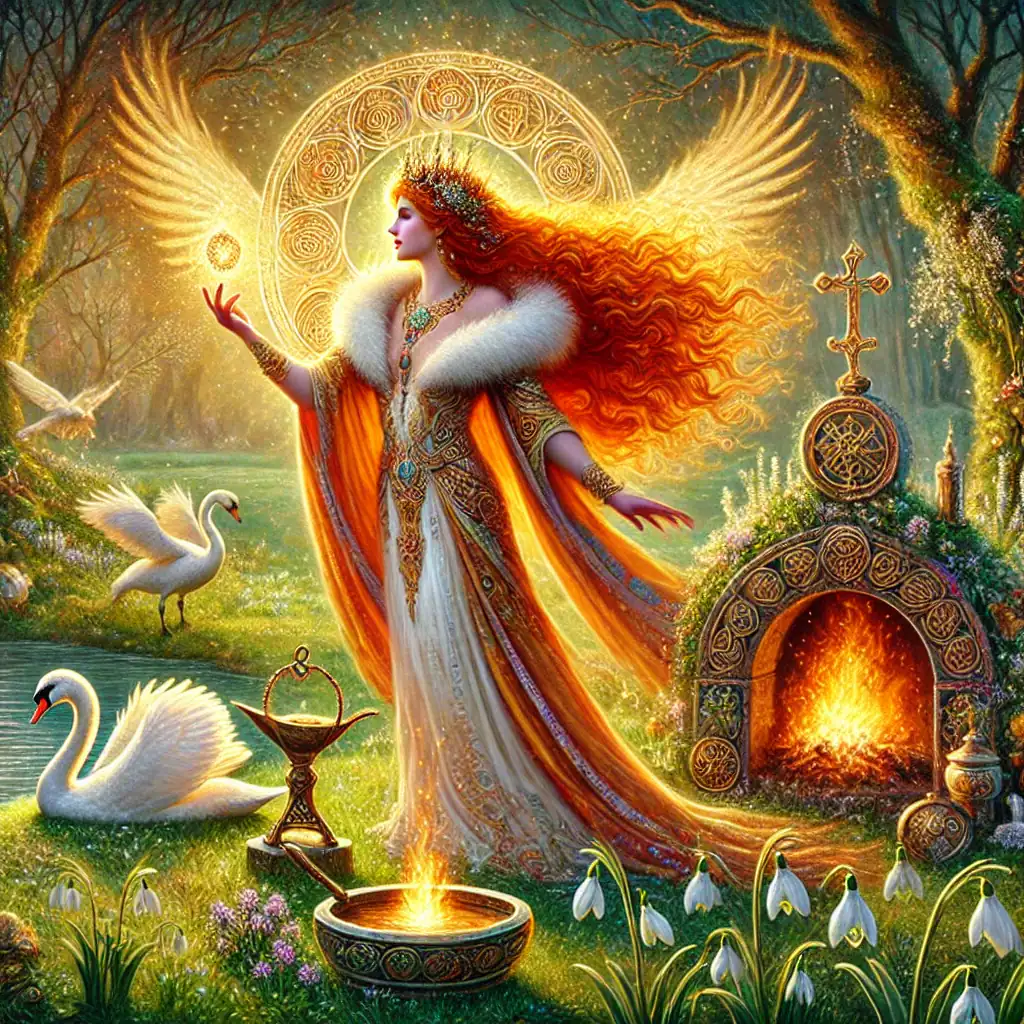
Brigid is frequently depicted as a radiant young woman, embodying the beauty and vitality of fire and spring. Her imagery emphasizes her nurturing and transformative qualities, with symbols that connect her to her various domains:
- A Brigid’s Cross:
This woven cross of rushes or straw is one of her most recognizable symbols. It represents protection, blessings, and the cycle of life, and is traditionally placed in homes to safeguard against harm and bring prosperity. - Sacred Flames:
Fire plays a central role in Brigid’s iconography, symbolizing her connection to transformation, illumination, and purification. Eternal flames dedicated to her were historically kept burning by priestesses and are rekindled in her modern worship. - Animals:
Brigid is closely associated with sacred animals that reflect her nurturing and creative nature:- Cows: Symbolizing abundance and sustenance, reflecting her role in fertility and agriculture.
- Swans: Representing purity and transformation, aligning with her connection to inspiration and the cycles of life.
- Golden or Red Hair and Feathered Cloak:
Brigid is often depicted with radiant red or golden hair, representing the fire and sun she embodies. Her cloak of feathers symbolizes her connection to nature and the divine realms. - The Forge and Smithing Tools:
Representing her transformative powers, the forge is a metaphor for creation through fire and resilience through adversity.
Brigid’s iconography weaves together her roles as a goddess of fire, renewal, and protection, creating a vivid and inspiring image of her influence in the lives of her devotees. Through her many facets, she continues to guide practitioners in embracing creativity, nurturing growth, and finding strength in transformation.
Mythological Background
Brigid, a cornerstone of Irish mythology, is revered for her role in healing, poetry, and smithing—domains that showcase her as a guardian of creativity, transformation, and resilience. Her mythology weaves themes of renewal, protection, and the balance of life’s cycles, making her an enduring figure in both pagan and Christian traditions.
Key Myths and Stories
Brigid’s myths and legends highlight her triple aspects and her role as a force of creation, transformation, and renewal.
- Triple Goddess of Creativity and Transformation:
As a triple goddess, Brigid’s domains of healing, poetry, and smithing encapsulate her ability to oversee life’s transformative forces.- Healing: Brigid is a healer, tending to both physical ailments and emotional wounds. Her presence symbolizes the nurturing care needed to restore balance and vitality, whether for an individual, a community, or the earth itself.
- Poetry: As a muse of poets, Brigid inspires the creative spark that brings words to life, reflecting her connection to the power of expression and the divine. Poetry, in her realm, becomes a tool for healing, teaching, and transformation.
- Smithing: Her mastery of the forge represents creation through fire, resilience in the face of trials, and the transformative power of adversity. The forge is not only a place of creation but also a symbol of the alchemy of life, where challenges are shaped into strengths.
- Imbolc and the Return of Light:
Brigid’s feast day, February 1st, aligns with Imbolc, an ancient Celtic festival marking the first stirrings of spring.- During Imbolc, Brigid’s energy is celebrated as a bringer of light and renewal, awakening the earth from winter’s dormancy.
- Her association with fire and the hearth makes her a symbol of warmth and life, embodying the promise of spring’s return.
- Imbolc rituals often include lighting candles or fires to honor Brigid’s presence and to invoke her blessings for the coming season.
- Syncretism into Saint Brigid:
With the spread of Christianity in Ireland, Brigid’s attributes were absorbed into the figure of Saint Brigid, allowing her worship to persist in a new form.- Saint Brigid, much like her goddess counterpart, became known for her miracles, generosity, and protection of women and children.
- The blending of pagan and Christian traditions allowed Brigid’s essence to remain central to Irish spirituality, symbolizing a bridge between the old ways and the new faith.
Relationships
Brigid’s connections within Irish mythology reflect her roles as a nurturer, creator, and protector.
- The Dagda:
Brigid is often described as the daughter of the Dagda, a chief figure in Irish mythology known for his strength and wisdom. This lineage underscores her divine authority and her connection to the creative and protective forces of the earth. - Her Sons:
In some tales, Brigid is the mother of three sons, each associated with one of her triple aspects:- Healing: Representing her nurturing and restorative energy.
- Poetry: Reflecting her inspiration and connection to the arts.
- Smithing: Symbolizing her transformative and creative power.
These familial ties emphasize her role in guiding and sustaining life’s cycles through her domains.
Role in Mythology
Brigid’s role in Irish mythology transcends simple categorization, as she bridges opposites and extremes:
- Creation and Destruction:
Brigid’s mastery of the forge symbolizes her ability to create and transform, even in the face of destruction or hardship. She teaches that new beginnings often arise from endings, much like the cycle of seasons. - Pagan and Christian:
As both a goddess and a saint, Brigid embodies the synthesis of pagan spirituality and Christian faith, uniting communities and preserving her essence across changing cultural landscapes. - Light and Dark:
Her association with fire and spring represents her role as a bringer of light and transformation, guiding mortals and gods alike through the cycles of darkness and renewal.
Brigid’s significance lies in her dynamic energy, her nurturing presence, and her ability to guide her followers through the transformative moments of life. During Yul e and Imbolc, her mythology continues to inspire celebrations of renewal, resilience, and hope, making her a timeless figure in the spiritual world.
Symbols and Associations
Brigid, as a goddess of healing, creativity, and protection, is represented by a rich tapestry of symbols and elements that reflect her multifaceted nature. These associations serve as a guide for understanding her influence and are central to rituals and practices dedicated to her.
Sacred Symbols
- Brigid’s Cross:
The Brigid’s Cross, traditionally woven from rushes or straw, is one of the most iconic symbols associated with her.- Protection and Blessings: It is placed in homes, particularly above doorways or near the hearth, to ward off harm, invoke her protection, and bring blessings of prosperity and health.
- Symbolism: The woven design reflects the cyclical nature of life, the interconnection of the spiritual and physical realms, and the transformative power of Brigid’s energy.
- Imbolc Tradition: Creating a Brigid’s Cross during Imbolc is a popular practice, honoring her as a guardian of the home and a bringer of renewal.
- Sacred Wells:
Brigid’s sacred wells, often found in Ireland, are pilgrimage sites that represent her powers of healing and renewal.- Healing Waters: These wells are believed to hold sacred, rejuvenating energy, and visitors often leave offerings, such as coins or ribbons, as a way of seeking her blessings.
- Connection to Nature: The wells symbolize the life-giving force of water, tying her to the cycles of life and fertility.
- The Hearth:
The hearth is a central symbol of Brigid’s protective and nurturing energy.- Warmth and Safety: It represents the heart of the home, a place where families gather for warmth, nourishment, and connection.
- Domestic Harmony: As a goddess of the hearth, Brigid safeguards households, fostering harmony, stability, and abundance.
- Sacred Space: Lighting a fire or candle at the hearth during rituals invokes her presence and honors her as a protector of the home.
Colors and Elements
- Colors:
Brigid’s associated colors reflect her diverse domains and spiritual essence:- Green: Symbolizing fertility, growth, and renewal, green captures her connection to the cycles of life and the earth’s vitality.
- Gold: Representing illumination, creativity, and divine inspiration, gold reflects her role as a bringer of light and transformation, particularly during Imbolc.
- White: Emblematic of purity and healing, white connects to her nurturing energy and her association with sacred wells and water.
- Elements:
Brigid’s elements highlight her dual nature as a goddess of fire and water, embodying transformation and renewal:- Fire: Representing illumination, creativity, and transformation, fire is central to Brigid’s identity as a goddess of the forge and the hearth. It symbolizes her ability to inspire, protect, and create.
- Water: Reflecting healing and renewal, water ties her to sacred wells, fertility, and the life-giving forces of nature. The balance between fire and water showcases her role as a unifier of opposites and a guardian of life’s harmony.
Brigid’s symbols and associations serve as a powerful reminder of her nurturing, transformative, and protective energy. Whether through the Brigid’s Cross, sacred wells, or hearth fires, these symbols invite her presence into daily life and connect her devotees to her timeless power of renewal, creativity, and balance.
Worship and Devotion
Brigid’s enduring legacy as a goddess and saint reflects her profound influence on spiritual practices, both in pre-Christian Ireland and in modern traditions. Her worship emphasizes protection, renewal, and creativity, making her a central figure during seasonal celebrations like Imbolc and in everyday acts of devotion.
Historical Practices
In ancient Ireland, Brigid was revered as a goddess of fertility, the hearth, and transformation, and her worship was deeply tied to the rhythms of the agricultural calendar and the seasonal cycles of life.
- Creating Brigid’s Crosses:
One of the most iconic traditions, the Brigid’s Cross, was woven from rushes or straw and placed in homes, particularly above doorways or near hearths.- Purpose: The cross was believed to protect the household from harm, bring blessings of health and prosperity, and ensure abundance in the coming year.
- Imbolc Tradition: Creating the cross during Imbolc, Brigid’s feast day, was both a sacred and communal act, symbolizing the renewal of light and life.
- Lighting Sacred Flames:
Fire was central to Brigid’s worship, symbolizing her connection to illumination, purification, and inspiration.- Rituals: Fires or candles were lit in her honor, often at sacred hearths or communal gatherings, to invoke her presence and blessings.
- Sacred Flame of Kildare: In Kildare, Ireland, priestesses kept an eternal flame burning in Brigid’s honor, a tradition that persisted for centuries and was later adapted into Christian practices.
- Offering Milk or Butter:
Offerings of milk, butter, or other dairy products were made to honor Brigid’s nurturing and agricultural aspects.- Symbolism: These offerings reflected her role as a provider of sustenance and fertility, aligning with her connection to livestock and the hearth.
- Seasonal Context: During Imbolc, a time of new life and renewal, these offerings were particularly significant, celebrating the beginning of the lambing season and the promise of abundance.
These historical practices emphasized Brigid’s nurturing energy, her protection over the home, and her role in ensuring prosperity and renewal.
Modern Practices
Brigid’s worship has been adapted into modern pagan, Wiccan, and Christian traditions, blending ancient rituals with contemporary spirituality. Her role as a goddess and saint allows her to bridge cultural and religious divides, inspiring devotion in diverse ways.
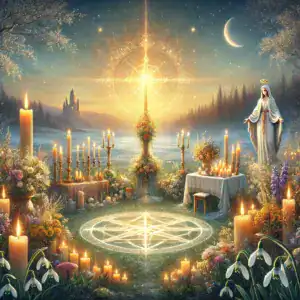
- Setting Up Altars:
Altars dedicated to Brigid are a focal point for rituals and meditations, reflecting her domains of creativity, healing, and renewal.- Decorations: Common items include Brigid’s Crosses, candles, flowers, and offerings such as milk, honey, or bread.
- Personal Touch: Practitioners often add items that resonate with Brigid’s energy, such as crafting tools, poetry, or symbols of fire and water.
- Rituals and Meditations:
Modern rituals often focus on Brigid’s themes of transformation, protection, and inspiration.- Fire Rituals: Lighting candles or small fires during rituals honors her connection to purification and creativity.
- Meditations: Practitioners meditate on Brigid’s energy to gain clarity, renew their creative spark, or seek emotional and spiritual healing.
- Healing Work: Invoking Brigid during healing rituals emphasizes her nurturing energy and her role as a protector of physical and emotional well-being.
- Imbolc Celebrations:
Brigid remains central to Imbolc, celebrated on February 1st as a festival of light and renewal.- Seasonal Feasts: Traditional feasts include dairy-based foods, spiced cakes, and honeyed mead, all offered in her honor.
- Poetry and Song: Creative expressions such as reciting poetry, singing, or storytelling pay tribute to Brigid as a muse of the arts.
- Community Gatherings: Group rituals often include fire ceremonies, crafting Brigid’s Crosses, or blessing homes with her protective energy.
Through historical and modern practices, Brigid’s worship continues to inspire a deep connection to creativity, transformation, and the cycles of life. Her ability to adapt across time and traditions makes her a timeless figure of devotion, protection, and renewal.
Attributes and Lessons
Brigid, as a goddess of creativity, protection, and transformation, offers timeless wisdom and guidance to those who seek her. Her energy inspires resilience, growth, and balance, serving as a beacon for navigating life’s challenges and opportunities.
Character Traits
Brigid’s traits reflect her dynamic and multifaceted nature, making her an ideal figure for those in need of both strength and inspiration.
- Creativity:
As the Muse of Poets and Lady of the Forge, Brigid embodies the spark of creativity that fuels both artistic expression and transformative action. Her influence encourages individuals to explore their creative potential, whether through writing, crafting, or problem-solving. - Protection:
Brigid’s association with the hearth and home highlights her nurturing yet protective energy. She guards families, communities, and sacred spaces, fostering a sense of safety and harmony. Her presence is both comforting and empowering, reminding her devotees of the strength found in connection and care. - Transformation:
Through her domain over smithing and fire, Brigid symbolizes the alchemy of change—the ability to shape life’s trials into opportunities for renewal and growth. She inspires resilience and adaptability, teaching that even the most challenging circumstances can lead to new beginnings.
Lessons and Themes
Brigid’s mythology and worship offer profound lessons that resonate with modern practitioners, emphasizing balance, growth, and the sacredness of daily life.
- The Power of Transformation:
Brigid teaches that challenges are not merely obstacles but opportunities for growth.- Smithing as a Metaphor: Just as metal is forged in fire, individuals can shape their experiences—no matter how difficult—into something strong and valuable.
- Renewal through Creativity: Whether through artistic expression, personal growth, or spiritual practice, Brigid encourages transformation as a pathway to empowerment.
- Balance of Light and Dark:
Brigid’s presence during Imbolc, a festival of renewal, reminds us of the importance of embracing both light and shadow.- Seasonal Reflection: Imbolc marks the transition from winter’s darkness to the light of spring, symbolizing the cyclical nature of life and the hope found in renewal.
- Embracing Shadows: Brigid encourages individuals to confront their challenges and inner struggles, finding strength and clarity in the process.
- The Sacred in the Everyday:
Through her association with the hearth, Brigid reveals the divine presence in the mundane aspects of life.- Domestic Harmony: The hearth, as the heart of the home, represents the power of daily rituals and connections to foster stability and love.
- Creative Acts: Whether cooking, crafting, or tending to a home, Brigid’s energy elevates these tasks into acts of sacred devotion.
Relevance Today
Brigid’s lessons and themes remain deeply relevant in the modern world, offering inspiration and guidance for a variety of challenges and pursuits:
- Resilience in Adversity:
Brigid’s transformative energy encourages individuals to face difficulties with courage and to emerge stronger and wiser. Her presence serves as a reminder that renewal and growth often follow life’s most challenging moments. - Celebrating Creativity:
Brigid inspires her followers to embrace their creative potential, recognizing the power of imagination and artistry in shaping their lives and the world around them. - Honoring Balance:
Through her connection to light and dark, Brigid teaches the importance of finding balance in life’s cycles, whether between work and rest, action and reflection, or challenges and triumphs. - Finding the Sacred in Modern Life:
Brigid’s association with the hearth and home reminds modern practitioners that everyday acts of care and creativity are imbued with spiritual significance. She encourages mindfulness and gratitude for the small but meaningful moments that define life.
By embodying creativity, protection, and transformation, Brigid serves as an enduring guide for navigating life’s complexities, offering her followers the tools to grow, create, and thrive. Her wisdom inspires resilience, hope, and the ability to see the divine in all aspects of existence.
Magical and Spiritual Work
Brigid’s presence in magical and spiritual practices reflects her role as a goddess of transformation, inspiration, and protection. Through rituals, spells, and the creation of sacred spaces, practitioners can connect with her energy to foster healing, creativity, and harmony.
Rituals and Spells
Brigid’s energy is particularly potent in rituals and spellwork that involve healing, creativity, and protection. These practices allow her devotees to align with her domains and harness her transformative power.
- Healing Spells:
Brigid’s association with healing waters and sacred flames makes her an ideal guide for spells focused on physical, emotional, or spiritual well-being.- Water Rituals: Use water from a sacred well or a natural source, combined with an invocation to Brigid, to cleanse and renew the body and spirit.
- Fire Spells: Light a candle or small flame, symbolizing her healing warmth, and meditate on its light to release negative energy and restore balance.
- Offerings: Leave milk, honey, or herbs like chamomile or lavender as part of your healing spell to honor Brigid’s nurturing essence.
- Creative Inspiration:
As a muse of poets and artists, Brigid inspires creativity in all forms.- Invocation for Creativity: Before beginning a creative project, light a candle and recite a prayer or poem to Brigid, inviting her guidance and inspiration.
- Poetry and Writing Spells: Use her energy to fuel creative breakthroughs by placing symbols of fire or crafted tools on your workspace.
- Artistic Offerings: Dedicate a finished piece of art, poetry, or music to Brigid as an act of devotion and gratitude.
- Home Blessings:
Brigid’s role as a protector of the hearth and home makes her an ideal figure for rituals that ensure safety, harmony, and warmth in your living space.- Candle Rituals: Light a candle at the hearth (or its modern equivalent, such as a stove) while reciting a blessing to invoke her protection.
- Brigid’s Cross: Craft or place a Brigid’s Cross in your home to ward off harm and invite her blessings.
- Hearth Offerings: Place offerings like bread, butter, or small tokens near your hearth as a way of honoring her guardianship.
Altars and Sacred Space
Creating a dedicated space for Brigid allows practitioners to focus their devotion and connect deeply with her energy. An altar for Brigid reflects her connection to fire, creativity, and fertility, serving as a spiritual anchor for rituals, meditation, and offerings.
- Candles:
Candles are a central element of a Brigid altar, representing her connection to illumination, warmth, and purification. Choose gold, red, or white candles to align with her energy. - Milk or Butter:
As symbols of nourishment, fertility, and domestic harmony, offerings of milk or butter honor Brigid’s nurturing aspect. These can be left on the altar as part of Imbolc rituals or general acts of gratitude. - Crafted Items:
Incorporate handmade Brigid’s Crosses, poetry, or other crafted items to celebrate her role as a goddess of creativity. These items also serve as offerings and a way to align with her creative energy. - Sacred Symbols:
Enhance the altar with representations of Brigid’s domains, such as:- Fire: A small cauldron, a brazier, or symbolic flames.
- Water: A bowl of water or a small fountain to represent sacred wells and healing.
- Forge Tools: Miniature hammers or anvils to symbolize smithing and transformation.
- Seasonal Elements:
During Imbolc or other seasonal celebrations, decorate the altar with spring flowers, greenery, and items symbolic of renewal, like seeds or eggs.
By maintaining a sacred space for Brigid, practitioners create a physical and spiritual connection to her energy, fostering a deeper relationship with this beloved goddess. Through rituals and altars, her guidance, creativity, and protection become tangible elements in the lives of her devotees.
Conclusion: Brigid’s Enduring Legacy
Brigid’s enduring legacy as both a goddess of the old ways and a beloved saint highlights her timeless significance across spiritual traditions. As a goddess of healing, creativity, and transformation, she embodies the profound balance between nurturing and resilience, inspiration and action. Her domains extend beyond mythology to offer practical and spiritual guidance, encouraging her devotees to embrace the cycles of life, find strength in adversity, and honor the sacred in everyday moments.
At Imbolc, Brigid’s energy shines brightest, heralding the return of light and the promise of renewal. Through the creation of Brigid’s Crosses, the lighting of candles, and offerings of milk, honey, or crafted tokens, her devotees connect with her transformative power. These acts of devotion reflect not only her influence over life’s transitions but also her ability to inspire hope and creativity even in the darkest times.
Brigid’s lessons in balance, growth, and perseverance remain as relevant today as they were in ancient times. She teaches us that challenges can be forged into opportunities, that love and light coexist with shadow, and that renewal is a sacred force inherent in all of life’s cycles. Whether through the blazing fires of the hearth, the healing waters of sacred wells, or the creative spark of inspiration, Brigid offers a pathway to connection and transformation.
By celebrating Brigid at Imbolc or through daily acts of reverence, practitioners honor her as a guiding force of light, renewal, and creativity. Her presence serves as a reminder of the divine within and around us, encouraging us to carry her sacred flame forward, illuminating our paths with hope, purpose, and resilience.