Introduction
The Winter Enchantress of Yuletide Lore
Frau Holda, a revered figure in Germanic folklore, emerges during Yuletide as a goddess of the hearth, winter’s beauty, and the mystical arts. She is both nurturing and mysterious, embodying the quiet magic of snow-laden nights and the warmth of a well-tended home. Known for her ties to spinning, the cycles of life, and the spectral realm, Frau Holda’s presence during the Yuletide season weaves a narrative of blessings, renewal, and the balance between the seen and unseen worlds.

Who is Frau Holda?
Frau Holda, a revered figure in Germanic folklore, is a goddess who embodies the harmonious balance between the domestic and mystical realms. As a divine matron of winter, the hearth, spinning, and the afterlife, her presence is both nurturing and deeply enigmatic. She is celebrated for her role in overseeing the practical aspects of life, such as the care of the home and the art of spinning, while also guiding souls and invoking the enchantment of the natural world during the transformative season of Yuletide.
Frau Holda represents the cyclical nature of life and the seamless transitions between its phases. Her dominion over spinning symbolizes the weaving of fate, life’s ongoing flow, and the interconnectedness of all things. She is particularly revered during winter, a time of dormancy and reflection, where her wisdom encourages the embrace of stillness and preparation for renewal. Her dual nature is a reminder of the balance between nurturing growth and confronting the mysteries of transformation.
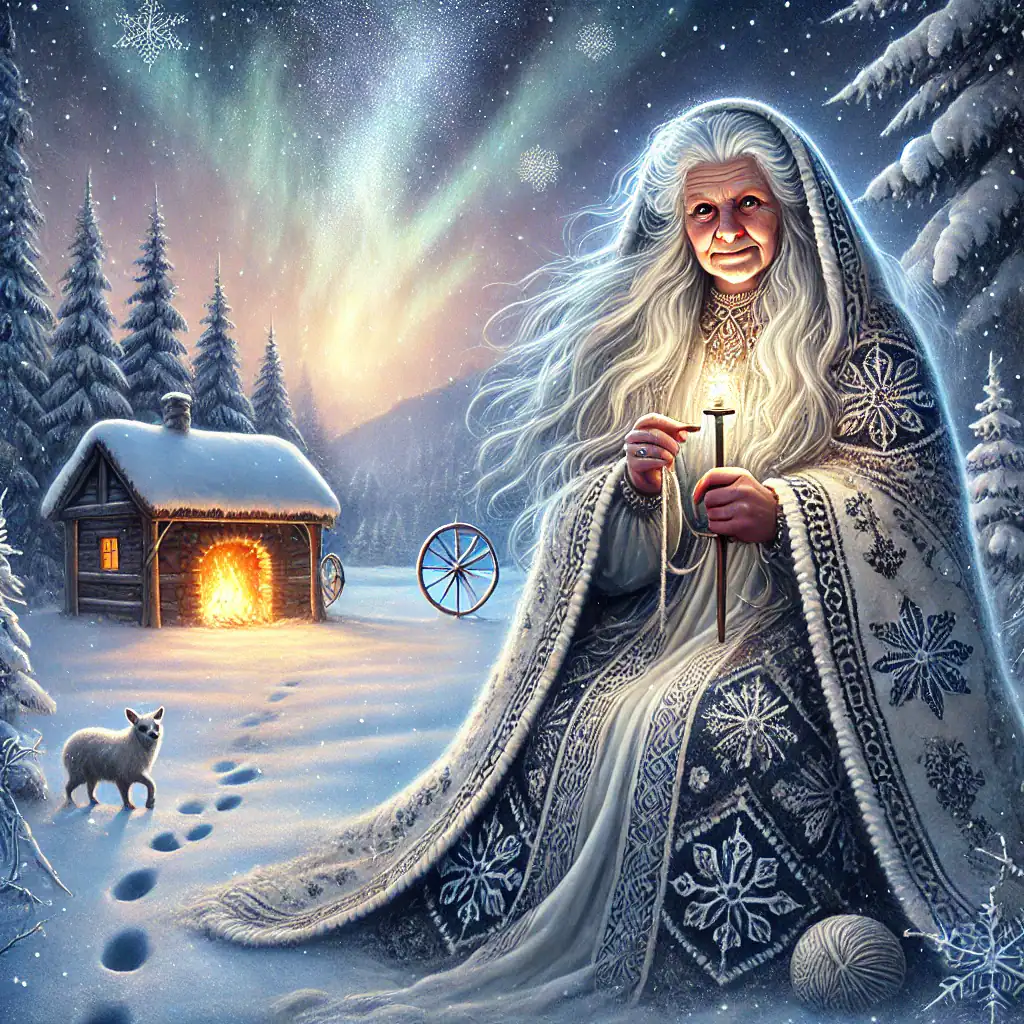
Often depicted as a wise and kind older woman, Frau Holda radiates the quiet strength of feminine wisdom. She is not only a caretaker and protector but also a figure of justice who rewards diligence and industriousness while punishing idleness. Her presence evokes the magic of winter nights and the warmth of a well-tended home, making her an enduring symbol of Yuletide’s themes of transition, renewal, and community.
Epithets and Titles
Frau Holda is known by several names and titles across different regions, reflecting her diverse roles and widespread veneration in Germanic folklore.
- Hulda or Holle: Variations of her name that highlight her regional influence. In some traditions, she is also referred to as Mother Holle, a maternal figure linked to the cycles of nature.
- Mistress of the Wild Hunt: A title that emphasizes her role in leading the spectral procession of souls through the winter skies during the Wild Hunt.
- Guardian of Spinning: Reflecting her connection to spinning, weaving, and the domestic arts, this title underscores her role in guiding industrious spinners and maintaining the balance of life’s threads.
- Lady of the Hearth: This epithet speaks to her association with the home, warmth, and the heart of family life during the cold winter months.
Her names and titles not only define her areas of influence but also highlight her role as a liminal figure who traverses the boundaries between the seen and unseen, making her a central figure in Yuletide lore.
Iconography
The imagery associated with Frau Holda is rich with symbolism, painting her as a figure deeply rooted in the natural world and the cycles of life.
- The Wise Woman in Winter Robes: Frau Holda is often depicted as an older woman dressed in thick winter garments, symbolizing her connection to the cold season. Her age conveys wisdom, patience, and the deep understanding of life’s transitions.
- Traveler in Snowy Landscapes: Frau Holda is frequently portrayed traveling through snow-covered fields, sometimes on foot, other times in a wagon. Her presence in the wintry wilderness ties her to the magical transformations of the season.
- The Spindle or Distaff: A spindle or distaff is a common attribute in depictions of Frau Holda, symbolizing her dominion over spinning and weaving. These tools emphasize her connection to industriousness, creation, and the cyclical nature of life.
- Snowfall as Her Featherbed: According to folklore, snowfall is attributed to Frau Holda shaking out her featherbed in the heavens, blanketing the earth with purity and renewal. This image ties her to the beauty and magic of winter and her ability to cleanse and refresh the world in preparation for spring.
These visual elements underscore her connection to Yuletide’s themes of transition, purity, and balance. Her imagery reminds practitioners of the intricate weave of life’s threads, shaped by diligence, justice, and the cycles of nature.
Frau Holda’s portrayal as a winter goddess and guardian of hearth and home invites both reverence and comfort, making her a cherished figure in the Yuletide season. Through her symbols, epithets, and visual depictions, she remains an enduring presence in the mythology and celebrations of this sacred time.
Mythological Background
Frau Holda’s mythological narrative is deeply intertwined with the mysteries of Yuletide, embodying the duality of life and death, nurturing and judgment, and the balance between diligence and idleness. Her presence during this sacred season is marked by a tapestry of myths that reflect her multifaceted nature and her dominion over hearth, winter, and the liminal spaces of existence.
The Wild Hunt
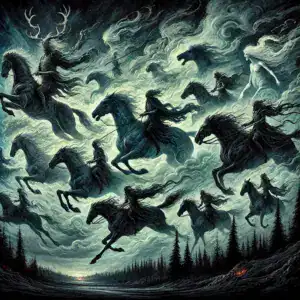
One of the most compelling myths surrounding Frau Holda during Yuletide is her connection to the Wild Hunt, a spectral procession that sweeps across the winter skies. Unlike Odin’s version of the Hunt, which often focuses on warriors and spirits of battle, Frau Holda’s procession is said to include the souls of children and others who have passed. This spectral entourage follows her across snowy landscapes, emphasizing her role as a caretaker of the departed and a guide through the mysterious realms of winter.
The Wild Hunt led by Frau Holda symbolizes the thin veil between life and death during the Yuletide season. The winter nights, long and dark, serve as a backdrop for this otherworldly journey. Folklore often describes the Hunt as a portent of change, reflecting Yuletide’s themes of transformation and renewal. For those who honor her, Frau Holda’s Hunt is not a source of fear but a reminder of the cyclical nature of existence, where endings lead to new beginnings.
The Yule Log and Hearth Blessings
Another cherished legend involves Frau Holda’s journey across snowy landscapes during Yuletide nights, where she visits homes adorned with the ashes of the Yule Log. In this story, Frau Holda bestows blessings upon diligent families who honor the hearth’s sacred flame. Her blessings are said to bring warmth, prosperity, and harmony, ensuring a bountiful year ahead.
The Yule Log, a central symbol of Yuletide, represents continuity, the enduring flame of life, and the familial bonds that sustain communities during the harsh winter months. Frau Holda’s role in this legend reinforces her association with the hearth and home, positioning her as a protector of domestic life and a bringer of abundance.
Guardian of Spinning and Diligence
A recurring theme in Frau Holda’s myths is her connection to spinning and weaving, arts she oversees as both a patroness and a stern judge. One well-known tale tells of Frau Holda rewarding industrious spinners with prosperity and beauty while punishing those who are idle or careless in their work. This legend emphasizes the value of diligence and skill, aligning with Yuletide’s themes of preparation and renewal.
Frau Holda’s role as a guardian of spinning also symbolizes her influence over the cycles of life and fate. Like a weaver at her loom, she oversees the threads of existence, ensuring they are tended with care and intention. This aspect of her myth connects her to the turning of the year at Yule, where the old gives way to the new, and life’s patterns continue to unfold.
Relationships
Frau Holda is a liminal figure in Germanic lore, sharing connections with other deities and spirits who embody the mysteries of winter and the cycles of life.
- Ties to Perchta: Frau Holda is often associated with Perchta, another Germanic winter goddess. While their roles overlap, with both overseeing domestic tasks and embodying themes of judgment, Frau Holda’s persona is gentler and more nurturing, focusing on blessings and transformation during Yuletide. Perchta’s sterner, more punitive aspect contrasts with Frau Holda’s balance of kindness and justice.
- Connection to Odin and the Wild Hunt: As a leader of the Wild Hunt, Frau Holda shares ties with Odin, who similarly commands this spectral procession during Yuletide. However, while Odin’s Hunt often emphasizes warlike and shamanic themes, Frau Holda’s version highlights the nurturing and guiding aspects of the afterlife, especially for children’s souls.
- Links to the Norns: Frau Holda’s association with spinning and weaving connects her to the Norns, the Norse weavers of fate. Like the Norns, Frau Holda represents the threads of destiny and the importance of tending life’s patterns with care. Her role aligns her with themes of balance, justice, and the cyclical nature of existence.
Role in Mythology
Frau Holda occupies a unique and multifaceted role in Germanic mythology, serving as a bridge between the physical and spiritual realms.
- Nurturer of Life: As a goddess of the hearth and spinning, Frau Holda nurtures life by protecting domestic spaces and overseeing the cycles of creation. Her presence during Yuletide encourages families to honor the hearth as a source of warmth, unity, and sustenance during the coldest months.
- Guide of Souls: Her leadership of the Wild Hunt underscores her role as a psychopomp, a guide for souls transitioning between life and death. This aspect of her mythology highlights her connection to the unseen realms and her ability to traverse liminal spaces with grace and purpose.
- Winter’s Guardian: Frau Holda governs the natural world during winter, her magic embodied in the frost and snow that cover the earth. Snowfall, said to result from her shaking out her featherbed, symbolizes her ability to cleanse and renew the land in preparation for the coming spring.
Her Yuletide role reflects her ability to balance nurturing warmth with the mysteries of transformation, making her a deeply resonant figure during this sacred season. By blessing the diligent, guiding the departed, and overseeing the cycles of life, Frau Holda exemplifies the harmony of opposites that defines Yuletide—a time of reflection, renewal, and hope.
Sacred Symbols
The symbols associated with Frau Holda are deeply rooted in her mythology and the natural and domestic realms she governs. These sacred elements not only reflect her attributes but also provide ways for devotees to connect with her during Yuletide.
- Spindle and Distaff:
As the goddess of spinning and weaving, Frau Holda is closely associated with the spindle and distaff, tools used in the creation of thread and fabric. These symbols represent her dominion over creation, industriousness, and the cyclical nature of life. Spinning itself becomes a metaphor for the interconnected threads of existence, reflecting the idea that life is shaped by effort and care. During Yuletide, these tools symbolize preparation and transformation, reminding practitioners of the importance of tending to both the material and spiritual threads of life. - Snow:
Snow is one of Frau Holda’s most recognizable symbols, and folklore attributes snowfall to her shaking out her featherbed in the heavens. This act not only creates a blanket of purity over the earth but also symbolizes renewal, rest, and the preparation for new beginnings. Snow’s transformative power aligns with Frau Holda’s role as a figure of cyclical change and magic, reminding practitioners of the quiet beauty and cleansing qualities of winter. - Yule Log:
The Yule Log, a central element of Yuletide celebrations, embodies the continuity of life, warmth, and the enduring flame of the hearth. Frau Holda is said to bless homes adorned with the ash of the Yule Log, bringing prosperity and harmony to the household. The log itself serves as a physical and spiritual link to the hearth, a sacred space under Frau Holda’s protection. Burning the Yule Log symbolizes gratitude for the year’s blessings and hope for the future, connecting the hearth’s flame to the goddess’s nurturing presence.
Colors and Elements
Frau Holda’s associations with specific colors and elements reflect her dual nature as a goddess of the hearth and winter, blending the tangible warmth of domestic life with the ethereal magic of the natural world.
- Colors:
- White: Representing purity, snow, and the cleansing power of winter, white is a key color in Frau Holda’s symbolism. It reflects her role in bringing renewal and her connection to the transformative energy of snow.
- Silver: A color tied to winter’s frost and the glow of the moon, silver captures Frau Holda’s magical and mysterious qualities. It evokes the quiet beauty of winter nights and the spectral journeys she undertakes during the Wild Hunt.
- Earthy Tones: Browns and warm earth tones represent the hearth, domestic stability, and Frau Holda’s nurturing role. These colors emphasize her grounding presence and connection to the cycles of life and nature.
- Elements:
- Earth: As a goddess of the hearth and domestic life, Frau Holda is grounded in the element of earth, symbolizing stability, nourishment, and the cycles of nature. Her connection to spinning and creation further ties her to this element, reflecting the physical labor and effort required to sustain life.
- Air: Her association with the Wild Hunt and the snowfall created by her featherbed shaking aligns her with the element of air. Air represents movement, transformation, and the ethereal qualities of her guidance over spectral journeys and winter’s magic.
Offerings and Rituals
Devotees honor Frau Holda during Yuletide with offerings and rituals that reflect her dual roles as a domestic guardian and a mystical figure of winter’s magic. These acts serve to invite her blessings and connect with her energy during the season.
- Traditional Offerings:
- Bread: As a symbol of nourishment and the fruits of labor, bread reflects Frau Holda’s role as a nurturer and protector of the home. Offering freshly baked bread honors her connection to the hearth and the domestic arts.
- Milk: Milk represents sustenance and the nurturing aspects of life. Left as an offering, it acknowledges Frau Holda’s blessings and her role in ensuring harmony within the household.
- Flax: As a goddess of spinning, flax—a material used to create linen—is a particularly meaningful offering. It symbolizes industriousness, creativity, and the cycles of life she governs.
- Spinning Dedications:
Practitioners who spin or weave often dedicate their work to Frau Holda during Yuletide. This act aligns with her role as a guardian of diligence and honors the sacred art of spinning as a connection to life’s threads and the goddess’s blessings. - Yule Log Ash:
After the Yule Log has burned, devotees may collect its ash and place it on the hearth or in their sacred space as a token of gratitude for Frau Holda’s blessings. The ash symbolizes the continuity of life, the warmth of the hearth, and the transformative power of fire, all under her protection. - Rituals of Gratitude and Blessing:
Lighting candles or a fire in the hearth serves as a way to honor Frau Holda and invite her presence. As the flame burns, practitioners may recite prayers of gratitude for the past year’s blessings and request her guidance and protection for the year ahead. Including symbols like snowflakes, spinning tools, or natural elements enhances the ritual’s connection to her energy.
Through these symbols, colors, elements, and rituals, practitioners can honor Frau Holda’s presence during Yuletide, inviting her blessings of warmth, harmony, and renewal into their homes and lives. These acts of devotion forge a sacred connection to the goddess and the cyclical rhythms of the season she embodies.
Historical Practices
Frau Holda’s veneration in Germanic folklore reflects her role as a goddess deeply connected to the rhythms of the seasons, the hearth, and the cycles of life. Her influence was woven into everyday domestic life, agricultural practices, and the sacred rituals of the Yuletide season.
Blessings for Spinners and Industriousness
In the past, spinning held a place of paramount importance in domestic and communal life, serving as both a practical necessity and a deeply symbolic act. The creation of thread and fabric was essential for clothing, trade, and the overall survival of households, especially during the long winters. Against this backdrop, Frau Holda emerged as a revered goddess and divine patroness of spinning, embodying the values of industriousness, skill, and the cyclical nature of life.
Spinning as a Sacred Act
For those who spun thread and wove fabric, their craft was more than a mundane chore—it was an act of creation that mirrored the natural and spiritual cycles overseen by Frau Holda. The spinning wheel or spindle became a sacred tool, symbolizing the continuous weaving of life’s threads and the interconnectedness of existence. Within this framework, Frau Holda was seen as the guardian of this sacred art, offering her blessings to those who approached their work with care and diligence.
The rhythms of spinning—the twist of fibers, the turning of the wheel—echoed the cycles of the seasons and the interconnectedness of all things. This parallel elevated spinning to a spiritual practice, a daily reminder of life’s patterns and the importance of maintaining balance and harmony.
Blessings for Diligence and Skill
Frau Holda was believed to favor those who took pride in their craft, rewarding their efforts with blessings of prosperity, health, and domestic harmony. Industrious spinners, who approached their work with dedication and skill, often experienced bountiful harvests, well-functioning households, and an overall sense of well-being. This belief extended beyond the material; the blessings bestowed by Frau Holda were seen as spiritual affirmations of the spinner’s alignment with the natural order and their role within the greater tapestry of life.
Legends often tell of Frau Holda visiting homes in disguise, observing the spinning habits of those within. Those who demonstrated diligence and care would awaken to find their threads spun into gold or other valuable materials, a reward for their industriousness and devotion to their craft. These stories emphasized the goddess’s benevolence toward those who upheld the virtues of hard work and focus.
Punishments for Idleness and Neglect
Conversely, Frau Holda’s myths also carry warnings for those who neglected their duties or approached their work with laziness. Tales abound of idle spinners finding their fibers tangled or cursed, a symbolic reflection of the disorder and imbalance caused by neglecting life’s responsibilities. In some stories, Frau Holda is said to punish the idle by staining their fibers or scattering their spinning tools, forcing them to confront the consequences of their inaction.
These tales reinforced the importance of diligence and care, not only in spinning but in maintaining the cycles of life and the natural world. Neglecting one’s work was seen as a disruption to these cycles, a break in the sacred thread that connected all things. Frau Holda’s punishments, while stern, were ultimately meant to guide individuals back to alignment with these rhythms.
Spinning and the Cycles of Life
Frau Holda’s association with spinning extends beyond the act itself to encompass broader themes of creation, transformation, and renewal. The act of spinning—twisting raw fibers into something functional and beautiful—mirrors the natural cycles of birth, life, death, and rebirth. Just as fibers are spun into thread and woven into fabric, life is shaped by the choices and efforts of individuals, each contributing to the greater tapestry of existence.
Spinners who worked under Frau Holda’s guidance were seen as active participants in these cycles, their labor a sacred contribution to the balance of life. By rewarding diligence and punishing neglect, Frau Holda underscored the importance of recognizing this connection and honoring it through intentional effort.
Relevance Today
Even in modern times, where spinning is no longer a daily necessity, Frau Holda’s lessons remain deeply relevant. She reminds practitioners of the importance of care, focus, and intention in all aspects of life, whether through creative endeavors, personal responsibilities, or spiritual practices. By embracing these values, individuals can align themselves with the cycles of nature and life, weaving their own threads into the greater pattern with purpose and grace.
Through her association with spinning, Frau Holda serves as a timeless symbol of diligence, creativity, and the sacred balance between effort and reward. Her myths continue to inspire those who honor her, reminding us of the enduring magic that lies within the simple yet profound act of creation.
Snow and Agricultural Prosperity
Frau Holda’s association with snow is a profound reflection of her role as a goddess who governs both the beauty and practicality of the natural world. According to folklore, snowfalls were caused by Frau Holda shaking out her featherbed in the heavens, with each flurry of feathers transforming into delicate snowflakes. This act was not only a charming tale but also a symbolic gesture of her care for the earth and its cycles.
Snowfall, under Frau Holda’s influence, was viewed as a blessing rather than a hardship. The snow served an important agricultural purpose, acting as a protective blanket for the soil during the harsh winter months. This insulating layer shielded crops and the earth from freezing temperatures, preserving the fertility of the land and ensuring that moisture was retained for the coming spring thaw. In this way, snow was a harbinger of renewal, a quiet promise that life would return with the changing seasons.
For agricultural societies, this connection made Frau Holda an essential figure during Yuletide. Her gift of snow represented the careful balance between winter’s stillness and the renewal it prepared. The pristine white landscapes she created reminded communities of the cyclical nature of existence, where rest and dormancy were vital stages before growth and abundance could reemerge.
Frau Holda’s snowy blessings also carried a spiritual significance, symbolizing purification and renewal. Just as snow cleanses the land and covers it with a blanket of purity, she was believed to bring clarity and a fresh start to those who honored her during Yuletide. Her association with snow thus bridged the physical and metaphysical, connecting the agricultural benefits of winter to the spiritual themes of transformation and hope.
This dual nature of her snow—both practical and magical—reinforces Frau Holda’s role as a goddess who embodies harmony and balance, nurturing the earth and its inhabitants through the quiet power of winter’s embrace.
Offerings and Hearth Rituals
Seasonal rituals dedicated to Frau Holda were deeply rooted in the rhythms of domestic life and the sacred significance of the hearth. In Germanic households, the hearth was far more than a physical space for warmth and cooking—it was the heart of the home, a focal point for family life, and a symbol of protection, prosperity, and unity. As the goddess of the hearth, Frau Holda was revered as its guardian, and her blessings were sought to ensure a harmonious and thriving household.
To honor Frau Holda, families often left offerings of bread, milk, or flax on the hearth. Each of these offerings carried symbolic meaning:
- Bread represented sustenance, abundance, and the fruits of labor, reflecting Frau Holda’s appreciation for diligence and industry. Offering bread was a way to express gratitude for her blessings and to invite continued prosperity.
- Milk symbolized nourishment and the nurturing qualities of the hearth, aligning with Frau Holda’s role as a maternal and protective figure. Leaving milk as an offering emphasized the desire for her guardianship over the home and its inhabitants.
- Flax, a material essential to spinning and weaving, represented creativity, industriousness, and the cycles of life that Frau Holda governed. Offering flax honored her as the patroness of spinning and acknowledged her connection to life’s threads.
These gestures were more than acts of devotion; they were also practical expressions of the values Frau Holda embodied, such as hard work, gratitude, and care for the home. By leaving offerings on the hearth, families sought not only her goodwill but also the continuation of the harmony and warmth that she represented.
The hearth itself was considered a sacred space under Frau Holda’s guardianship. Beyond its physical functions, it served as a gathering place where families cooked, worked, and shared stories. It was a symbol of unity, providing the warmth and light necessary to sustain life through the cold winter months. Honoring Frau Holda at the hearth reinforced its sacred nature, turning daily life into an act of reverence and aligning the family with the cycles of nature and the divine.
These rituals also carried a communal aspect, as they reminded families of their connection to each other and to the greater rhythms of the season. By acknowledging Frau Holda through these simple yet meaningful acts, households sought to ensure not only her blessings but also the continuation of her protective and nurturing presence in their lives.
Yule Fires and Community
The lighting of Yule fires was a cherished tradition during midwinter, embodying both practical and spiritual significance in honoring Frau Holda. These fires, often central to Yuletide celebrations, symbolized the return of light and warmth as the darkest days of the year gave way to the lengthening daylight. For families, the Yule fires were a beacon of hope and renewal, and their glowing warmth was thought to attract Frau Holda’s blessings, fostering protection, prosperity, and harmony in the household.
Gathering Around the Fires
Families would come together around these fires, creating a sacred and communal space to reflect on the year past and set intentions for the year ahead. This practice was deeply rooted in gratitude, with storytelling and small rituals woven into the gatherings to mark the season’s turning. Tales of Frau Holda’s benevolence, her connection to snow and spinning, and her role as the hearth’s guardian were often shared, keeping her mythology alive and fostering a sense of connection to her presence.
The Yule Log
A central element of these midwinter traditions was the Yule Log, a large piece of wood selected with care and lit in the hearth as part of the festivities. The Yule Log held rich symbolism: it represented the enduring flame of life, continuity through the cycles of nature, and the warmth that sustains families during the coldest months. Frau Holda was said to bless homes where the Yule Log burned, and its ash was believed to hold her protective and nurturing energy.
Ash as a Sacred Talisman
After the fire had burned out, families often collected the ashes of the Yule Log, treating them as sacred relics imbued with Frau Holda’s blessings. These ashes were sometimes sprinkled around the home or garden to bring luck and fertility, or kept near the hearth as a talisman to ensure the goddess’s continued protection throughout the year. This practice reinforced the belief in Frau Holda’s ability to nurture life, safeguard the home, and bring renewal through her connection to the cycles of the earth.
Symbolism of Light and Transformation
The fires also served as a powerful metaphor for transformation, mirroring the themes of death and rebirth that define the Yuletide season. The flames, consuming the log and transforming it into ash, symbolized the shedding of the old year and the promise of new beginnings. Through the light of the Yule fires, families connected to Frau Holda’s energy, honoring her as a goddess of balance and renewal, and aligning themselves with the natural rhythms she governed.
In this way, the lighting of Yule fires became a multifaceted act of devotion, celebration, and reflection. It was a moment to honor Frau Holda’s presence, express gratitude for her blessings, and embrace the hope and warmth that her mythology brings to the heart of Yuletide.
Modern Practices
In modern pagan and Heathen traditions, Frau Holda continues to be honored as a powerful and multifaceted goddess, especially during the sacred season of Yuletide. Her enduring appeal lies in her dual nature—both nurturing and enigmatic—making her a relatable figure for contemporary practitioners seeking balance in their lives. While modern practices often adapt historical rituals to align with today’s lifestyles, they maintain the core themes of diligence, transformation, and the cyclical harmony between rest and renewal that Frau Holda embodies.
Adapting Historical Traditions
Many contemporary rituals dedicated to Frau Holda draw inspiration from the rich tapestry of historical customs. Offerings of bread, milk, honey, or flax are still made in her honor, symbolizing gratitude for her blessings and a desire to invoke her protection. These offerings are often left on altars or near the hearth, echoing the practices of ancestral households that sought her goodwill.
Modern practitioners may also incorporate elements like spinning and weaving into their devotional work, even if they do not engage in these crafts regularly. Symbolic acts, such as meditating on the spinning wheel or using flax or yarn in ritual settings, connect them to Frau Holda’s domain of industriousness and creativity. These acts honor her role as a goddess who oversees life’s threads and reminds practitioners of the importance of care and diligence in all aspects of life.
Honoring Frau Holda During Yuletide
Yuletide provides a particularly powerful time to connect with Frau Holda, as her presence is deeply intertwined with the themes of the season. Practitioners create sacred spaces to honor her, often adorning altars with symbols of her mythology. Common elements include:
- Spinning tools like spindles or distaffs, symbolizing creation and the cycles of life.
- Winter greenery, such as holly, pine, or mistletoe, representing the natural rhythms of the season.
- Candles in white, silver, and earthy tones, reflecting Frau Holda’s connection to purity, transformation, and the hearth.
Some practitioners light Yule fires or candles in her honor, meditating on her connection to the cycles of nature and the transformative energy of winter. These rituals often include acts of introspection, where individuals reflect on the past year and set intentions for the coming one, aligning themselves with Frau Holda’s wisdom and the season’s themes of renewal.
Rituals for Modern Practitioners
Modern devotions to Frau Holda during Yuletide may include the following:
- Dreamwork and Introspection: Frau Holda’s connection to the unseen realms and dreams makes Yuletide an ideal time for practitioners to engage in dreamwork. By setting intentions before sleep or meditating on her energy, they seek her guidance through symbolic or prophetic dreams.
- Offerings and Gratitude Rituals: Bread, milk, honey, and flax remain popular offerings, symbolizing nourishment, creativity, and industriousness. These tokens are often left on altars, hearths, or in natural spaces to express gratitude for Frau Holda’s blessings.
- Snow Magic and Nature Rituals: In regions where snow is present, practitioners may gather snow to use in rituals or as offerings to Frau Holda. Walking in snowy landscapes or engaging in mindfulness practices outdoors helps connect with her presence and the cleansing energy of winter.
- Storytelling and Seasonal Gatherings: Sharing myths and legends of Frau Holda during Yuletide celebrations honors her legacy and keeps her stories alive. Seasonal gatherings often include storytelling, feasting, and small rituals dedicated to her, fostering community and spiritual connection.
Frau Holda in Modern Spirituality
For contemporary practitioners, Frau Holda serves as a guiding figure for navigating the balance between rest and effort, as well as the transformations that define life’s cycles. She reminds us of the value of honoring periods of stillness and reflection, particularly during winter, when the natural world slows down to prepare for renewal. Her association with spinning and weaving also inspires modern individuals to approach their work and creativity with care and intention, weaving their own threads into the greater tapestry of existence.
Frau Holda’s enigmatic nature also resonates with those drawn to the mysteries of the unseen, encouraging exploration of the liminal spaces between worlds. Her presence during Yuletide invites practitioners to embrace the dualities of light and dark, life and death, and stillness and renewal, finding wisdom and strength in these contrasts.
Through these modern adaptations, Frau Holda remains a beloved and relevant figure, her mythology continuing to inspire and guide those who honor her. Her connection to Yuletide’s transformative energy ensures that her presence endures as a symbol of hope, renewal, and the sacred balance of life.
Altars and Sacred Spaces
Creating an altar dedicated to Frau Holda during Yuletide allows practitioners to establish a tangible and spiritual connection to the goddess. These altars become sacred spaces that embody her mythology, offering a place for reflection, ritual, and devotion. Adorned with carefully chosen items, they reflect Frau Holda’s nurturing yet enigmatic nature and invite her presence into the home.
Key Elements of an Altar for Frau Holda
- Spinning Tools: Items like spindles, distaffs, or skeins of flax represent Frau Holda’s association with spinning, creativity, and the cycles of life. These tools serve as symbols of industriousness and the threads of existence she oversees.
- Winter Greenery: Sprigs of holly, pine, or mistletoe bring the natural energy of the season to the altar, connecting it to the cycles of nature that Frau Holda governs. These elements also reflect the renewal and vitality associated with Yuletide.
- Candles: Candles in white, silver, or earthy tones are commonly placed on altars to symbolize the hearth, purity, and Frau Holda’s connection to winter’s transformative energy. The act of lighting these candles represents inviting her warmth and protection into the home.
- Seasonal Symbols: Snowflake motifs, small figurines of wolves or birds, and Yule Log ashes may be included to honor specific aspects of Frau Holda’s mythology, such as her role in bringing snow or her connection to the Wild Hunt.
- Personal Touches: Devotees often include items that resonate with their personal connection to Frau Holda, such as written prayers, pieces of fiber art, or seasonal foods. These items add a unique and intimate layer to the sacred space.
The altar serves as a focal point for meditations, rituals, and offerings. It acts as a bridge between the practitioner and Frau Holda, creating an environment where her presence can be felt and her blessings received. By maintaining this sacred space throughout Yuletide, practitioners foster a deeper connection to her wisdom and the season’s themes of rest and renewal.
Rituals and Offerings
Modern rituals dedicated to Frau Holda during Yuletide are inspired by historical practices but adapted to align with contemporary lifestyles. These rituals emphasize her connection to the cycles of nature, industriousness, and the rewards of hard work, making them deeply meaningful for practitioners seeking her guidance and blessings.
Lighting Candles or Fires
Lighting candles or small fires in honor of Frau Holda reflects the traditional Yule fires that symbolized light, warmth, and renewal. The flickering flames are seen as beacons that invite her presence and protection. Practitioners may recite invocations or prayers as they light the candles, meditating on Frau Holda’s role as a guardian of the hearth and the transformative energy of winter. This simple yet profound ritual connects the practitioner to the cyclical rhythms of nature and the goddess’s nurturing energy.
Meditation on Winter’s Cycles
Meditative practices during Yuletide often focus on themes of rest, renewal, and the balance between effort and introspection. Practitioners may visualize snow blanketing the earth as a symbol of cleansing and preparation for growth, aligning their own intentions with these natural cycles. These meditations can be accompanied by the soft glow of altar candles, creating a serene atmosphere for connecting with Frau Holda’s wisdom.
Offerings of Gratitude
Leaving offerings for Frau Holda is a way to express gratitude for her blessings and seek her goodwill for the coming year. Common offerings include:
- Bread: Symbolizing sustenance and the fruits of labor, bread is an offering that honors Frau Holda’s nurturing role.
- Milk or Honey: Representing nourishment and the sweetness of life, these offerings reflect her connection to domestic harmony and prosperity.
- Flax: A nod to her patronage of spinning and industriousness, flax serves as a meaningful offering for those who wish to honor her creative and transformative energies.
These offerings are typically placed on the altar, hearth, or in natural spaces, accompanied by prayers or intentions. By presenting these tokens, practitioners align themselves with the values Frau Holda embodies and invite her blessings of protection, harmony, and renewal.
Honoring Through Craft
Spinners and fiber artists often dedicate their work to Frau Holda during Yuletide, connecting their craft to her role as a patroness of spinning. This practice bridges the past and present, celebrating the industrious traditions that once defined her veneration. Whether spinning thread, weaving fabric, or engaging in other creative pursuits, practitioners view their work as a sacred act, offering it to Frau Holda as a gesture of devotion.
For those who do not engage in fiber arts, symbolic acts such as knotwork, creating thread-based charms, or crafting winter decorations serve as meaningful alternatives. These creative endeavors honor Frau Holda’s industrious spirit and her influence over the cycles of life.
Through altars, rituals, and offerings, modern practitioners maintain a deep connection to Frau Holda during Yuletide. These practices not only honor her mythology but also inspire introspection, creativity, and a profound appreciation for the balance of rest and renewal that defines the season she governs.
Seasonal Storytelling
The practice of storytelling has long been a cherished tradition during Yuletide, a time when families and communities gather to share warmth, food, and the wisdom of the past. Frau Holda’s myths and legends hold a special place in this tradition, serving as a powerful way to honor her during the season. By retelling her stories, practitioners not only celebrate her influence but also preserve her lore for future generations, weaving her presence into the heart of modern Yuletide observances.
A Sacred Act of Connection
Storytelling during Yuletide is more than mere entertainment—it is a sacred act that forges a connection between the teller, the listeners, and the goddess herself. Frau Holda’s myths are rich with symbolism, offering insights into themes of diligence, transformation, and the interconnectedness of life. Sharing these tales during gatherings allows her values to resonate deeply, reminding participants of the importance of hard work, care for the home, and respect for the natural cycles of life.
The long winter nights, illuminated by candlelight or the flickering glow of a hearth, create the perfect atmosphere for storytelling. In this intimate setting, listeners are transported to snowy landscapes where Frau Holda shakes out her featherbed, covering the earth in snow, or where diligent spinners receive her blessings. These vivid images bring her mythology to life, making her presence tangible and her lessons memorable.
Incorporating Stories into Gatherings
In Yuletide gatherings, Frau Holda’s stories are often shared as part of seasonal festivities. Families and friends may gather around a fire or a beautifully adorned altar to hear tales of her benevolence toward industrious spinners, her role in the Wild Hunt, or her blessings bestowed upon homes that honor her. These stories are sometimes paired with rituals, such as offering bread or milk to the hearth, enhancing their spiritual significance.
For practitioners with children, storytelling becomes a meaningful way to introduce younger generations to Frau Holda’s lore. Simplified versions of her myths can convey values like hard work, kindness, and respect for nature, planting the seeds of her wisdom in a way that is accessible and engaging for all ages.
Emphasizing Frau Holda’s Lessons
The retelling of Frau Holda’s myths offers an opportunity to reflect on the lessons she embodies:
- Diligence and Industriousness: Stories of Frau Holda rewarding spinners who demonstrate skill and dedication reinforce the importance of effort and care in daily life. These tales remind listeners that hard work and mindfulness bring rewards, not only in material prosperity but also in spiritual harmony.
- Balance and Renewal: Her connection to snow and the cycles of winter highlights the need to embrace rest and transformation as essential parts of life. These themes resonate particularly during Yuletide, a season of reflection and preparation for the year ahead.
- Care for the Home and Hearth: Myths of Frau Holda blessing well-tended homes underscore the sacredness of domestic life. They encourage listeners to nurture their own hearths, both as physical spaces and as metaphors for family and community bonds.
Preserving Her Lore
Incorporating Frau Holda’s stories into Yuletide traditions helps preserve her mythology and ensures that her influence endures. Whether through spoken word, written retellings, or creative reinterpretations like plays or art, storytelling acts as a bridge between the past and present. It keeps her memory alive in a way that is both timeless and adaptable, allowing each generation to find meaning and inspiration in her tales.
Storytelling in Rituals
Frau Holda’s myths can also be woven into rituals, enhancing their depth and purpose. For example:
- Invocation: A story of Frau Holda’s blessings might be told before making offerings at the hearth, aligning the act with her mythology.
- Meditation: Practitioners may meditate on a specific tale, visualizing themselves as part of the narrative to draw closer to her energy.
- Seasonal Plays: In community celebrations, enacting Frau Holda’s stories through plays or dramatized readings can bring her myths to life in a communal and celebratory way.
By sharing her stories during Yuletide, practitioners invite Frau Holda’s presence into their homes and hearts, honoring her legacy and allowing her wisdom to guide their celebrations. Storytelling becomes a powerful act of devotion, reminding us of the enduring relevance of her lessons in both the magical and the mundane aspects of life.
Geographical Influence
Frau Holda’s veneration was strongest in Germany and the surrounding regions, where she was celebrated as a guardian of winter, spinning, and domestic life. Her presence in these areas reflects the practical and spiritual importance of the hearth and home, as well as the cyclical nature of life that shaped these communities.
Regional Legends and Influence
- In parts of Germany, Frau Holda’s role as a protector of spinners and bringer of snow made her a beloved figure, with many regional variations of her mythology emphasizing her connection to diligence and transformation.
- In Switzerland and Austria, similar figures such as Perchta share traits with Frau Holda, suggesting a shared cultural framework for winter goddesses across the Alpine and Germanic regions.
Modern Interpretations
Today, Frau Holda’s influence extends beyond her historical worship, blending with contemporary spirituality and Yuletide traditions. Her myths inspire modern pagans and Heathens to embrace the themes of winter as a time for reflection, preparation, and honoring the rhythms of life. Her connection to snow, spinning, and the hearth continues to resonate, reminding practitioners of the sacredness of home and the beauty of transformation.
Through historical and modern practices, Frau Holda remains a vital figure during Yuletide, embodying the balance of warmth and mystery, diligence and magic, and the cycles of life and renewal that define the season. Her enduring presence is a testament to the timeless power of her mythology and the values she represents.
Character Traits
Frau Holda is a goddess of profound depth, embodying qualities that resonate across both practical and mystical realms. Her traits reflect her dual role as a nurturer of domestic life and a guardian of the unseen, making her an inspiring and multifaceted figure during Yuletide.
- Wisdom: Frau Holda is often depicted as a wise elder figure, guiding those who seek her favor with insight and understanding. Her wisdom is not confined to abstract concepts but is rooted in the rhythms of daily life and the natural world. She understands the balance between effort and rest, light and dark, and uses her knowledge to guide practitioners in navigating life’s transitions.
- Nurturing: As the goddess of the hearth, Frau Holda embodies the nurturing energy that sustains families and communities. Her blessings bring warmth, harmony, and prosperity to the home, reflecting her role as a maternal figure who cares deeply for those under her protection.
- Diligence: A champion of industriousness, Frau Holda rewards those who approach their work with care and intention, particularly in the domestic arts like spinning and weaving. Her mythology emphasizes the value of diligence, skill, and attention to detail, inspiring practitioners to honor their responsibilities and take pride in their efforts.
- A Balance of Practical and Magical: Frau Holda’s presence during Yuletide encapsulates the union of the practical and the magical. She oversees the tangible aspects of life, such as the hearth and spinning, while also wielding mystical powers, such as creating snow and leading the spectral Wild Hunt. Her character reminds practitioners that magic and meaning can be found in everyday tasks.
Lessons and Themes
Frau Holda’s mythology offers enduring lessons and themes that are particularly meaningful during Yuletide. These teachings inspire reflection, personal growth, and a deeper connection to the cycles of life.
- Embracing Cycles:
Like the spinning wheel she governs, Frau Holda teaches that life is composed of interconnected cycles—birth, death, and rebirth. Her presence during Yuletide, a season that bridges the end of one year and the beginning of another, reinforces the importance of embracing these transitions with grace. Just as winter’s stillness prepares the earth for spring’s renewal, Frau Holda’s lessons encourage practitioners to find balance and flow in their own lives. - Diligence and Gratitude:
Through her mythology, Frau Holda rewards those who demonstrate care and effort, emphasizing the blessings that come from honoring one’s work and responsibilities. This lesson extends beyond spinning and weaving to all aspects of life, reminding practitioners to approach their endeavors with dedication and to express gratitude for the abundance that follows. - Renewal:
Frau Holda’s snow, said to result from her shaking out her featherbed, brings not only beauty but also a sense of cleansing and renewal. This symbolism aligns with Yuletide’s themes of rebirth and transformation, inspiring practitioners to release what no longer serves them and embrace new beginnings with hope and intention.
Relevance Today
In modern spirituality, Frau Holda remains a source of inspiration for practitioners seeking to align with the cycles of nature, honor the sacredness of home, and embrace the transformative energy of winter.
- Honoring the Hearth:
Frau Holda inspires practitioners to view the hearth as a sacred space, both physically and metaphorically. In contemporary homes, this may take the form of creating a cozy, harmonious environment where family and community can gather. It also reflects an inner hearth—a sense of warmth and stability within oneself that can be nurtured through mindful practices. - Embracing Winter’s Magic:
Winter, often seen as a time of rest and introspection, holds a special place in Frau Holda’s mythology. She encourages practitioners to embrace this season as an opportunity for reflection, transformation, and renewal. Her association with snow reminds us of the beauty and purity that can be found even in stillness and darkness. - Connecting to Cycles of Life and Nature:
In today’s fast-paced world, Frau Holda’s teachings offer a reminder of the importance of aligning with the natural rhythms of life. By honoring the transitions between seasons, embracing cycles of effort and rest, and finding magic in everyday tasks, practitioners can foster a deeper connection to themselves, their communities, and the world around them.
Through her character traits, lessons, and modern relevance, Frau Holda serves as a timeless guide for those navigating the sacred balance between the practical and the mystical. Her presence during Yuletide invites practitioners to embrace transformation, honor the cycles of existence, and find magic in the rhythms of life.
Rituals and Spells
Rituals and spells dedicated to Frau Holda during Yuletide allow practitioners to honor her presence, connect with her energies, and align with the themes of warmth, industriousness, and winter’s transformative magic. These practices are both symbolic and deeply personal, fostering a connection to Frau Holda’s mythology and the season’s spiritual significance.
Blessing the Hearth
The hearth is central to Frau Holda’s domain, symbolizing warmth, stability, and the heart of the home. Lighting a candle or Yule Log in her honor is a meaningful ritual that invites her blessings into the household. Practitioners can enhance this ritual by:
- Reciting a prayer or invocation to Frau Holda as the flame is lit, asking for her protection and harmony.
- Using a white or silver candle to reflect her association with snow and winter’s purity.
- Placing the candle or log on the hearth or altar and meditating on the glow as a symbol of renewal and hope.
This simple act creates a sacred atmosphere and serves as a reminder of Frau Holda’s presence, nurturing both the physical and spiritual hearth.
Spinning and Weaving
Dedicating time to spinning, weaving, or crafting is a profound way to honor Frau Holda, who is deeply connected to the art of creation and the cycles of life. Even if practitioners do not traditionally spin or weave, they can engage in other creative pursuits, such as knitting, crocheting, or sewing, with intention. To dedicate these acts to Frau Holda:
- Meditate on her presence before beginning the work.
- Incorporate symbols of spinning, such as a spindle or thread, into the creative space.
- Offer the finished piece or the act of creation itself as a gesture of gratitude and devotion to the goddess.
This practice bridges the historical and modern, honoring Frau Holda’s industrious spirit while connecting practitioners to the sacred art of creation.
Snow Magic
Frau Holda’s connection to snow makes snow magic a powerful way to work with her energy during Yuletide. Practitioners can collect fresh snow during a snowfall and use it in rituals or blessings to symbolize purity, renewal, and transformation. Ideas for snow magic include:
- Creating a blessing water: Melt the snow and use it to anoint objects, cleanse spaces, or bless the hearth and home.
- Writing intentions in the snow: Draw symbols or write wishes in the snow, allowing it to carry the energy of transformation as it melts and returns to the earth.
- Meditating during snowfall: Spend time outdoors during a gentle snowfall, connecting to Frau Holda’s presence and visualizing the snow as her gift of renewal.
Snow magic aligns the practitioner with Frau Holda’s energy and the transformative power of winter, fostering a deeper appreciation for the season’s mysteries.
Divination and Communication
As a goddess who governs the liminal spaces between worlds, Frau Holda is especially attuned to the practices of divination and spiritual communication. Yuletide, with its long nights and introspective energy, offers an ideal time to seek her wisdom.
Dreamwork
Frau Holda is said to guide dreams, making dreamwork a favored method for connecting with her. Practitioners can set intentions before sleep, asking for her guidance or insight. Techniques for dreamwork include:
- Dream Journaling: Keep a journal by the bedside to record dreams upon waking, noting any symbols or emotions that might carry Frau Holda’s messages.
- Sleep Rituals: Burn calming herbs like lavender or place winter greenery such as holly near the bed to create a sacred space for dreaming.
- Visualization Before Sleep: Meditate on Frau Holda’s image or her snowy landscapes, inviting her to guide dreams and offer wisdom.
Dreams during Yuletide are often rich with symbolism, providing practitioners with insights into their spiritual path and alignment with the season’s energy.
Omens in Nature
Observing natural signs is another way to communicate with Frau Holda, who is deeply connected to the rhythms of the earth and winter. Practitioners can look for omens in:
- Snowfall Patterns: The timing, intensity, or appearance of snowfalls may carry symbolic meanings linked to Frau Holda’s blessings or messages.
- Yule Log Ash: After burning the Yule Log, examine the patterns in its ash for intuitive guidance or symbols that resonate with her energy.
- Wildlife Behavior: Observing animals, particularly birds or wolves, can offer insights, as these creatures are often associated with Frau Holda’s mythology.
Engaging with these omens fosters a connection to Frau Holda’s domain and enhances awareness of her presence in the natural world.
Altar and Sacred Space
Creating a dedicated altar for Frau Holda during Yuletide provides a physical and spiritual focal point for devotion, rituals, and offerings. This sacred space honors her mythology and aligns the practitioner with her energy.
Key Components of a Frau Holda Altar
- Spinning Symbols: Include spindles, thread, or flax to represent her patronage of spinning and the cycles of life.
- Candles: Use white, silver, or earthy tones to symbolize her connection to snow, purity, and the hearth.
- Offerings: Place bread, milk, honey, or other traditional offerings on the altar to express gratitude and invite her blessings.
- Winter Greenery: Decorate the altar with holly, mistletoe, pine, or other seasonal plants to evoke the energy of Yuletide and Frau Holda’s connection to nature.
Enhancing the Seasonal Energy
Incorporating additional seasonal symbols can enrich the altar’s energy:
- Add snowflakes or representations of snowfall to honor her connection to winter.
- Place a small figure of a wolf or bird to reflect her ties to the Wild Hunt.
- Use Yule Log ash or a small fire-safe dish to represent the hearth and her blessings.
This sacred space serves as a center for rituals, meditation, and spiritual work throughout Yuletide. By dedicating an altar to Frau Holda, practitioners create a tangible link to her presence, inviting her protection, guidance, and transformative energy into their homes and lives.
Cultural Sensitivity
Frau Holda is a figure deeply embedded in the fabric of Germanic folklore and mythology, and honoring her requires a thoughtful and respectful approach to her cultural origins. Practitioners who wish to work with Frau Holda should strive to engage with her mythology in an authentic and informed manner, ensuring that her stories and traditions are honored rather than appropriated or diluted.
Understanding Her Cultural Context
Frau Holda’s mythology originates in the traditions of Germanic and Alpine communities, where she was revered as a goddess of spinning, winter, and the hearth. These stories were passed down through oral traditions, later recorded in folklore, and remain a vital part of the cultural identity of these regions. To honor her authentically, practitioners should:
- Research Her Lore: Study Frau Holda’s myths, symbols, and traditions as recorded in folklore and historical sources, gaining an understanding of her cultural and spiritual significance.
- Avoid Oversimplification: Recognize the depth and complexity of her mythology. Frau Holda embodies both nurturing and judgment, creativity and transformation, making her a figure who cannot be reduced to a single archetype.
- Preserve Her Integrity: When retelling her stories or incorporating her into modern practices, strive to preserve the essence of her character and her connection to the natural and domestic realms.
Avoiding Commercialization
As interest in pagan and Heathen traditions grows, there is a risk of commercializing deities like Frau Holda, turning her rich mythology into superficial merchandise or generalized symbolism. Practitioners can honor her by focusing on meaningful, personal connections rather than commodified representations. For example:
- Create handmade offerings, such as bread or woven items, that reflect her association with diligence and creativity.
- Approach her stories and rituals as sacred acts rather than trendy practices.
By honoring her with reverence and authenticity, practitioners contribute to the preservation of her mythology and its cultural significance.
Boundaries and Consent
Frau Holda’s energy is both nurturing and firm, embodying the balance between care and accountability. Approaching her with sincerity and mindfulness is essential for fostering a respectful connection, especially during the potent Yuletide season, when her presence is most strongly felt.
Approaching with Sincerity
Frau Holda values diligence, care, and intention, and practitioners should reflect these qualities in their interactions with her. This includes:
- Setting Clear Intentions: When working with Frau Holda, clearly define the purpose of the ritual or offering, ensuring it aligns with her domains of hearth, spinning, and winter’s transformation.
- Honoring Her Dual Nature: Acknowledge both her nurturing aspects and her role as a firm guide who rewards effort and integrity while expecting the same in return.
Approaching Frau Holda as a transactional figure or solely for personal gain without effort or respect risks creating an imbalanced or inauthentic relationship. Instead, practitioners should view their connection to her as a reciprocal exchange of energy, rooted in gratitude and mindfulness.
Respecting Boundaries
As a goddess who governs liminal spaces and the cycles of life, Frau Holda’s energy is powerful and multifaceted. Practitioners should respect her boundaries by:
- Not Forcing Connections: Allow the relationship to develop naturally rather than attempting to control or demand her presence. Trust in her timing and guidance.
- Observing Seasonal Potency: While Frau Holda can be honored year-round, Yuletide is a particularly significant time for her veneration. Be mindful of the heightened energy during this season and approach her with extra care and reverence.
Consent in Spiritual Work
In all spiritual practices, including those involving Frau Holda, the principle of consent is paramount. This includes:
- Respecting her presence: Approach her with humility, ensuring that rituals and invocations are performed with genuine intent and respect for her autonomy.
- Avoiding assumptions: Do not assume that her presence will automatically align with your personal desires or goals. Instead, focus on aligning your intentions with her qualities and lessons.
By approaching Frau Holda with sincerity, mindfulness, and respect, practitioners can cultivate a meaningful connection to her energy, allowing her wisdom and guidance to enhance their spiritual journey during Yuletide and beyond.
Conclusion
Frau Holda, with her dual roles as guardian of the hearth and guide of the mystical, brings a profound depth to Yuletide celebrations. Her presence is a reminder of winter’s transformative power, the blessings of hard work, and the enchantment that lies within the cycles of nature. As snow falls and hearths glow, Frau Holda weaves her magic into the season, inviting all who honor her to embrace the warmth of home and the renewal of spirit that Yuletide offers.