Introduction
The Spring-Born Light in the Heart of Yuletide
In the great woven fabric of Norse myth, where frost giants breathe ice across the void and gods stride through the turning cycles of fate, Idunn stands apart as a deity whose power is both quiet and immeasurable. She is the gentle pulse of life hiding beneath winter’s stillness, the soft green glow in the heart of snow-laden forests, and the promise that no matter how long the dark lingers, renewal awaits. Her presence is not fierce like a storm, nor blazing like a warrior’s charge; instead, she embodies the subtle, necessary magic that sustains the cosmos itself: youth, vitality, and the eternal return of life.
The sacred apples she guards—golden, gleaming, and divine—are far more than mere fruit. They are symbols of cosmic continuity, the very mechanism by which the Aesir retain their strength and immortality. Without Idunn’s care and her unwavering stewardship of this sacred grove, even the gods would succumb to time’s erosion. In this quiet truth lies her immense power: she is the guardian of all beginnings, all renewals, all returns.
During Yuletide, when the long night stretches across Midgard and the sun sits low in the sky, Idunn’s presence becomes particularly profound. Yule is a threshold—a liminal space between the year that has aged and the one waiting to be born. It is a time when the world seems suspended, as if holding its breath for the returning light. In this hush, Idunn’s energy rises softly, like the first swell of sap in a frozen tree. She reminds us that beneath every darkened landscape lies the seed of light; that beneath every snowfall, the roots of spring are already stirring.
Her essence during Yule is not loud or triumphant—it is a gentle, persistent whisper of hope. She invites us to tend our internal gardens, to nurture our dreams, and to honor the cycles of rest and renewal that shape nature and the human spirit alike. Her apples become metaphors for all forms of regeneration: physical healing, emotional refreshment, rekindled creativity, and spiritual awakening.
In offerings placed upon her winter altar—apples, seeds, flowers, and living plants—we recognize a reverence for her guardianship. In tending a single potted sprout or lighting a gold candle to warm the darkness, we echo the ancient promise she embodies: that life returns, always.
To honor Idunn at Yule is to honor hope itself—the shimmering thread of possibility woven through even the longest night. It is to celebrate the magic of beginnings, the cyclical dance of nature, and the eternal truth that renewal is never out of reach.

Who Is Idunn?
Idunn—also rendered as Iðunn in Old Norse—is one of the most essential yet understated goddesses in the Norse pantheon. Her name is often interpreted as “The Rejuvenating One,” “The Ever-Young,” or “She Who Renews,” and every aspect of her myth reflects this quiet but powerful truth. She is the keeper of the golden apples of immortality, the sacred fruit that restores vitality to the gods and preserves their strength against the ceaseless march of time. Where other deities govern war, wisdom, or storms, Idunn governs continuity itself: the beating pulse of life that must never falter.
Unlike some of the more fiery or dramatic figures in Norse lore, Idunn occupies a gentler realm of divinity. She is spring’s breath upon frost, the first bud that dares to unfurl when winter’s grip loosens, and the subtle shimmer of new growth stirring beneath the snow. Her presence is restorative rather than forceful; nurturing rather than commanding. She embodies the hopeful, ever-returning rhythm of nature.
Idunn is married to Bragi, the god of poetry and eloquence—a union that beautifully reflects the harmony between renewal (her domain) and inspiration (his). The power of her apples ensures that Bragi’s voice remains eternal, reminding us that creativity and renewal are deeply intertwined. Their marriage is often depicted as mutually supportive, a gentle portrait of divine partnership grounded in nourishment, growth, and the sacred arts of tending and storytelling.
Though she appears in relatively few surviving myths, Idunn’s influence is profound and indispensable. Her role is not one of spectacle, but of cosmic necessity—an anchor that maintains divine equilibrium. Without her, even the greatest gods weaken. Her mythic importance is best understood not by the number of stories in which she appears, but by the impact of her presence and the devastation caused by her absence. She is the quiet heart of divine longevity.
Depictions and Iconography
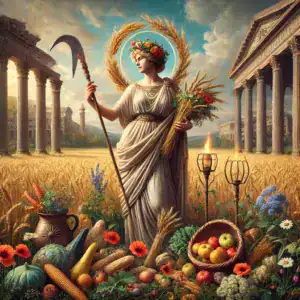
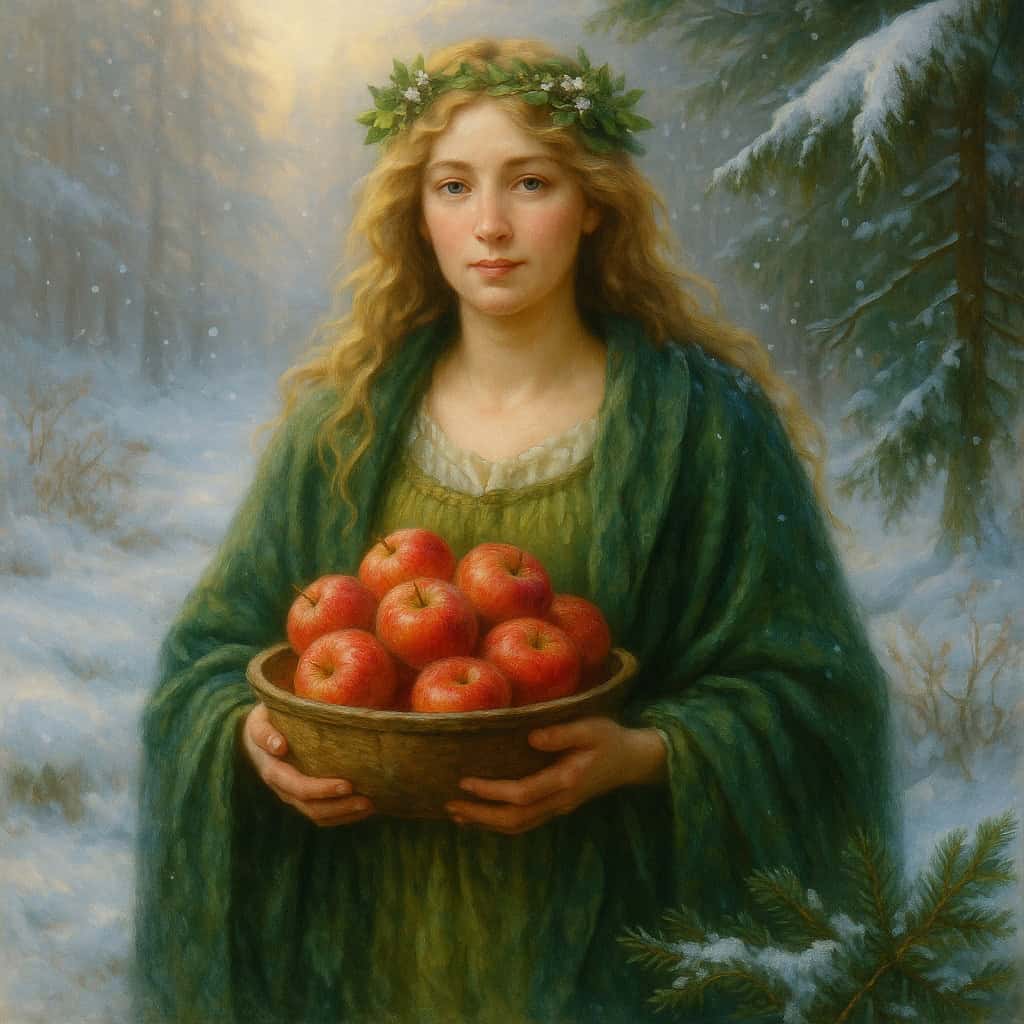
In art and poetic imagination, Idunn is often portrayed as youthful and radiant, her features embodying the freshness of early spring. She is commonly shown holding her apple box, known as the “epli” chest, from which she dispenses the sacred fruit. Surrounding her might be:
- Blossoming branches
- Tender green shoots
- Birds heralding spring
- Golden apples glowing with soft inner light
Her clothing is imagined in the gentle hues of renewal—greens, golds, soft pinks, and fresh whites. In some depictions, vines or flowers intertwine with her hair, reflecting her inseparable bond with the earth’s cycles.
Her imagery is less martial or imposing than that of many Norse deities; instead, it highlights serenity, nourishment, and the vibrant promise of rebirth. Idunn is not a goddess who conquers—she restores.
Her Divine Essence
Idunn represents:
- Youth that is more than physical beauty—youth as vitality, possibility, and momentum
- The courage to begin again
- The quiet, persistent power of renewal
- The invisible forces that sustain the world
She is the flame that rekindles the sun after winter, the sweetness after hardship, the green rebirth after the long night of Yule.
Mythological Background
Idunn’s place in Norse mythology may seem quiet at first glance, yet her story reverberates through the entire cosmology. She does not seek glory, nor does she dominate the battlefield or the halls of poetry. Instead, she sustains the very foundation upon which the gods depend. Her mythological background reveals her indispensable nature, her vulnerability, and her profound connection to cycles of renewal—making her presence especially meaningful during Yule, the season of hope and rebirth.
The Tale of Her Abduction—A Crisis of Divine Mortality
The most notable myth involving Idunn is the dramatic tale of her abduction by the jötunn Thjazi, an event that nearly brought the Aesir to ruin. This myth demonstrates that the immortality of the gods was not inherent, but maintained—and that Idunn herself was the guardian of that fragile blessing.
The story begins with Loki’s trademark mischief. While traveling with Odin and Hoenir, Loki found himself ensnared in a bargain with the giant Thjazi, who demanded Idunn and her apples as compensation. Forced by fear or folly, Loki lured Idunn from Asgard by telling her he had found apples even more wonderful than her own just beyond the city walls. Trusting him—perhaps naively—Idunn followed, carrying her precious chest of golden fruit.
The moment she stepped into the open, Thjazi swooped down in the form of an eagle, seized her, and carried her off to his realm.
Without Idunn, the gods began to age almost immediately. Skin wrinkled, hair grayed, joints stiffened, and vigor faded. Panic swept through Asgard, and blame fell squarely upon Loki’s shoulders. Under threat, Loki transformed into a falcon, flew to Thjazi’s stronghold, and rescued Idunn by turning her into a nut—light enough to carry. Thjazi pursued, but the gods raised a wall of fire at Asgard’s gates, destroying him and finally restoring Idunn and her irreplaceable apples to their rightful place.
This myth embodies a powerful truth:
Even the mighty rely on renewal. Even the divine need rejuvenation.
Without Idunn, all things falter.
Her Divine Marriage: Idunn and Bragi
Idunn is married to Bragi, the god of poetry, wisdom, and eloquence. Their partnership symbolizes a delicate but profound harmony:
- She gives renewed life;
- He gives renewed meaning.
Bragi’s gift of poetry is nourishment for the spirit, just as Idunn’s apples are nourishment for the flesh. Together, they represent both the vitality of life and the beauty that makes life worth living.
They are one of the gentlest and most balanced divine couples in Norse lore—a union rooted in mutual support and the weaving of continuous cycles of creation, inspiration, and renewal.
Keeper of the Apples—A Sacred Role Above All Others
One of Idunn’s essential roles is maintaining the eschatological balance of the cosmos. The gods are not innately eternal; they remain ageless only because Idunn tends, protects, and dispenses the apples of rejuvenation.
These apples are not simply fruit—they are embodiments of springtime vitality, the promise of renewal, the possibility of beginning again. They symbolize:
- Healing
- Restoration
- The ever-returning cycle of life
Her guardianship reflects the Norse understanding of the universe as a place of constant change, where even divine beings must tend to their longevity.
Idunn at Yule—The Quiet Flame of Renewal
Yule, the longest night of the year, is a celebration of endurance and the return of the light. While other deities may engage in more dramatic roles during the season—Odin leading the Wild Hunt, Thor protecting the cosmic order—Idunn quietly embodies Yule’s underlying spiritual truth:
The light will return. Life will regrow. After darkness comes renewal.
During Yule, Idunn’s energy is often invoked to kindle hope during the darkest nights, reminding us of:
- The seeds sleeping beneath winter snow
- The promise of warmth after cold
- The unseen forces preparing for rebirth
Her presence in Yule is gentle but unwavering—a whisper of dawn on the horizon.
A Goddess of Cycles—Death, Dormancy, and Renewal
Though Idunn is strongly associated with spring, she also holds deep ties to the cyclical nature of the year as a whole. Her apples represent more than youth—they signify the perpetual rhythm of life, death, and rebirth. In the Norse worldview, this cycle is sacred: winter’s stillness carries the blueprint of spring.
Therefore, during Yule—as the wheel of the year turns toward renewal—Idunn stands as a guardian of hope, a reminder that vitality will return. Her mythology teaches that nothing is truly lost; it simply rests, waiting for the right moment to bloom again.
Symbols and Associations
Idunn’s presence in Norse mythology is woven through a tapestry of powerful symbols—each one reflecting her deeper mysteries of vitality, renewal, and the eternal return of life after winter. During Yule, when darkness stretches long and cold across the world, these symbols gain even more resonance. They remind practitioners that beneath the frozen earth, the pulse of rebirth is already stirring.
The Golden Apples — Seeds of Eternal Youth
Idunn’s most iconic symbol is, of course, her golden apples, bright and luminous like miniature suns held in the palm of her hand. These apples are:
- Fruits of immortality, maintaining the youth and vigor of the gods
- Symbols of spring, renewal, and awakening
- Tokens of cyclical hope, reminding us that vitality can be regained, not merely lost
Unlike other mythological apples that tempt mortals into misfortune, Idunn’s apples nourish and restore. They are gifts of longevity, healing, and spiritual endurance.
During Yule, they represent the returning light—even in the heart of winter’s darkness.
The Chest That Holds the Apples — Keeper of Life’s Promise
Often overlooked in retellings is the ornate chest or casket in which Idunn stores her apples. This chest symbolizes:
- Protection of sacred knowledge
- Nurturing life even while hidden away
- The womb-like quality of renewal, holding potential until the time is right
During winter, this image reflects how the earth holds the seeds of spring in waiting—quiet but powerful.
Potted Plants, Seeds, and New Growth
Because Idunn governs rejuvenation, she is connected to all forms of young, growing life:
- Budding plants
- Fresh sprouts
- Blossoms
- Tender leaves emerging after snow
These symbols remind practitioners of the subtle but persistent strength of nature—that even when the world seems barren, life is preparing its return.
Gardening Tools and Cultivator’s Implements
In many modern depictions and devotional practices, Idunn is linked to garden tools—small trowels, pruning shears, watering cans. Though simple, they carry profound meaning:
- Care and intention
- Tending the unseen
- Actively participating in cycles of growth
Idunn is not a goddess of effortless miracles—she teaches that renewal requires tenderness, patience, and mindful stewardship.
Colors of Idunn — Spring’s Palette in Midwinter
Her colors evoke the first brushstrokes of spring:
- Soft greens — new leaves, healing, renewal
- Warm gold — sunlight, apples, vitality
- Delicate pinks and whites — blossoms and purity
During Yuletide ritual, these colors offer emotional brightness amid the dark winter palette of deep blues and silvers.
Elemental Associations — Earth and Air in Harmony
Idunn’s essence is rooted in two primary elements:
- Earth, representing life, fertility, groundedness, and the hidden strength of roots beneath snow
- Air, symbolizing breath, awakening, and the first warm winds of spring
Together, these elements reflect her ability to bridge what is dormant with what will bloom.
Associated Animals — Birds of Spring and Pollinators
Though not tied to a single definitive animal in the lore, Idunn is often spiritually associated with:
- Songbirds, heralds of dawn and the shifting seasons
- Bees, as guardians of orchards and symbols of industrious renewal
- Deer, creatures linked to the forest’s rebirth
All represent gentleness, perseverance, and the stirring of new life.
Seasonal Correspondence — Yule and the Dawn of Spring
While Idunn is most strongly associated with spring, her presence during Yule highlights a profound cosmic truth:
Every renewal begins in the dark.
Thus, her symbols during Yule emphasize:
- The first spark beneath the snow
- The promise of thaw
- The knowledge that winter is a passage, not a prison
In this way, Idunn becomes not only the goddess of youth, but the goddess of hope.
Worship and Devotion
Idunn’s worship has always been subtle, woven into the quiet rhythms of nature rather than expressed through grand temples or warrior rites. Unlike Odin or Thor, whose cults shaped public ritual and poetic tradition, Idunn’s reverence lived in the hidden spaces of hearth, orchard, and household. She is a goddess approached with gentleness, gratitude, and trust—qualities reflective of her own essence.
During Yuletide, when the world lies dormant beneath blankets of frost, Idunn becomes a symbol of the life-to-come rather than the life that is. Her presence endures not in blinding displays of power, but in the small, steady promise of renewal. Thus, her worship (both ancient and modern) often centers on acts that acknowledge quiet growth and the cyclical heartbeat of nature.
Historical Practices and Cultural Reverence
While direct historical evidence of specific cult worship of Idunn is scarce—owing to the oral nature of Norse tradition—scholars widely recognize that she held an essential, if understated, place in the spiritual worldview of the Norse people.
Her importance was baked into everyday life:
- Orchards and fruit-bearing trees were treated with exceptional respect, as apples were a rare and precious symbol of vitality.
- Seasonal customs emphasized storing, preserving, and cherishing food through winter—mirroring Idunn’s sacred guardianship of sustenance and youth.
- Lore surrounding the turning of the year often invoked the themes of renewal, protection, and the safeguarding of life’s continuity—all realms under Idunn’s care.
Although no monumental shrines to Idunn have been unearthed, devotion to her was expressed through the tending of orchards, the preservation of seeds, and the blessings spoken over coming harvests. Her worship lived in the careful rituals of preparation that sustained communities through the cold season.
Yuletide Devotion: Honoring Renewal in the Heart of Winter
During Yule, Idunn’s blessings echo through the rituals that mark the transition between the old year and the new. While Odin and the Wild Hunt dominate the dramatic imagery, Idunn offers a gentler, quieter form of magic: the reassurance that life will return, even when the sun is weakest and the nights longest.
Modern practitioners draw upon this symbolism through:
- Apple Offerings: Fresh apples, dried slices, or carved wooden apples placed on the altar to honor her gifts of youth and vitality.
- Greenery and Sprouting Plants: Potted herbs, new shoots, or winter-hardy plants that embody the promise of spring.
- Seeds Saved for Spring: A powerful offering representing faith in the cycle of life, fertility, and new beginnings.
- Honey or Mead: Sweet offerings symbolizing nourishment, health, and the simple joys of life.
Each of these offerings reflects gratitude for the resilience of nature, even in its quietest season.
Ritual Acts of Renewal and Hope
Because Idunn embodies the return of life, many rituals dedicated to her during Yule focus on renewal, healing, and the strengthening of vitality—both spiritual and physical.
Common Yule practices might include:
- Lighting a green or gold candle to represent the spark of life held safe through winter’s chill.
- Whispering wishes of rejuvenation into an apple before burying it in the snow, symbolizing the planting of personal or magical intentions for the coming year.
- Blessing seeds or bulbs that will be planted in spring, honoring Idunn as the caretaker of their slumbering potential.
- Meditative walks through winter landscapes, reflecting on nature’s quiet perseverance.
Such rituals help practitioners align themselves with the slow, steady heartbeat of the earth—a powerful reminder that transformation begins long before it becomes visible.
Modern Pagan and Heathen Devotion
In contemporary spiritual practice, Idunn is often honored by:
- Creating a winter altar featuring apples, seeds, plants, and natural symbols of growth
- Performing renewal rites during Yule or at the first signs of the returning sun
- Using apple-based foods (such as cider, pastries, or baked goods) as sacred offerings shared between family and deity
- Journaling or contemplation focused on what must be rejuvenated in one’s own life
Many modern Heathens and witches see Idunn as a guide for self-care, healing, and inner revitalization. She is invoked in rituals involving:
- emotional renewal
- recovery from hardship
- strengthening of vitality or health
- healing after spiritual fatigue
The Quiet Sanctity of Devotion to Idunn
Unlike more dramatic deities, Idunn does not demand intensity—she invites participation in the subtle mysteries of life. Her worship encourages:
- patience
- gentleness
- trust
- hope
To honor Idunn is to honor the delicate processes that sustain life: the slow growth of a seed, the tending of a garden, the healing of the body, and the quiet deep breath after a long cold season.
In this way, devotion to Idunn—especially during Yule—becomes a practice of tending to the inner hearth, preparing for the spring that has not yet come, and believing in the promise that renewal is always on its way.
Attributes and Lessons
Idunn’s nature is unlike that of the thunderous or war-centered gods of the Norse pantheon. She is quiet but indispensable, gentle but powerful, modest but foundational to the very continuity of divine life. Her essence is found not in dramatic feats but in the quiet miracles of endurance, recovery, and the delicate renewal of the natural world. During Yule—the hinge between death’s stillness and the return of the sun—her gifts become especially poignant.
The Attributes of Idunn
Idunn is the heart of rejuvenation, a goddess whose strength lies in the steadiness of life’s unbroken cycle. Her character reflects several defining qualities:
- Gentleness: She embodies soft power—the kind found in healing, growth, and the persistent unfolding of nature.
- Nurturing Presence: Just as plants require attentive care, Idunn tends to the gods and the world, sustaining vitality from within.
- Hopefulness: She is the promise that no winter lasts forever. Her presence reminds mortals and gods alike that renewal is always possible.
- Resilience: Even though she is not a warrior goddess, she carries an unshakeable steadfastness. Her strength is the kind that survives silently, unfaltering through the frost.
- Purity and Wholeness: Idunn’s apples symbolize purity—not innocence, but the unbroken essence of life unburdened by decay.
Her attributes are gentle, but not weak; subtle, but not small. They are the attributes of life itself—quiet, persistent, and eternally returning.
Lessons Idunn Teaches
Idunn’s mythology and her role in Yule offer profound teachings that apply both spiritually and personally. Her stories are not merely about apples or immortality—they are metaphors for resilience, trust, and the sacredness of renewal.
- Renewal Comes from Within
The myth of Idunn’s abduction highlights the essential truth that life withers without renewal. Just as the gods aged and weakened in her absence, we too require intentional acts of restoration. Her story is a reminder:
- to rest before exhaustion breaks us
- to nourish ourselves before depletion
- to honor our cycles and seasons
She teaches that rejuvenation is not indulgence—it is maintenance of the soul.
- Even Dormant Life Is Still Life
During Yule, Idunn’s energy rests deep inside the earth, beneath the frozen soil. Though nothing grows on the surface, everything is preparing beneath it. She teaches us to trust the unseen processes—the ones that take root long before they blossom.
This lesson encourages patience and faith during times of:
- stagnation
- waiting
- grief
- transition
Idunn reminds us that stillness is not failure; it is the gathering of strength.
- Hope Is a Sacred Act
As the guardian of vitality, Idunn’s very presence is an act of hope. Her apples symbolize not only eternal youth but also the belief that life continues despite hardship. She teaches:
- to carry hope through our winters
- to protect what nurtures us
- to hold onto the small rituals that sustain our spirits
Hope, in Idunn’s realm, is not naive—it is sacred.
- Growth Requires Care
Idunn’s dominion includes orchards, gardens, seeds, and sprouts—all aspects of life that require dedicated tending. She teaches us that growth:
- cannot be rushed
- thrives with gentle attention
- demands consistency over intensity
She encourages mindful cultivation—of goals, relationships, habits, and healing.
- Renewal is Cyclical, Not Linear
The returning sun of Yule mirrors the return of Idunn’s vitality. She teaches that renewal:
- arrives in cycles
- may require previous letting-go
- is natural and inevitable
- varies in pace and form
Her lessons align us with the rhythms of nature rather than the pressures of constant achievement.
Relevance Today
In modern spiritual practice, Idunn is a powerful guide for:
- self-care and healing work
- nurturing new beginnings
- recovery from burnout
- mental and emotional restoration
- rites of passage or personal transformation
She encourages us to cultivate habits that sustain us—not just physically, but emotionally and spiritually.
Especially during Yuletide, Idunn’s relevance is profound. In a world obsessed with urgency and productivity, she invites practitioners to:
- slow down
- reconnect with their internal cycles
- honor the natural rhythms of rest and rebirth
- approach themselves with gentleness
Idunn offers the wisdom that renewal is not a reward—it is a necessity, and that tending to one’s vitality is an act of devotion in itself.
Magical and Spiritual Work
Working with Idunn’s energy is like stepping into a quiet orchard at dawn: soft light, budding promise, a sense of peace that vibrates with potential. Her magic is subtle yet powerful, rooted in renewal, healing, and the steady cultivation of life. While some gods demand fire and thunder, Idunn invites practitioners into intimate acts of care, gentleness, and hopeful intention.
Magical Themes: Renewal, Vitality & Hope
Idunn’s magic is especially potent during Yule, when the world rests in winter’s stillness but quietly prepares for spring. Spells and rites dedicated to her are centered around:
- restoration and healing
- new beginnings and rebirth
- strengthening vitality, health, and youthfulness
- emotional recovery and resilience
- long-term growth and life cycles
Her magic unfolds slowly, like roots beneath snow—steady, patient, and transformative.
Rituals and Spellwork with Idunn
Rejuvenation Spells
These spells aim to restore energy, clear exhaustion, and renew the spirit.
- Place a fresh apple on your altar.
- Carve runes like Berkano (growth), Uruz (strength), or Laguz (flow) into the skin.
- Hold the apple in both hands during meditation, envisioning Idunn’s blessings filling you with vitality.
- Eat the apple afterward as an act of internal renewal.
This ritual is ideal during exhaustion, illness recovery, or emotional heaviness.
Gardening or Seed Blessings
Because Idunn governs the life force within seeds and fruit, any ritual involving planting becomes powerful under her guidance.
- Hold seeds beneath the full or waxing moon.
- Whisper intentions for growth, healing, or new beginnings.
- Plant the seeds in a pot (even in winter), tending them as a long-term devotional act.
Each sprout becomes a living symbol of your hope and resilience.
Yule Apple Blessing
During the Yuletide season, make offerings or perform blessings with apples to honor her seasonal role.
- Slice an apple horizontally to reveal the pentagram within.
- Dry the slices for charms, wreaths, or spell sachets.
- Offer whole apples to Idunn on Yule night with prayers for growth in the coming year.
This ritual binds her spring-like blessings to the turning of the solar wheel.
Emotional Healing & Inner Renewal
A gentle candle ritual:
- Light a green or white candle at dusk.
- Sit quietly with a warm blanket, a cup of herbal tea, or comforting scents.
- Ask Idunn to help you release emotional fatigue.
- Visualize old grief or stress dissolving as fresh green energy flows in.
Her magic heals softly, tenderly, and encourages emotional wholeness rather than suppression.
Divination and Spirit Communication
Idunn is not typically invoked for prophecy like Odin or Freyja, but her presence can enhance intuitive clarity, particularly regarding long-term paths, healing trajectories, or personal growth cycles.
Fruit Scrying
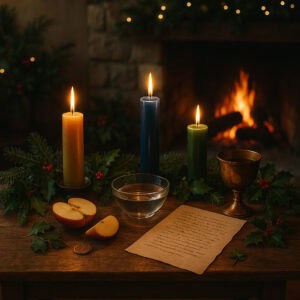
Meditate while gazing into a bowl of water containing apple slices, allowing subtle insights or emotional truths to rise.
Tree and Orchard Meditation
If you have access to an orchard or grove, walk among the trees in quiet contemplation, asking Idunn to reveal what needs nurturing in your life.
Signs & Omens from Idunn
She often speaks in symbols of:
- sprouting plants
- unexpected flowers
- dreams of orchards
- finding seeds, fruit, or herbs
- sensations of warmth during meditation
Her messages rarely come as warnings—they come as guidance toward renewal.
Altar and Sacred Space
An altar for Idunn should feel like a place where warmth meets growth, where gentleness meets hope. It can be a small corner, a windowsill, or a dedicated sacred table—but it should be kept clean, peaceful, and filled with living or symbolic vitality.
Common Altar Items
- Fresh apples or apple imagery (core offering and symbol of her essence)
- Potted plants or sprouting seeds
- Gardening tools (miniatures or ritual versions)
- Green, gold, or soft pink candles
- Offerings of honey or fresh water
- Herbs like chamomile, basil, mint, or apple blossoms
- Symbols of spring—eggs, flowers, small birds, or budding branches
Placement and Atmosphere
Because Idunn’s magic is soft and renewing:
- Choose a space where natural light touches your altar.
- Add gentle scents—apple, chamomile, lavender.
- Keep the area uncluttered to honor her simple, life-giving presence.
A clean, calm altar mirrors her purity and reinforces her role as a goddess of fresh starts.
Working with Idunn in Yule Rituals
During the Yuletide season, Idunn’s influence becomes especially meaningful. Winter is her still point—the place where renewal is preparing to rise.
Yule rites may include:
- blessing the year’s final apple
- tying wishes for renewal to evergreen branches
- crafting apple ornaments or charms
- invoking her at the turning of the sun to bless the coming year
- creating a “renewal journal” to track emotional or spiritual regrowth
She helps practitioners plant the seeds—literal or emotional—that will flourish in spring.
Safety, Respect, and Ethical Considerations
Approaching Idunn means stepping into a space of tenderness, hope, and quiet renewal. She is not a goddess of firestorms, thunder, or fierce initiations; her energy is soft and restorative—but that softness should never be mistaken for weakness. Idunn embodies the profound, enduring power of growth, healing, and life itself. Like a seed pushing through winter soil, her magic is subtle but unstoppable.
Because of this, working with Idunn requires sincerity, patience, and respect.
Honor Her Through Authentic Intention
Idunn responds best to gentle, honest efforts at self-care, healing, and renewal. Unlike gods who thrive on grand gestures or dramatic oaths, Idunn values:
- consistency over spectacle
- genuine hope over forced positivity
- small, nurturing acts over elaborate displays
Coming to her with hurried energy or a desire for instant transformation can feel discordant with her nature.
Respect the Cycles of Growth and Rest
Idunn is a goddess bound to natural rhythms—the budding of plants, the slow ripening of fruit, the turning of seasons. When working with her:
- Avoid rushing results.
- Honor periods of rest, reflection, and emotional winter.
- Let changes unfold organically.
Pushing against these rhythms may lead to frustration or misaligned outcomes in your workings.
Avoid Using Her Magic for Vanity or Manipulation
Though Idunn governs youthfulness, her gifts are not about superficial beauty or eternal perfection. Her apples restore vitality because the gods need strength to fulfill their roles—not because they fear aging.
Thus, her energy should never be invoked for:
- Manipulating appearances to deceive others
- Shallow pursuits of beauty without inner growth
- Bypassing emotional or physical healing with “quick fixes”
Transformation with Idunn always begins from within.
Keep Your Sacred Space Clean and Pure
Idunn’s presence feels brightest in spaces that reflect:
- cleanliness
- order
- fresh air
- natural light
- simplicity
Clutter, stagnation, or chaotic energy can make offerings feel unfocused. Cleansing your space—physically and spiritually—before inviting her is a sign of respect.
Listen More Than You Demand
Idunn’s messages tend to arrive quietly through:
- subtle emotions
- gentle dreams
- the appearance of flowers or fruit
- feelings of renewed hope
- intuitive nudges toward self-care
Her voice is rarely forceful. Approaching her with openness allows her guidance to grow naturally in your life.
Understand Her Cultural and Mythological Context
Idunn is part of a larger Norse worldview where cycles, fate, and balance shape divine relationships. Working with her ethically means:
- acknowledging the roots of her mythology
- respecting Norse traditions and cosmology
- avoiding the urge to reshape her into a modern stereotype
Her power is found in the continuity of ancient wisdom and the persistence of life through time.
Conclusion
Idunn stands as one of the quiet cornerstones of Norse cosmology—a goddess whose gentle influence sustains the very heartbeat of the divine. In Yuletide’s deep winter hush, when the world contracts into stillness and rest, her presence becomes even more meaningful. She reminds us that beneath every frozen field lies the memory of spring, and within every resting seed sleeps the promise of life renewed.
Her golden apples are not simply symbols of youth; they are emblems of vitality, resilience, and the cyclical truth that growth never truly ends. Whether carried in mythic baskets through the halls of Asgard or honored on an altar adorned with greenery and light, her gifts speak to the soul’s capacity for rejuvenation. Idunn encourages us to trust in beginnings yet to bloom, to tend gently to our own healing, and to approach our lives with hope that outlasts the darkest nights.
During Yule, a season of reflection and quiet magic, Idunn’s essence becomes a guiding lantern. She teaches that renewal does not require force—it unfolds naturally when we nurture ourselves and remain open to possibility. Her presence invites us to soften, to breathe deeply, and to reconnect with the simple but profound rhythms of life: rest, restore, rise, and return.
As the wheel of the year turns and the light begins its slow ascent, Idunn blesses all who seek her with the strength to persevere, the patience to grow, and the courage to begin again. In honoring her, we honor the eternal truth that hope is never lost—it merely sleeps, waiting for the warmth of our intention to awaken it once more.