Introduction
A late-summer ritual of harvesting, preserving, and preparing your magical herbs for the seasons ahead.
August hums with the richness of growth. The sun still burns bright, but there’s a whisper of waning in the wind—a subtle shift that tells the seasoned witch it’s time to gather. The gardens, hedgerows, and window boxes offer their final abundance before the wheel turns toward autumn. It is in this golden cusp of the year that we turn our hands to harvesting herbs. Herbs such as sage, basil, mint, and rosemary are at their peak in late summer—vibrant, aromatic, and full of concentrated energy. Harvesting them now ensures not only their best flavor and potency but also aligns your practice with the natural cycle of reaping and preservation. This article will guide you through the art and magic of collecting and drying herbs in August. You’ll learn why timing matters, how to prepare your space and tools, and how to store your harvest for winter use—whether for spellwork, healing brews, or nourishing meals.

The Harvest Window – Why August Matters
There’s a rhythm to the green world, and August sings the final, golden verse of summer’s song. For traditional witches, wise folk, and herbalists, this time of year is sacred—a culmination of sunlight, soil, and subtle energies that have been building since the spring thaw. To harvest in August is to catch a plant at its fullest expression, just before it begins the quiet descent into rest and seed.
By this point in the season, most perennial and annual herbs—especially those favored in magical practice like sage, basil, mint, and rosemary—have matured under the full strength of the summer sun. Their leaves are lush with essential oils, their stems are firm, and their aroma is most potent. If you wait too long—past first frost or into the early seeding cycle—the plant begins to draw its energy inward, conserving strength for survival rather than generosity. The flavor fades, the medicinal properties dilute, and the magical potency wanes.
Sage, basil, mint, and rosemary each carry the blessing of solar energy. In magical terms, they are ruled by the Sun or Mercury, planets associated with clarity, communication, healing, vitality, and purification. To harvest them in August is to bottle up the sun itself—its warmth, its illuminating power, its invigorating presence. These are herbs that will become invaluable in the darker months, when candles flicker in shadowed corners and a sip of rosemary tea feels like sunrise in a cup.
But beyond timing and potency, the harvest is a spiritual dialogue with the land. It is not a taking, but a conversation. In folk tradition, it was common to whisper thanks to the plant, to cut with a dedicated blade or sacred sickle, to make offerings of song, water, or even a small braid of your own hair. These acts of reverence aren’t just quaint customs—they are magical ethics, reinforcing the bond between practitioner and plant spirit. Just as the earth provides for you, you must provide in return: by leaving enough for pollinators and wildlife, by allowing the plant to regenerate, and by never harvesting in greed or haste.
This spirit of reciprocity is at the heart of the harvest window. It teaches restraint, gratitude, and mindfulness—qualities that carry through into every spell or remedy you craft from your dried herbs. When you steep a tea in January, brew a potion at Yule, or burn a cleansing bundle on a stormy Samhain night, you are calling upon the August sun and the relationship you forged beneath it.
Harvesting in August is not just practical. It is holy. It is a rite that honors the fullness of life while acknowledging the turning of the Wheel toward decline. It is an offering to yourself, your craft, and the spirits that dwell within leaf and root. And when done with care, it ensures that your cupboard is not just full, but sacred—lined with green memory and solar promise.
Preparing for the Gathering – Tools and Timing
As any seasoned practitioner knows, the gathering of herbs is not simply a matter of clipping stems and storing leaves. It is a ritual—a meeting of energy, intention, and sacred time. To begin this act unprepared is to miss the silent conversation between plant and witch. So before stepping out to harvest your green allies, ready yourself as you would for spellwork.
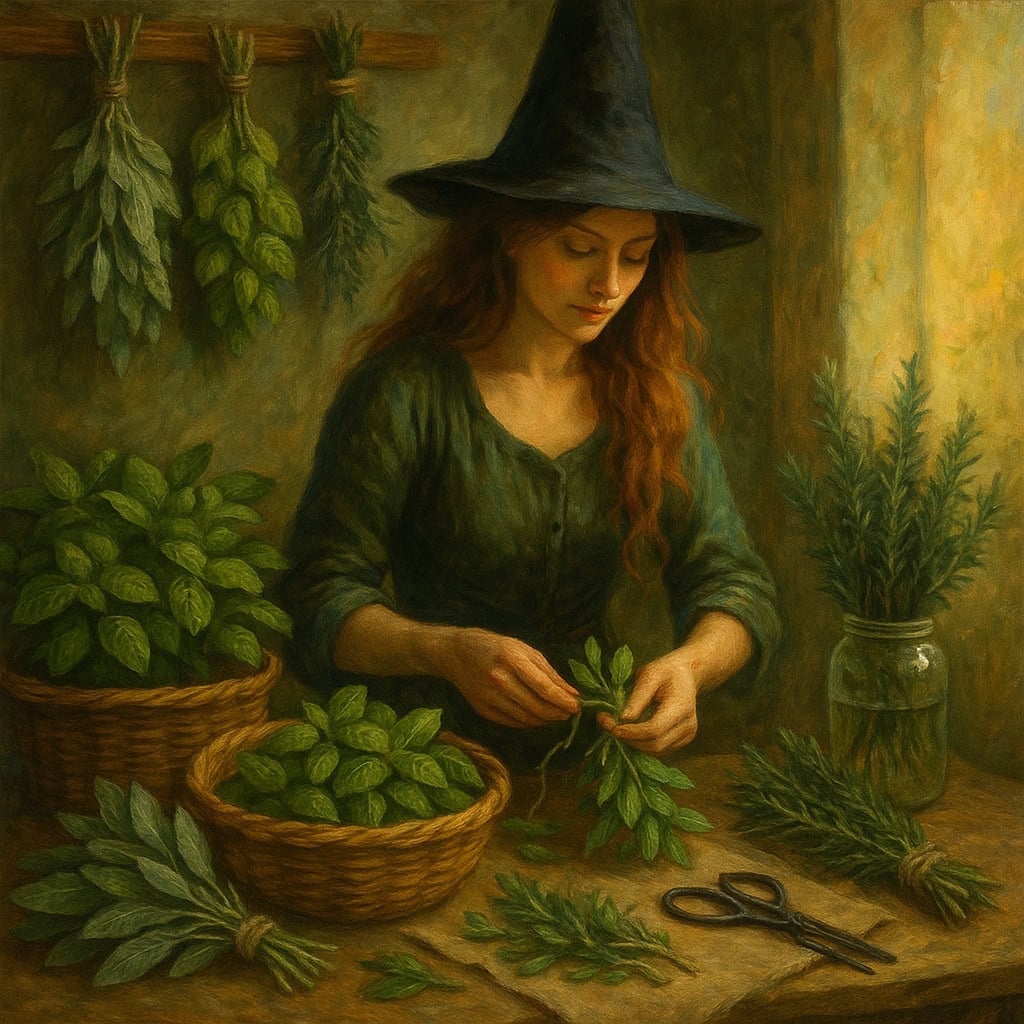
First, gather your tools. Your herb scissors, snips, or boline should be sharp, clean, and spiritually dedicated. These are not everyday utensils for chopping onions or trimming twine—reserve them solely for herbal work. Before the season begins, consider cleansing them with smoke from mugwort or juniper, or submerging them in moon-charged water to remove residual energy. Whisper your intent into the blade: that it cut only in gratitude and reverence, never in greed.
Choose your gathering vessel with equal care. A woven basket lined with cloth or a pouch made of natural fiber helps prevent bruising and keeps airflow circulating, preserving the plant’s vitality until it reaches your drying space. Plastic or tightly sealed containers may suffocate the herbs, causing wilting and dampness—two enemies of a clean, magical harvest.
Timing is critical. Set out in the morning once the dew has lifted but before the sun sits high in the sky. This is the golden hour for harvesting: the plants are awake, oils are most concentrated in the leaves, and the sun has not yet begun to pull moisture from the earth. In magical terms, this moment is liminal—it holds the quiet energy of transition, ideal for gathering with intention. The waxing moon is favored for herbs that will be used in growth, clarity, or healing work; the waning moon for banishing, purification, or introspective blends.
When returning with your harvest, move gently and purposefully into the space where your herbs will dry. Your drying area should be dark, dry, and well-ventilated—away from harsh sunlight, which can leach the oils and magic from your plants. A spare room, closet, or even a shaded attic corner can serve beautifully. If space allows, hang herbs upside down from string or twine. This method not only preserves their shape but channels the plant’s remaining energies downward into the leaves—a principle borrowed from ancient herbalism.
For smaller sprigs, delicate flowers, or large harvests, consider using mesh drying racks or shallow trays lined with parchment paper. You can also slip stems into paper bags with pinprick holes for airflow, especially if you’re drying items that may drop seeds or crumble easily. Avoid metal surfaces unless they’re food-grade stainless steel, as some herbs can react with oxidizing materials.
And most importantly: label everything. In the moment, you might swear you’ll remember which bundle was basil and which was lemon balm—but in a month’s time, memory fades, especially when dozens of drying bundles look eerily similar. Use tags, clothespins, or parchment notes to include not just the name of the plant but the harvest date, moon phase, location, and—if you like—the magical intention of the harvest. Did you gather rosemary under the full moon to enhance memory work? Note it. Was the mint cut as a storm brewed to infuse power and protection? Write it down. These notes become part of your magical record, and they breathe extra life into your future spellcraft.
To prepare well is to honor both the plant spirit and your practice. It ensures not only that your herbs will retain their flavor, fragrance, and medicinal potency, but also that the energy woven into your work will remain clear, potent, and intentional. In this way, even the quiet act of clipping mint becomes a ritual of devotion, a promise whispered to the earth that nothing will be wasted—and everything will be used in purpose.
Preserving the Magic – Drying and Storing Herbs
Drying herbs is a slow alchemy—a quiet unfolding where moisture gives way to memory, and the lush green energy of summer is sealed for use in the dark months ahead. Once your herbs are tied and hung, patience becomes part of the ritual. Depending on humidity, airflow, and the type of herb, the drying process may take one to two weeks. You’ll know they’re ready not by the ticking of a clock, but by the crackle of leaf against finger. When the leaves crumble easily and cleanly, the moisture is gone—and the magic is ready to be preserved.
Take care during this moment of transition. Strip leaves or flowers gently from their stems, always with reverence. You are not just storing herbs; you are bottling intention, season, and spirit. Handle each plant as if it still lives—because in many ways, it does. Its energy lingers in its oils, its scent, its color, and in the spell it carried from root to sky. If you’ve harvested with intention, that magic is still present.
For storage, use glass apothecary jars with tight-fitting lids, clean tin canisters, or parchment-lined envelopes. Avoid plastic, which can suffocate and degrade delicate oils over time. Choose vessels that allow the herbs to breathe, but also protect them from the elements—especially moisture, which invites mold, and sunlight, which fades both potency and power. A dark cupboard, drawer, or covered shelf becomes more than a practical solution—it becomes a sacred archive of your herbal year.
And do not rush the labeling. The act of naming what you’ve gathered is more than just organization—it is spellcraft. Write slowly, with deliberate hand. Choose your ink with care. Use labels that reflect the magic you intend to use. A simple note that reads:
Rosemary – Cut during Waning Moon – For Protection & Memory Work
is a spell in itself. The moment of harvest, the lunar timing, the purpose—they all transform a simple jar into a vessel of sacred memory.
These labeled jars are not just supplies. They are your winter allies. In January, when snow silences the land, a pinch of dried mint can bring clarity to your altar. A crumbling leaf of sage can restore sacred space. A cup of rosemary tea can stir the spirit and fortify the heart. In these small moments, August returns—its sun still alive in the herb’s aroma, its golden heat preserved in green-brown curls and the whisper of leaves once living.
Preserving your herbs is an act of both magic and preparation, a way of holding onto light when the world turns dim. And when you unscrew the lid come midwinter, what you’ll find isn’t just the scent of basil or thyme—but the proof that the Wheel turns, the harvest returns, and nothing gathered with care is ever truly lost.
Using Your Dried Herbs in Spellwork and Seasonal Magic
Once your herbs are dried and stored, they become more than ingredients—they are active allies in your spiritual practice. These humble leaves and blossoms, preserved in the breath of August, carry both magical intent and seasonal resonance. Their use in spellwork is a continuation of the cycle you began when you planted or foraged them, a thread of energy that stretches from soil to spirit.
In Spellwork:
Each herb has its own magical correspondences—rosemary for protection and remembrance, basil for prosperity, mint for clarity, sage for purification. When used in spells, these herbs amplify your intentions and anchor them in the natural world. Burn them as incense to cleanse your space, mix them into charm bags, grind them into powders, or steep them in moon-blessed waters for anointing or ritual baths. Because they were harvested and dried by your own hand, their power is intertwined with your energy, making the spell more personal, more potent.
For example, a protection sachet made with rosemary you cut under a waning moon becomes more than a token—it’s a living link to that night’s energy, to your intention, to the land. A sprinkle of mint from your jar into a bowl during divination doesn’t just smell refreshing—it clears stagnant thoughts and calls clarity into your readings.
In Seasonal Magic:
As the year turns and the land rests beneath frost, your dried herbs offer the promise of green. Imbolc may find you stirring thyme into warm honey to invoke healing and light. At Ostara, basil may be placed on the altar to welcome fertility and growth. In Lammas rites, a pinch of sage can honor the harvest spirit while also cleansing away what no longer serves.
These herbs are not bound to the moment they were picked—they are time-travelers, ready to answer your call when the wheel turns and you seek the energy of the sun, the memory of summer, or the wisdom of the green world.
Practical Tips for Incorporation:
- Blend dried herbs into incense to match the moon phase or sabbat.
- Anoint candles with herb-infused oils or roll them in crushed dried herbs for added magical layering.
- Add herbs to spell jars or witches’ bottles as tactile expressions of intention.
- Use a small pinch in tea (if the herb is food-safe) before rituals to attune your energy.
- Create seasonal bundles for burning or hanging—combinations that represent the spirit of each turn of the Wheel.
A Note on Intention:
Because your herbs were gathered with care and possibly under ritual observation, they are already enchanted. But before each use, pause. Hold the herb in your hand. Speak your intent aloud. Let your breath stir the leaves. In that moment, you awaken the sleeping spirit of the plant and invite it to work beside you once more.
Building a Sacred Herb Cabinet or Apothecary Space
Creating a dedicated space to house your herbs is a deeply rewarding act of magical stewardship. More than simple storage, a sacred herb cabinet becomes a physical embodiment of your practice—a living archive of seasons passed, spells cast, and wisdom gathered leaf by leaf. Whether it’s a single shelf, a repurposed cupboard, or an entire apothecary nook, the energy you pour into its creation will echo through every potion, incense, and charm you craft.
Choosing the Space
Begin by selecting a location that is dry, cool, and away from direct sunlight. A quiet corner near your altar or kitchen hearth can be ideal, marrying the practical with the spiritual. Wooden cabinets, old spice racks, or vintage apothecary drawers are not only functional but also steeped in charm, helping you connect to the legacy of herbal magic through the ages.
Storage Vessels
Glass jars are ideal for showcasing the color and texture of your dried herbs while protecting them from moisture. Choose airtight containers to preserve potency, and consider using amber or green-tinted glass to shield herbs from light. Tin boxes, ceramic jars, and cloth sachets can also be used for specific blends or delicate flowers.
Label each vessel clearly—include the herb’s common and botanical name, the date of harvest, and the moon phase or sabbat of collection. For a magical touch, add symbols, sigils, or intentions to the labels. These markings aren’t just for memory—they’re spells in themselves.
Organizing Your Collection
Arrange herbs in a way that reflects your style of working. Some witches sort by magical correspondences—protection, love, abundance—while others group by element, planetary rulership, or sabbat. You might keep seasonal herbs at the forefront, rotating them as the Wheel of the Year turns.
Keep a section for blended formulas: incense mixes, anointing powders, bath teas, and pre-crafted spell blends. Small bowls or trays can hold offerings or herbs waiting to be charged.
Tools and Accoutrements
Include the tools of your herbal craft: mortar and pestle, measuring spoons, muslin bags, small strainers, beeswax for salves, and essential oils for infusions. Keep charcoal disks for burning loose incense, as well as candle holders and an oil warmer or cauldron if heat is part of your process.
Don’t forget a dedicated cloth or tray for preparing herbs—a surface that can be consecrated and used only for magical herbal work.
Making It Sacred
Your herb cabinet is not just a pantry—it is a shrine to the green world. Decorate it with small statues, bundles of dried herbs, crystals like green aventurine or moss agate, or artwork depicting Brigid, Cerridwen, or other plant-aligned deities. Light a candle or burn incense before working. Speak blessings or prayers over your jars. Cleanse the space regularly with smoke, sound, or salt to maintain clarity.
Treat the cabinet not just as storage, but as a living altar—one that honors the cycle of growth, death, and transformation that herbs teach us with every stem and leaf.
Conclusion
Harvesting herbs in August is more than a seasonal chore—it is a sacred act of foresight. Each snipped sprig is a promise that your practice will be supported through the dark half of the year. By gathering your green treasures now, you ensure that your apothecary shelves echo with sunlight even in winter.
Let this become an annual rite: to stand among blooming herbs under a waning sun, shears in hand, gratitude in heart. Dry what you gather with reverence, store it with care, and come winter, you’ll feel the summer’s heartbeat in every brew and charm you cast.