Introduction
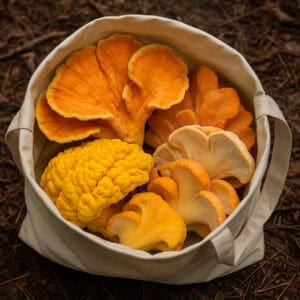
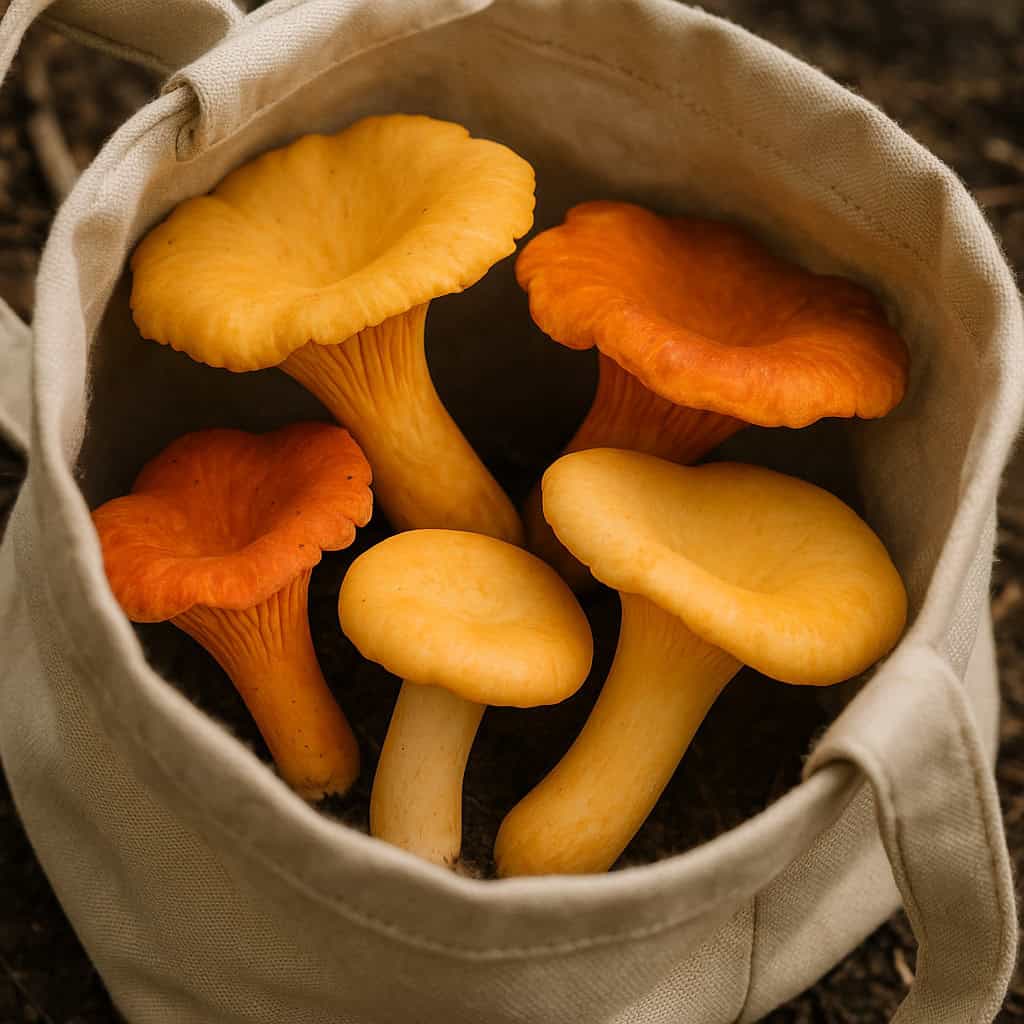
Golden treasures of the forest floor, prized for their rich flavor and vibrant color.
Few wild mushrooms excite foragers more than the elusive and enchanting chanterelle. With their unmistakable golden hue, trumpet-like shape, and rich, earthy aroma, chanterelles are a gourmet delight hiding among mossy forest paths and shaded groves. Foraging these mushrooms not only connects you to ancient culinary traditions but also rewards you with a flavorful bounty. In this article, we’ll explore how to safely and sustainably forage chanterelles, how to identify them and their variants, and how to use them for culinary, medicinal, and magical purposes.

What is it?
Chanterelles are a genus of edible wild mushrooms that grow in symbiosis with trees. Most found in forests with plenty of shade and moisture, they form mycorrhizal relationships with hardwoods and conifers, exchanging nutrients with tree roots underground.
Their wavy, vase-like caps and fruity aroma set them apart from other mushrooms. Unlike gilled mushrooms, chanterelles have ridges or false gills that fork and run down the stem. They are a delicacy in many cuisines and fetch high prices at markets due to their unique flavor and the fact that they cannot be easily cultivated.
Variants
There are several species within the Cantharellus genus, each with subtle differences in color, size, habitat, and flavor:
- Cantharellus cibarius (Golden Chanterelle): The classic bright-yellow chanterelle, commonly found in Europe and the Pacific Northwest.
- Cantharellus formosus (Pacific Golden Chanterelle): A West Coast variety with deeper orange hues, often growing under Douglas fir.
- Cantharellus lateritius (Smooth Chanterelle): Found in Eastern North America, this variant has smooth false gills and a pale golden appearance.
- Cantharellus cinnabarinus (Cinnabar Chanterelle): Smaller and vividly red to pink-orange, this species prefers hardwood forests and stands out due to its striking coloration.
How to Identify the Item and Its Variants
Correct identification is critical when foraging mushrooms. Here are the key traits of true chanterelles:
- Cap: Wavy, irregular, and vase-like. Color ranges from golden yellow to orange or pinkish-red.
- Gills: Not true gills; chanterelles have blunt, forked ridges that are decurrent (run down the stem).
- Stem: Solid, smooth, and the same color or lighter than the cap.
- Scent: Fruity and apricot-like, especially when fresh.
- Spore Print: Pale yellow to cream-colored.
🛑 Beware of Look-Alikes
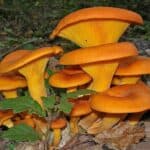
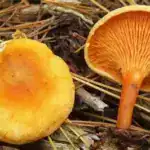
False chanterelles (Hygrophoropsis aurantiaca) and the toxic Jack-o’-lantern (Omphalotus olearius) are common misidentifications. The former has true gills and a darker cap, while the latter glows faintly in the dark and grows in dense clusters on wood.
Habits
Chanterelles thrive in moist, shady conditions and are commonly found in:
- Mixed woodlands with oaks, beeches, birches, and conifers.
- Mossy banks, forest floors, and near decaying wood (but not on it).
- Summer through early fall, particularly after a period of rainfall.
These mushrooms grow singly or scattered—never in dense clusters—and tend to reappear in the same locations year after year if left undisturbed.
How to Properly Forage the Item
- Bring the Right Tools: A mushroom knife or small blade, a brush, and a basket or mesh bag for airflow.
- Harvest Carefully: Cut the stem just above the soil to minimize disturbance to the mycelium.
- Check for Maturity: Young chanterelles have the best flavor. Avoid overgrown or overly soggy specimens.
- Inspect for Bugs: Chanterelles often host small insects. Brush or cut away infested parts.
- Leave Some Behind: Forage sustainably by taking only what you’ll use and allowing others to spore and propagate.
- Clean and Store: Gently brush off debris. Store fresh in paper bags in the fridge for up to a week, or dehydrate for long-term use.
Magical Uses
Chanterelles have long been associated with:
- Luck and Abundance: Their golden color links them to prosperity and wealth spells.
- Forest Spirits and Fae Magic: Use them to honor nature spirits or in rituals to connect with woodland energies.
- Grounding and Nourishment: Incorporate chanterelles in earth-centered spells to root spiritual energy.
Dry the mushrooms and keep them on your altar, or add powdered chanterelle to ritual incense blends.
Medicinal Uses
While not a potent medicinal mushroom like reishi or lion’s mane, chanterelles still offer healthful benefits:
- Rich in Nutrients: High in vitamins D and B, iron, and fiber.
- Antioxidant Properties: They contain carotenoids and polysaccharides that may help support immune function.
- Eye and Skin Health: Thanks to their beta-carotene content.
- Anti-inflammatory and Antimicrobial: Preliminary studies suggest these mushrooms may support general wellness.
As always, consult an herbalist or medical professional before using wild mushrooms medicinally.
Culinary Uses
Chanterelles are highly prized by chefs and home cooks alike:
- Flavor: Rich, nutty, slightly fruity, and earthy—like a mix of apricots and black pepper.
- Sautéed or Braised: Best cooked gently in butter or oil to bring out their depth.
- Pairs Well With: Garlic, shallots, cream, eggs, wine, thyme, and potatoes.
- Classic Dishes: Mushroom risotto, chanterelle soup, wild mushroom tart, or folded into omelets.
- Preserving: Freeze briefly sautéed chanterelles or dehydrate them for long-term use.
Never eat chanterelles raw—they can be tough to digest.
Cantharellus cibarius (Golden Chanterelle)
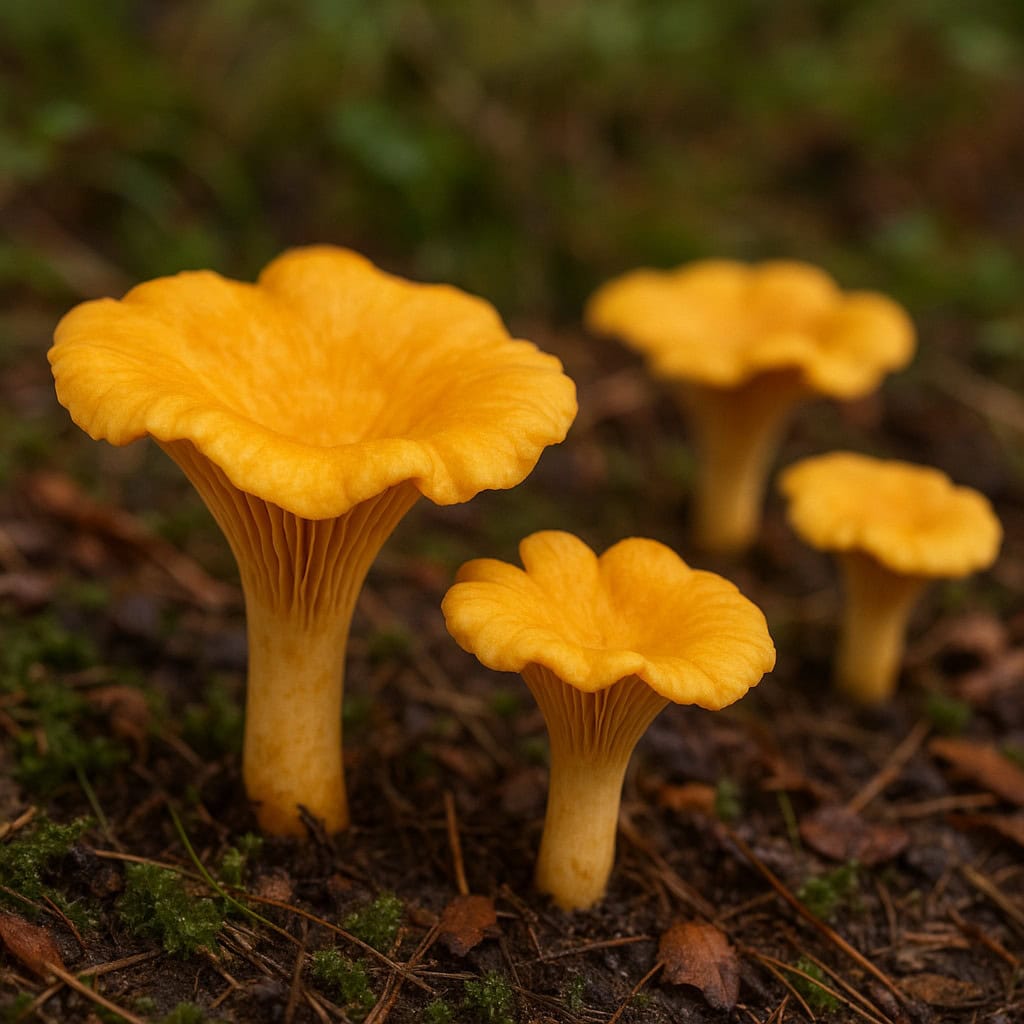
Cantharellus cibarius, commonly known as the Golden Chanterelle, is the quintessential species that most people envision when thinking of chanterelles. With its vivid yellow to golden-orange color, it stands out brightly against the forest floor, especially in the mossy, shaded environments it prefers. This iconic mushroom has been revered across Europe for centuries and is equally prized by foragers in the Pacific Northwest, where similar species thrive in abundance.
Appearance and Identification
The cap of the Golden Chanterelle is typically funnel-shaped or wavy, with edges that curl inward when young and flatten as the mushroom matures. The surface is often smooth and dry, though it may feel slightly velvety in moist conditions. The cap color ranges from egg-yolk yellow to a rich golden hue. One of its most defining features is the presence of false gills—blunt, forked ridges that run down the stem rather than the true gills found in many other mushrooms. These ridges are the same color as the cap or slightly lighter and have a soft, pliant texture.
The stem is solid, cylindrical, and usually paler than the cap. It may appear slightly swollen at the base. When sliced open, the flesh is white and emits a pleasant, fruity aroma—often compared to apricots or stone fruit—which becomes more pronounced when the mushroom is dried or cooked.
Habitat and Growth Patterns
Golden Chanterelles grow in symbiotic (mycorrhizal) relationships with trees, particularly with hardwoods like beech, birch, and oak in Europe, and with Douglas fir, spruce, and hemlock in the Pacific Northwest. They tend to favor well-drained, mossy, or loamy soil, and are often found on forest slopes, among leaf litter, or tucked into mossy banks. They typically grow singly or in small, scattered groups rather than dense clusters.
The fruiting season for C. cibarius usually spans late summer through early autumn, though it can begin as early as July in cooler, northern climates or higher elevations. After rainfall, they often appear in the same spots year after year.
Culinary Value
Renowned for their delicate, nutty flavor and firm texture, Golden Chanterelles are a chef’s favorite. Their peppery undertone and fruity aroma add depth to a variety of dishes, from creamy sauces and risottos to egg-based dishes and mushroom ragouts. Because of their firm flesh, they hold up exceptionally well in cooking, making them perfect for sautéeing, roasting, or preserving.
In European cuisine, C. cibarius is frequently paired with butter, cream, and herbs like thyme or tarragon. Its ability to absorb and enhance other flavors makes it a versatile ingredient in both rustic and refined dishes.
Nutritional and Medicinal Notes
Golden Chanterelles are low in calories but rich in vitamins, particularly D and several B vitamins. They also contain antioxidants, potassium, and copper. Some traditional uses include strengthening the immune system and supporting skin and eye health. Their high water content means they’re best stored fresh for short periods, or dried for long-term use.
Cantharellus formosus (Pacific Golden Chanterelle)
Cantharellus formosus, commonly referred to as the Pacific Golden Chanterelle, is one of the crown jewels of the West Coast’s wild mushroom scene. Highly prized for its culinary excellence and striking appearance, this species is native to the Pacific Northwest, thriving in the damp, coniferous forests that stretch from Northern California through British Columbia.
Appearance and Identification
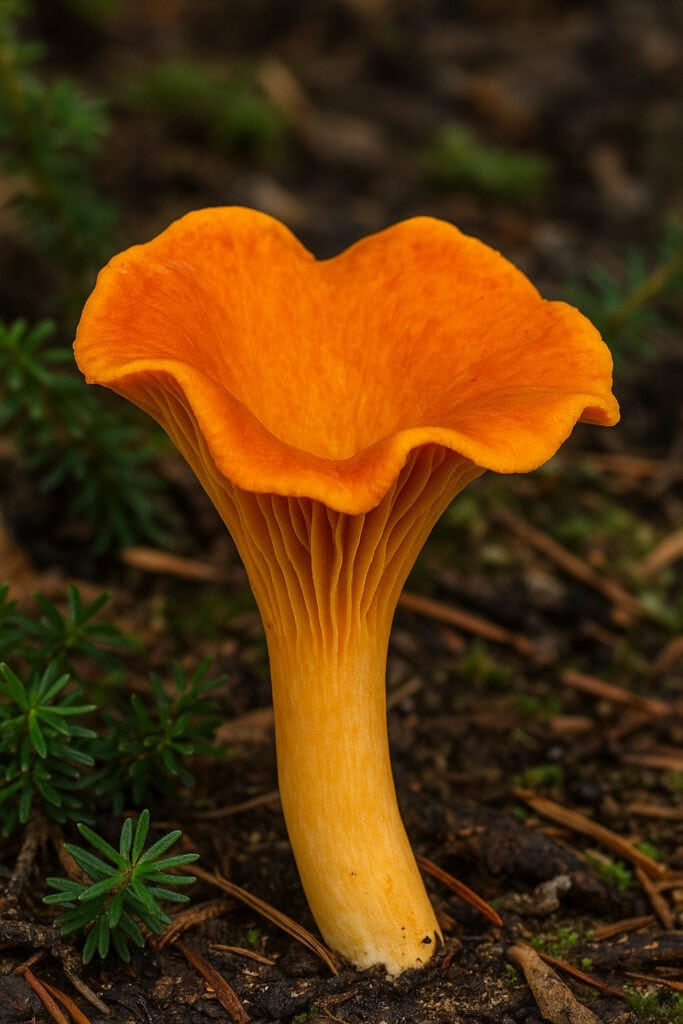
The Pacific Golden Chanterelle is often confused with its European cousin, Cantharellus cibarius, but it boasts several distinct characteristics. It tends to have deeper orange to flame-gold hues, particularly around the edges of its cap, which is more vividly colored than the yellow-toned C. cibarius. The cap is typically funnel-shaped or wavy, with an irregular, undulating margin that becomes more pronounced as the mushroom matures. The surface of the cap is smooth to slightly wrinkled and may become slightly sticky when wet.
One of the most distinguishing features of C. formosus is its false gills—these are shallow, forked ridges that extend downward along the stem. Unlike true gills, they are blunt and cannot be easily separated from the cap. These gill-like ridges are often a paler orange or cream color, contrasting softly with the darker tones of the cap.
The stem (or stipe) is solid and slightly tapered, often paler than the cap but with the same golden undertone. When sliced open, the flesh is firm and white to pale yellow and releases a sweet, fruity aroma, reminiscent of dried apricots—one of the classic signatures of the chanterelle family.
Habitat and Ecological Relationships
C. formosus thrives in mycorrhizal symbiosis with coniferous trees, particularly Douglas fir (Pseudotsuga menziesii), and occasionally Sitka spruce or western hemlock. You’ll most often find it nestled among the thick, spongy moss or duff beneath these trees, especially in old-growth or mature forests where the soil is moist and rich in organic matter.
This species prefers coastal and low-elevation forests, though it can sometimes be found further inland. It flourishes after autumn rains, generally appearing from late summer through mid-fall, though its season can extend well into early winter in milder regions.
Pacific Golden Chanterelles often grow singly or scattered across the forest floor rather than in clusters. Their vivid color makes them easier to spot against the dark forest debris, particularly when filtered sunlight catches their golden caps.
Culinary Appeal
The rich, nutty, and fruity flavor of Cantharellus formosus makes it a standout ingredient in Pacific Northwest cuisine. Its firm, meaty texture holds up beautifully to heat, making it ideal for sautéing, roasting, or incorporating into sauces, pastas, and risottos. When cooked, the mushroom develops an even deeper, buttery flavor that complements hearty grains, creamy dishes, or simply a bit of butter and garlic.
It pairs exceptionally well with thyme, rosemary, shallots, and white wine, and is commonly preserved by drying or freezing after blanching. The mushroom’s aroma and flavor intensify when dried, making it a fantastic addition to soups and stocks during the winter months.
Sustainability and Harvesting Notes
C. formosus is Oregon’s official state mushroom, highlighting its cultural and ecological significance. When harvesting, it’s important to cut the mushroom at the base rather than pulling it up, to avoid disturbing the underground mycelial network. This practice promotes sustainable foraging and ensures the mushrooms return season after season.
Avoid harvesting immature specimens and be careful not to confuse them with look-alike species like the toxic Jack-O’-Lantern mushroom (Omphalotus olivascens), which glows faintly in the dark and has true, blade-like gills.
Health and Nutritional Benefits
Like other chanterelles, C. formosus is rich in vitamin D, B-complex vitamins, and essential minerals such as potassium and copper. Its antioxidant properties may support immune health, and traditional herbalists have used chanterelles for supporting eye health due to their carotenoid content.
Cantharellus lateritius (Smooth Chanterelle)
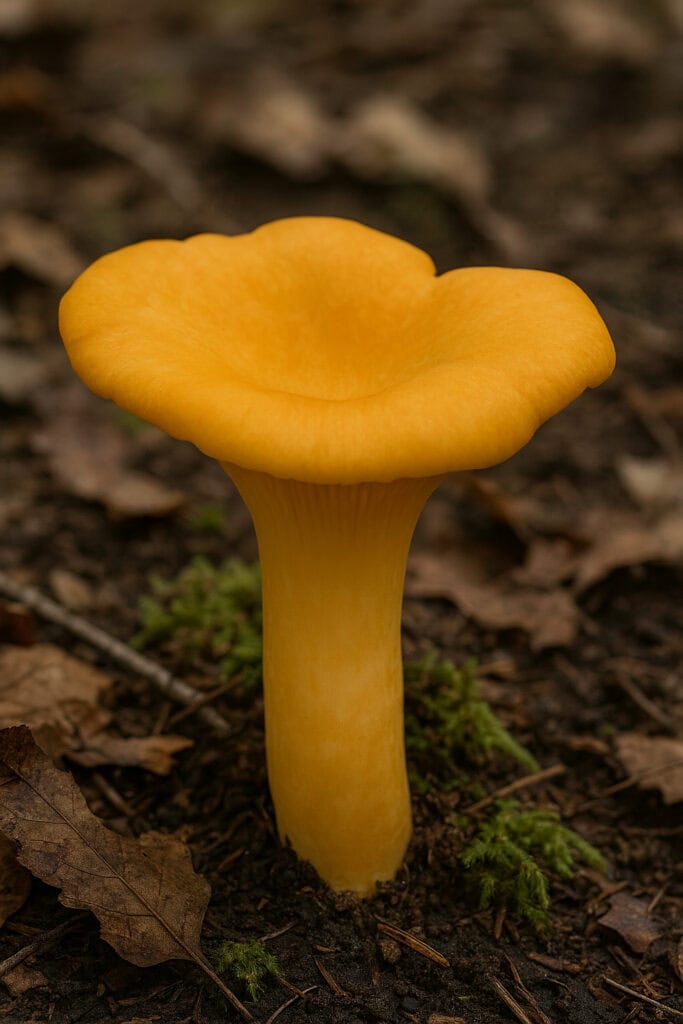
Cantharellus lateritius, commonly known as the Smooth Chanterelle, is a distinct and somewhat underappreciated member of the chanterelle family, most often found in the deciduous forests of Eastern North America. This species is notable for its almost featureless hymenium, the underside of the cap, which lacks the well-defined ridges seen in other chanterelles—hence the name “smooth.”
Appearance and Identification
The cap of C. lateritius is usually pale yellow to golden-orange, sometimes taking on peach or apricot hues depending on light exposure and maturity. It often begins as convex or slightly depressed in the center and flattens with age, sometimes becoming funnel-shaped. The cap edge is often wavy and irregular, a characteristic trait in most chanterelles.
What sets this species apart is its smooth to very shallowly wrinkled hymenium. Instead of the deeply forked or sharp-edged false gills found in many other chanterelles, C. lateritius displays a smooth, subtly veined underside that can appear almost blank in younger specimens. As the mushroom matures, very faint ridges may develop but never approach the pronounced gill-like structures of Cantharellus cibarius or C. formosus.
The stem is typically solid, smooth, and colored similarly to the cap, sometimes slightly paler at the base. It is usually well proportioned and may taper subtly downward. The flesh is firm and white, with a fruity aroma reminiscent of apricots—an aromatic signature consistent with many chanterelle species.
Habitat and Growth Habits
Cantharellus lateritius is mycorrhizal, forming symbiotic relationships with hardwood trees, especially oaks, beech, and hickory. It thrives in moist, shaded woodlands, favoring rich, loamy soils often found in the eastern and southeastern United States. This species tends to fruit from mid-summer through early fall, especially after heavy rains, appearing singly or in scattered groups.
Unlike the more vibrant and showy West Coast species, C. lateritius can be easily overlooked due to its more muted coloring and smoother appearance. However, its consistent growth in the same favorable locations makes it a dependable foraging target year after year.
Culinary Uses
The Smooth Chanterelle shares the nutty, fruity flavor profile typical of the chanterelle family, though some foragers describe it as slightly milder in taste than its golden cousins. It can be used in a variety of culinary preparations, from sautéed side dishes to inclusion in creamy pastas, risottos, egg dishes, and even savory tarts.
Its texture is meaty and resilient when cooked, making it ideal for drying or freezing for long-term storage. Because of its smooth underside, it’s easier to clean than more deeply veined species, which is especially convenient when cooking large batches or preserving the harvest.
Health Benefits
Like other chanterelles, C. lateritius is a nutrient-dense mushroom, providing vitamin D, iron, copper, and beta-carotene. The presence of antioxidants and anti-inflammatory compounds makes it a valuable addition to seasonal diets, particularly in supporting immune and metabolic function.
Cantharellus cinnabarinus (Cinnabar Chanterelle)
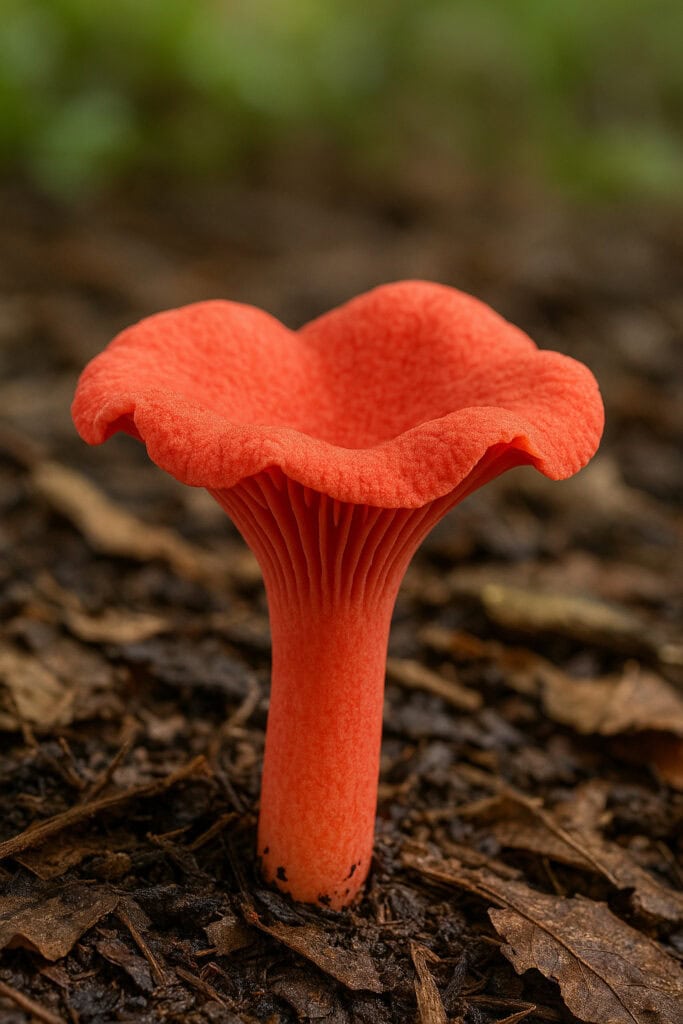
The Cinnabar Chanterelle (Cantharellus cinnabarinus) is a bold and striking member of the chanterelle family, instantly recognizable by its vivid cinnabar-red to orange-pink coloration. While smaller in stature compared to other chanterelle species, it makes a big visual impact on the forest floor and is a favorite among foragers for its unique beauty and distinctive flavor.
Appearance and Identification
C. cinnabarinus has a cap that ranges from bright coral to reddish-orange, sometimes with hints of pink or salmon depending on age and lighting. The cap is typically convex when young, flattening out with age and developing slightly wavy or lobed edges, giving it a delicate, almost floral look. Caps usually measure 1 to 4 inches in diameter, making them one of the smaller species in the Cantharellus genus.
The false gills—one of the key identifying features—are well-developed, blunt-edged, and deeply ridged, running down the short, often curved stem. These gills share the same bright hue as the cap, creating a uniform and saturated appearance throughout the mushroom.
The stem is solid, short, and colored similarly to the cap, although it may be slightly paler at the base. The flesh is thin, firm, and pale orange to cream-colored inside. A subtle fruity aroma, reminiscent of stone fruits or apricots, may be present, particularly when the mushroom is fresh and warm from the sun.
Habitat and Growth Habits
C. cinnabarinus is most commonly found in deciduous hardwood forests, especially under oak, beech, hickory, and occasionally birch trees. It prefers moist, well-drained soil and often fruits in leaf litter, where its vibrant color can help it stand out despite its smaller size. This species is widely distributed in eastern North America, ranging from Canada through the Midwest and down into the southeastern United States.
Unlike some other chanterelles that grow in tight clusters, Cinnabar Chanterelles tend to appear scattered or in loose groups, sometimes forming miniature fairy circles. The fruiting season typically runs from late spring through early fall, peaking in humid conditions following summer rains.
Culinary Uses
Though smaller than its golden cousins, the Cinnabar Chanterelle is equally prized in the kitchen. It offers a slightly spicy, peppery undertone beneath its fruity flavor, adding complexity to dishes. The firm texture holds up well to sautéing and pairs beautifully with butter, garlic, herbs, eggs, and cream sauces.
These mushrooms make wonderful additions to omelets, pasta dishes, risottos, and even lightly pickled preparations. Due to their small size, they’re often left whole in dishes to preserve their delicate appearance and texture.
Health and Nutritional Benefits
Like other members of the Cantharellus genus, C. cinnabarinus is rich in vitamin D, iron, potassium, and antioxidants. It’s low in calories but high in flavor, making it an excellent ingredient for health-conscious foragers. The beta-carotene and other pigments responsible for its bold color may also have immune-boosting and anti-inflammatory properties.
Special Notes
Because of their unusual coloration, Cinnabar Chanterelles are less likely to be confused with toxic look-alikes—though it’s still crucial to properly identify them, especially in areas where Jack-o’-Lantern mushrooms or other orange fungi may grow. Their striking hue, however, makes them a perfect introductory species for newer mushroom foragers learning to distinguish safe edibles.
Safety Concerns
- Proper Identification is Critical: Always double-check with field guides or a mycologist.
- Digestive Sensitivity: Some people may have mild reactions to chanterelles, especially if undercooked.
- Avoid Polluted Areas: Never forage near roadsides or industrial zones where soil or water may be contaminated.
If in doubt, leave it out.
Wrapping Up
Chanterelles are more than a flavorful forest find—they’re a living symbol of nature’s generosity. With their golden glow, rich scent, and nourishing spirit, these mushrooms are a favorite foragers’ delight and a gift to both the kitchen and the craft. By learning to identify and harvest them respectfully, you not only enrich your meals but deepen your connection to the rhythms of the wild. Happy foraging!