Introduction
Bringer of Radiance, Cycles, and Divine Guidance
Luna, the Roman goddess of the moon, shines as one of the most enduring figures of Rome’s celestial pantheon. Known for her radiant presence and nightly passage across the sky, Luna embodies not only the physical moon but also the spiritual qualities of guidance, renewal, and mystery. Her light was seen as a gentle counterpart to the blazing sun of Sol, providing balance to the cosmic order and nurturing the quiet rhythms of night, dreams, and tides.
Unlike Selene, her Greek predecessor and parallel, Luna developed within the uniquely Roman religious imagination. She was honored with temples, priests, and public rites, woven into Rome’s civic and agricultural calendar. Her cult reflected the Roman tendency to ritualize celestial forces as practical guardians of human life—protectors of crops, keepers of time, and witnesses to vows sworn beneath the night sky.
For modern seekers, Luna remains a powerful presence in both witchcraft and pagan traditions. She is a goddess of cycles and constancy, illuminating shadowed paths and reminding us that renewal follows every waning. Whether in ancient temples or in moonlit rituals today, Luna continues to embody the eternal dance of darkness and light, order and mystery.

Who is Luna?
Luna, whose very name in Latin means “moon,” is the Roman embodiment of the night’s celestial lamp. She is often described as the sister of Sol, the sun god, and Aurora, the goddess of dawn—together forming a divine triad that governs the cycles of light and darkness. Luna is also closely linked with Diana, the huntress and protectress of women, and with Hecate, the goddess of liminality and magic. While these deities sometimes overlap in function, Luna stands apart as the personification of the moon itself—ever radiant, ever constant, and ever in motion.
Unlike the Greeks, who often told personal myths of Selene’s love affairs, the Romans framed Luna more as a cosmic force, a regulator of order and time. She was venerated as a guardian of cycles, from agricultural plantings to women’s fertility, and her phases were used to mark the Roman calendar. Where Selene was poetry, Luna was also public order.
Depictions of Luna
In Roman art and poetry, Luna is often depicted as a serene goddess riding across the heavens in her silver chariot, drawn by a pair of shining horses (sometimes oxen). She wears flowing white or pale robes, her head crowned with a crescent moon that glows like a diadem of power. In her hand, she may hold a torch, guiding mortals through the darkness, or reins to her steeds, emphasizing her role as a cosmic driver of destiny.
Her image was both majestic and tender: radiant yet approachable, ethereal yet grounded in the cycles of life. The crescent crown in particular became one of her most enduring symbols, later adopted in magical and artistic traditions as a mark of lunar divinity and feminine power.
Mythological Background
Luna occupies a distinctive role in Roman mythology, serving as the divine embodiment of the Moon itself. Unlike some deities who existed primarily within a narrative framework of myths and adventures, Luna was regarded as a celestial power—an ever-present figure shaping time, cycles, and destiny. She was less the subject of elaborate stories than a constant force in Roman cosmology, a luminous regulator of both nature and civic order.
Cosmic Role
The Romans viewed Luna as one of three goddesses embodying aspects of the moon:
- Luna as the celestial and cosmic embodiment of the Moon.
- Diana as the lunar huntress, patron of women and childbirth.
- Hecate as the chthonic, mysterious face of the Moon, tied to magic and liminality.
Together, they represented the tripartite nature of the lunar mystery—heavenly, earthly, and underworldly. Luna stood at the apex of this trinity as the shining heavenly counterpart.
Her Chariot and the Nightly Journey
Like her Greek counterpart Selene, Luna was imagined as driving a silver chariot across the night sky, pulled by radiant horses or sometimes oxen. This daily passage reinforced the natural rhythm of time and underscored her role in regulating the calendar and agricultural life. The Romans carefully watched her phases to determine planting seasons, festivals, and civic observances.
Temples and Public Worship
Unlike many other Roman deities who were primarily associated with domestic cults, Luna was honored with public recognition in Rome. She had a temple on the Aventine Hill, dedicated in the 3rd century BCE, and her cult was linked to state ritual. This set her apart from Selene, whose worship in Greece was often more personal or poetic. Luna’s presence in Rome was a reminder that the moon was not just a private source of wonder but a celestial body whose power impacted the life of the entire city.
Enduring Mythic Presence
Though she lacks the rich body of personal myths that surround Selene, Luna’s symbolic place in Roman thought was profound. She was eternal, cyclical, and dependable, representing the luminous order that balanced Sol’s fiery radiance and Aurora’s fleeting dawn. The Romans saw her less as a figure of romantic intrigue and more as a sovereign presence, a constant goddess whose light shone for all.
Symbols and Associations
Luna’s imagery and associations capture her as both a celestial presence and a deeply human guide through the mysteries of night. Unlike some Roman deities who blurred into abstraction, Luna’s symbols made her immediately recognizable in art, ritual, and poetry.
The Crescent Diadem
Perhaps her most enduring symbol is the crescent moon crown (lunula), which she wears on her brow. This diadem represents not only her dominion over the night sky but also the cyclical rhythms of waxing, fullness, and waning. It is a symbol of fertility, renewal, and the eternal turning of time.
The Chariot of Night
Like her Greek counterpart Selene, Luna is often depicted riding across the heavens in a silver chariot drawn by horses (sometimes oxen). This imagery reinforced her role as a cosmic regulator, guiding the passage of days and months. The chariot itself is more than transportation—it is a statement of divine authority and movement, reminding worshippers that Luna embodies rhythm and inevitability.
Colors and Elements
Her sacred colors are silver, white, and pale blue, reflecting her dominion over the night’s cool radiance. She is strongly aligned with the element of Water, for her cycles govern tides and fertility, but she also has aspects of Air, carrying dreams, prophecy, and the clarity of light in darkness.
Sacred Imagery and Associations
In Roman thought, Luna’s power extended into nearly every aspect of life. She was invoked not just as a celestial presence but as a guide through transition, mystery, and renewal. Common associations include:
- Cycles of Time – The passage of months, measured by her phases.
- Dreams and Prophecy – Her light was believed to open the pathways of the subconscious.
- Fertility and Growth – Her cycles governed the planting of crops and the rhythms of women’s bodies.
- Illumination in Darkness – As Sol’s counterpart, she offered balance and guidance in the night.
Runic and Magical Symbols
While the Romans themselves did not use runes, Luna has been retroactively linked in modern practice to symbols of cyclical power such as the spiral and triple moon motif, reflecting her role as waxing, full, and waning light. The mirror is also associated with her, representing reflection and the inner clarity she offers those who seek her.
In all these forms, Luna stands as a beacon—her symbols affirming that the moon is never merely an object in the sky, but a divine embodiment of rhythm, wisdom, and the eternal dance between shadow and light.
Worship and Devotion
Ancient Practices
In ancient Rome, Luna was not a distant abstraction but a goddess with temples, rituals, and public reverence. Her most prominent sanctuary stood on the Aventine Hill, a sacred site where she was honored alongside other powerful deities. Festivals and rites connected with her often involved offerings of milk, incense, and silver to reflect her purity and shimmering light.
Priests and devotees would pray to Luna at night, particularly during the full moon, when her influence was considered strongest. Farmers sought her guidance for planting cycles, women prayed to her for fertility and safe childbirth, and augurs observed her phases for signs of divine will. Her presence was so interwoven with Roman timekeeping that her cycles became a foundation for the Roman calendar itself, which was originally lunar in design.
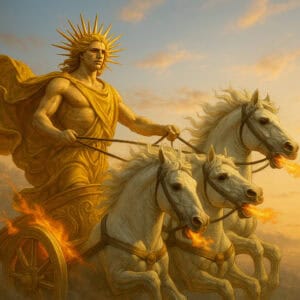
The Romans often paired Luna with Sol Invictus, the unconquered sun, recognizing them as cosmic counterparts. Together, they embodied the eternal dance of day and night, balance and transition.
Rituals and Hymns
Ancient hymns describe her as “the shining one” and “torch of the night,” and sacrifices in her honor often involved white animals (particularly cows or sheep) that mirrored her luminous purity. The recitation of prayers under her light was thought to draw her presence directly into the ritual space, allowing her wisdom to guide both state and personal matters.
Modern Devotion
Today, Luna’s presence remains strong in pagan, Wiccan, and witchcraft traditions, where she is revered as both a goddess in her own right and an aspect of the broader Triple Goddess archetype (maiden, mother, crone). Practitioners may:
- Perform moonlit rituals, especially at the full moon, to call on her for clarity, prophecy, or healing.
- Offer white candles, milk, silver coins, or moon-charged water as tokens of devotion.
- Meditate or scry under her light, using mirrors, bowls of water, or polished silver to reflect her presence.
- Honor her cycles through esbat rituals, which celebrate the moon’s phases and their influence on magic and life.
Altars dedicated to Luna often feature mirrors, crescent imagery, white or silver cloths, and vessels of water to symbolize both her reflection and her connection to dreams and tides. Many practitioners choose to align their spellwork with her phases: calling on her waxing phase for growth and new beginnings, her full phase for power and clarity, and her waning phase for release and banishment.
Continuity of Her Cult
What makes Luna unique is that, though her direct temples no longer draw Roman citizens, her worship has endured in subtle transformations. She appears in poetry, in art, and in the very language of “lunacy” and “lunar cycles.” For many modern seekers, invoking Luna is a way to step into the same rhythm that guided both ancient Rome and the eternal night sky: the quiet assurance that even in darkness, a light remains.
Attributes and Lessons
Luna embodies not only the brilliance of the night sky but also the subtle wisdom of cycles, change, and inner illumination. Her myths and worship carry enduring lessons that speak as much to modern seekers as they did to the ancient Romans.
Illumination in Darkness
Luna is the eternal torchbearer of the night, reminding us that even in times of uncertainty or obscurity, there is always light to guide the way. Her steady glow symbolizes the power of clarity and truth, particularly when shadows obscure the path ahead. To those who seek her, she teaches how to hold a gentle but unwavering flame of insight in the midst of confusion.
Constancy and Cycles
Though she waxes and wanes, Luna is never absent. Her cycles mirror the rhythms of human life—times of growth, fullness, decline, and renewal. She teaches that change does not mean loss, but transformation. Just as the moon diminishes only to return, so too do we experience ebbs and flows that are part of a greater wholeness.
Emotional Insight and Dreams
As a goddess tied to water, reflection, and the subconscious, Luna opens the way to emotional clarity and the wisdom of dreams. She encourages seekers to look inward, to honor intuition, and to embrace emotional truth as a sacred compass. In her presence, vulnerability is not weakness but a source of profound knowledge.
Balance of Shadow and Light
Luna is not only the glowing orb in the sky but also the shadow that veils it. She embodies both visibility and mystery, reminding us that life is a balance of the revealed and the concealed. To embrace her lessons is to accept that shadow is not the enemy of light but its counterpart, necessary for growth and depth of understanding.
✨ Key Lessons of Luna
- Illuminate the Path – Seek clarity in times of darkness and offer light to others who wander.
- Honor Cycles – Accept life’s waxing and waning phases as natural and essential.
- Trust Emotion and Intuition – Let dreams, feelings, and inner truths guide decisions.
- Embrace Shadow and Mystery – Recognize that not all truths are revealed at once, and that hidden wisdom is as valuable as visible light.
Magical and Spiritual Work
As the Roman embodiment of the moon, Luna’s presence in magical and spiritual practices is profound and enduring. She is invoked not only as a radiant goddess but also as the living essence of the moon’s cycles—making her one of the most versatile deities for witchcraft, divination, and healing.
Prophecy and Divination
Luna is a natural patroness of seers, oracles, and dreamers. Her shifting phases mirror the unveiling of truth—sometimes clear as a full moon, sometimes hidden as in the dark moon. Diviners often call upon her before scrying with water or mirrors, casting lots, or interpreting dreams. In Roman times, Luna was associated with prophetic vision, and her light was considered a bridge to higher wisdom.
Healing and Emotional Work
Her gentle glow has long been tied to healing, particularly in matters of the mind, heart, and spirit. Ritual baths under moonlight, offerings of water, or prayers for emotional release invoke Luna’s calming influence. She is especially invoked in spells for easing grief, regulating cycles (both menstrual and life rhythms), and finding serenity after turmoil.
Lunar Magic and Spellwork
Luna governs the rhythm of magical timing, with her phases serving as guides:
- Waxing Moon: For growth, attraction, and new beginnings.
- Full Moon: For power, culmination, and illumination.
- Waning Moon: For banishment, release, and introspection.
- Dark/New Moon: For rest, shadow work, and transformation.
Working in harmony with her cycles ensures that magic flows naturally with her celestial current.
Esbats and Moonlit Rituals
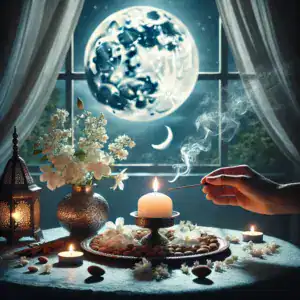
In modern paganism, particularly Wicca and related traditions, Esbats (ritual gatherings held during the full moon) are sacred occasions to honor Luna. Practitioners may gather to raise energy, cast spells, or simply commune with her under the night sky. These rituals often feature water, silver, and white or blue candles, all resonant with her essence.
Offerings and Altars
Altars dedicated to Luna often feature silver bowls of water, white lilies or roses, polished mirrors, and moonstones or pearls. Lighting a silver or white candle while speaking prayers at moonrise is a simple yet potent way to connect with her presence.
✨ Key Practices for Invoking Luna
- Moonlit Divination: Use mirrors, bowls of water, or crystals under her light.
- Dream Magic: Place offerings or prayers to Luna before sleep to invite guidance.
- Healing Rites: Perform cleansing rituals during the waning moon for release, or under the full moon for renewal.
- Esbat Gatherings: Celebrate the full moon with community ritual, spellwork, or song in her honor.
Safety, Respect, and Ethical Considerations
To work with Luna is to approach one of the oldest and most visible mysteries of the night sky. She is not a goddess to be treated casually; her cycles govern tides, fertility, and the very rhythms of life, and as such, she deserves reverence and thoughtful devotion.
Honoring Her Cycles
Luna’s power waxes and wanes with the phases of the moon, and one of the most respectful ways to honor her is to align your spiritual practices with these phases. This means not rushing against her natural flow: planting seeds of magic during the waxing moon, celebrating abundance during the full, and releasing or resting during the waning and dark moon. Ignoring these cycles risks not only ineffective magic, but also a lack of harmony with the forces she embodies.
Avoiding Casual Invocation
It is tempting to call upon Luna for every small spell or nightly prayer, but her mysteries are not meant to be trivialized. She is a goddess of depth, secrecy, and hidden truths. Approach her only when you are prepared to listen, reflect, and honor her gifts sincerely. Casual or superficial invocation may leave practitioners feeling disconnected or overwhelmed rather than uplifted.
Working with Purity and Intent
The Romans saw Luna as both a protector and a guide, and to this day, approaching her with honesty and clarity of heart remains essential. She responds best when practitioners:
- Keep their ritual spaces clean and uncluttered.
- Speak words of devotion or petition with sincerity.
- Offer simple, pure gifts such as water, milk, white flowers, or silver tokens.
Balancing Mystery and Clarity
While Luna reveals much, she also conceals. Her mysteries are not for domination, but for partnership. Those who seek to control or exploit lunar magic without respect may find themselves lost in confusion, as if wandering in moonlit fog. By honoring her mysteries as sacred rather than exploitative, practitioners align themselves with her natural rhythms of revelation and concealment.
Practical Guidelines
- Time Your Work: Align rituals with the moon phase that resonates with your intent.
- Enter Ritual Cleanly: Physically and spiritually cleanse before approaching her.
- Keep Integrity: Do not invoke her name in jest, shallow curiosity, or without commitment.
- Respect Silence: During the dark moon, allow yourself rest and quiet; not all times are meant for action.
Luna is both a radiant guide and a keeper of shadows. Treating her mysteries with care ensures that her light continues to illuminate the path without overwhelming or deceiving the seeker.
Conclusion
Luna, radiant goddess of the moon, stands as both a celestial presence and a guiding archetype. To the Romans, she was not merely a distant body in the sky but a divine regulator of time, fertility, and fate. Her temple on the Aventine Hill reminded worshippers of her enduring cycles, while her light was invoked to guide journeys, protect the vulnerable, and illuminate the unknown.
Her legacy is one of illumination balanced with mystery. She offers seekers the comfort of constancy—the waxing and waning that remind us of life’s natural rhythms—yet she also veils deeper truths, teaching patience, humility, and respect for what must remain hidden.
For modern practitioners, Luna continues to inspire a living connection to the night sky. Witches, pagans, and spiritual seekers call upon her in moonlit rituals, dream work, prophecy, and healing. Her lessons endure:
- Honor Cycles: Life flows with phases of growth, fullness, release, and rest.
- Seek Illumination: Clarity comes not by force but by gentle reflection in her light.
- Respect Mystery: Not all must be revealed; wisdom lies in balance between seen and unseen.
As Rome’s eternal moon goddess, Luna reminds us that even in darkness, there is a guiding glow to follow. She is the soft light upon water, the silver torch of the heavens, and the eternal guardian of night. To walk with Luna is to walk with reverence for cycles, patience for revelation, and trust that even in shadow, light will always return.